
Debating God’s Justice: A Comparative Study of Tafsīr al-Kashshāf, al-Tafsīr al-Munīr and Tafsir al-Mīzān
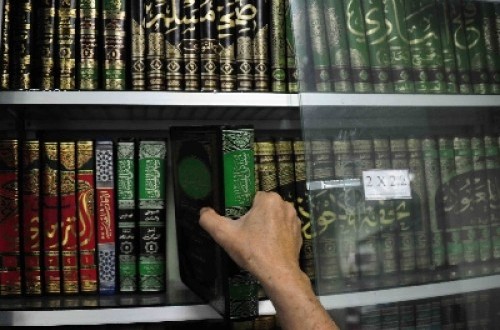
The question of whether God is truly just may be one of the oldest questions asked by believers. It arises whenever a pious person is struck by misfortune, whenever injustice seems to go unchallenged, and whenever we wonder: if everything has already been decreed, where does human responsibility lie? In Islamic history, such unease did not remain a private lament. It became a long, layered theological debate, traces of which can still be read in the pages of Qur’anic commentaries.
An article by Professor Hasani Ahmad Said of Syarif Hidayatullah State Islamic University Jakarta, together with Azizah Romadhona and Wardatul Jannah of PTIQ University Jakarta, invites readers to follow those traces. Its title is deliberately provocative. But the object of its “challenge” is not God; rather, it is the way people—more specifically, Qur’anic exegetes—understand His attribute of justice. The article addresses this through a comparison of three major commentaries, each representing a principal strand of Islamic theology: al-Kashshāf by the Mu‘tazilite az-Zamakhshari; al-Tafsīr al-Munīr by Wahbah az-Zuhaili, read through an Ash‘arite lens; and al-Mīzān by Muhammad Husain ath-Thabathaba’i, from the Twelver Shi‘ite tradition.
This choice is the study’s first strength. The question of divine justice is not new, as the authors readily acknowledge. However, their review of previous scholarship found no study that brought all three theological schools together for analysis. Like three witnesses questioned about the same case, the exegetes are examined through the same verses, including Qur’an 4:58, 16:90, 41:34, 21:47 and 36:54. The result allows readers to see clearly where they agree and where they part ways. This kind of comparison is fairer—if we may borrow the article’s own theme—than analysing a single commentary and then rushing to conclusions about an entire school.
The article is also well structured and easy to follow. It begins with the linguistic roots of al-’adl, its definition in Lisān al-’Arab, and four layers of meaning identified by Quraish Shihab: equality, balance, giving people their due, and justice ascribed to God. Related Qur’anic terms, such as al-qisṭ, al-musāwāh and lā yaẓlimu, are also mapped out. This linguistic foundation matters because theological disputes often begin with differing readings of one or two words. Readers unfamiliar with kalam—theology—are guided gradually rather than thrown straight into the polemic.
The three schools are then delineated clearly. The Mu‘tazilites believe that God necessarily acts for the good and must reward every deed proportionately: a conception of justice that reason can assess. The Ash‘arites take the opposing position: God is the absolute sovereign over what belongs to Him, so whatever He wills is, by definition, just. Shi‘ite thought occupies a middle position. Drawing on Murtadha Muthahhari, the article explains that humans are created free, but their existence and actions remain dependent on God. They are neither wholly autonomous (tafwīḍ) nor compelled (jabr).
The most compelling section, at least to me, is where these theories are tested directly against the text. Here readers can see how theological convictions shape interpretation. In interpreting Qur’an 4:40, az-Zamakhshari stresses that God will not diminish even an atom’s weight of reward. This is not because God is unable to do so, but because His wisdom does not permit it. He also reads Qur’an 16:90 as evidence that God never burdens a servant beyond their capacity, a characteristic Mu‘tazilite idea known as luṭf. Az-Zuhaili, by contrast, emphasises Qur’an 11:107—a verse that does not even contain the word “justice”—to affirm that no one can thwart God’s will. Ath-Thabathaba’i interprets Qur’an 41:46 using the classical definition of injustice: putting something in the wrong place. To reward someone for a good deed they did not perform would be injustice, which is impossible for God.
Another strength is the authors’ attentiveness to nuances beyond theology proper. Az-Zuhaili, for example, does not confine the discussion to matters of faith. In interpreting Qur’an 4:58, he brings justice into the political sphere: it is the foundation of government, a condition for civilisation to flourish, and a guarantee that the weak receive their rights while the powerful do not act arbitrarily. Ath-Thabathaba’i brings Qur’an 16:90 into the social sphere, stressing that a person’s happiness rests on the wellbeing of their surroundings. Such details make the article feel relevant and alive, rather than a mere catalogue of scholarly views. Its message resonates today: divine justice is not only a matter of heaven, but also a mirror for how people exercise power on earth.
Hasani Ahmad Said’s presence among the authors lends the study additional weight. A senior lecturer in Qur’anic Exegesis at UIN Jakarta, he is known for his prolific work on theological approaches to Qur’anic interpretation. One of his books, Tafsir Teologis: Menggali Ayat-ayat Kalam dalam Tafsir Fath al-Qadir Karya al-Syaukani, explores the same field, and his ideas are also cited in the article. His record includes graduating as the top doctoral student at UIN Jakarta’s Graduate School in 2011, graduating top of the Qur’anic Exegete Cadre Training programme at the Qur’an Studies Centre, and writing more than a dozen books and dozens of national and international journal articles, including papers indexed in Scopus Q1. He also teaches at PTIQ University Jakarta, where the other two authors studied. This collaboration between lecturer and students deserves recognition as an example of an intellectual tradition being passed on rather than monopolised.
One further point to praise is the article’s conclusion. Rather than declaring one school the winner, the authors show that all three share a basic understanding: justice means giving people what is due to them, putting things in their proper place, and rewarding deeds proportionately. The remaining differences are left for readers to consider and, the authors argue, do not take anyone outside Islam. In a religious climate where differences between schools—particularly Sunni and Shi‘ite—can easily inflame tensions, this conclusion is both reassuring and instructive.
The article is not without limitations. Constraints of space mean that some verses are discussed only briefly, and readers who want to examine the Arabic wording in the three commentaries will still need to consult the original texts. The biographical material on the exegetes also takes up a considerable amount of space compared with the comparative analysis. These minor reservations, however, do not diminish the article’s central value.
For students of Qur’anic exegesis, scholars of kalam, and general readers who have wrestled with the question “why”, the article offers a clear point of entry. It reminds us that differences in interpretation need not signal division, but can reflect the richness of the ways Muslims read God’s word. Ultimately, the debate among scholars over divine justice makes the same demand of us all: to treat one another justly.
Source: jawawa.id (https://jawawa.id/newsitem/debating-gods-justice-a-comparative-study-of-tafsir-al-kashshaf-al-tafsir-al-munir-and-tafsir-al-mizan-1794120671)
Originally published by Republika (https://khazanah.republika.co.id/berita/to65eq487/menimbang-keadilan-tuhan-dari-tiga-mimbar-tafsir), translated from Indonesian