
Debate Over 67,800-Year-Old Sulawesi Cave Painting: Criticised by France, Defended by Global Archaeologists
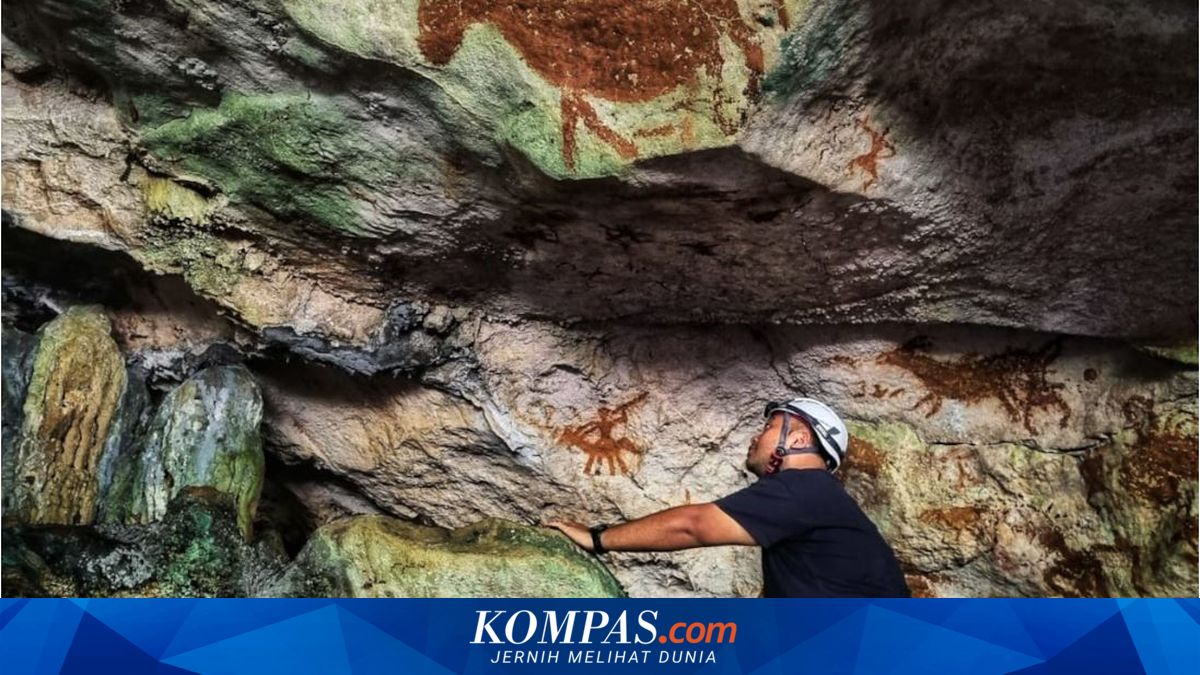
The international archaeological community has recently been shaken by a fierce debate concerning the true age of the world’s oldest prehistoric cave paintings discovered in Indonesia. Previously, Guinness World Records officially recognised a non-figurative hand stencil in Metanduno Cave, Muna Island, Southeast Sulawesi, as the oldest in the world, with an age reaching 67,800 years.
However, this extraordinary claim has faced sharp criticism from Georges Sauvet, a senior researcher from the Centre for Research and Studies of Prehistoric Art in France. He expressed doubts regarding the accuracy of the Uranium-Thorium (U-Th) method used, arguing that the calcite layers covering the paintings are susceptible to uranium leakage caused by cave water flow (an open system). According to Sauvet, if uranium is leached away, laboratory dating results will be inflated, making the cave paintings appear much older than their actual age.
Sauvet’s criticism immediately triggered a defence from several top global scientists. João Zilhão, a research professor from the University of Lisbon, asserted that all dating methods—including radiocarbon—carry their own risks of error, making it unfair to single out the U-Th method. He compared it to traditional radiocarbon methods, which are also highly vulnerable to contamination.
A strong defence also came from Maxime Aubert, an archaeologist and geochemist from Griffith University, Australia, who led the research in Sulawesi. Aubert explained that his team no longer relies on outdated techniques. To avoid dating distortions caused by water seepage, they have developed cutting-edge technology based on laser ablation.
“To say that uranium-series dating does not work on rock art simply because there are some cases where calcite samples show open-system behaviour is an overgeneralisation,” said Maxime Aubert, as reported by Live Science. While Aubert acknowledged that, in theory, uranium can leach in or out of calcite deposits due to cave water and distort the original age, he emphasised that the team has moved beyond the error-prone methods of the past.
Source: jawawa.id (https://jawawa.id/newsitem/debate-over-67-800-year-old-sulawesi-cave-painting-criticised-by-france-defended-by-global-archaeologists-1780879025)
Originally published by Kompas (https://www.kompas.com/sains/read/2026/06/02/103408723/perdebatan-usia-lukisan-gua-sulawesi-67800-tahun-dikritik-perancis-dibela?utm_source=ABC&utm_medium=rss), translated from Indonesian