
Death of Sumatran Elephants: IPB Expert Highlights Weak Law Enforcement
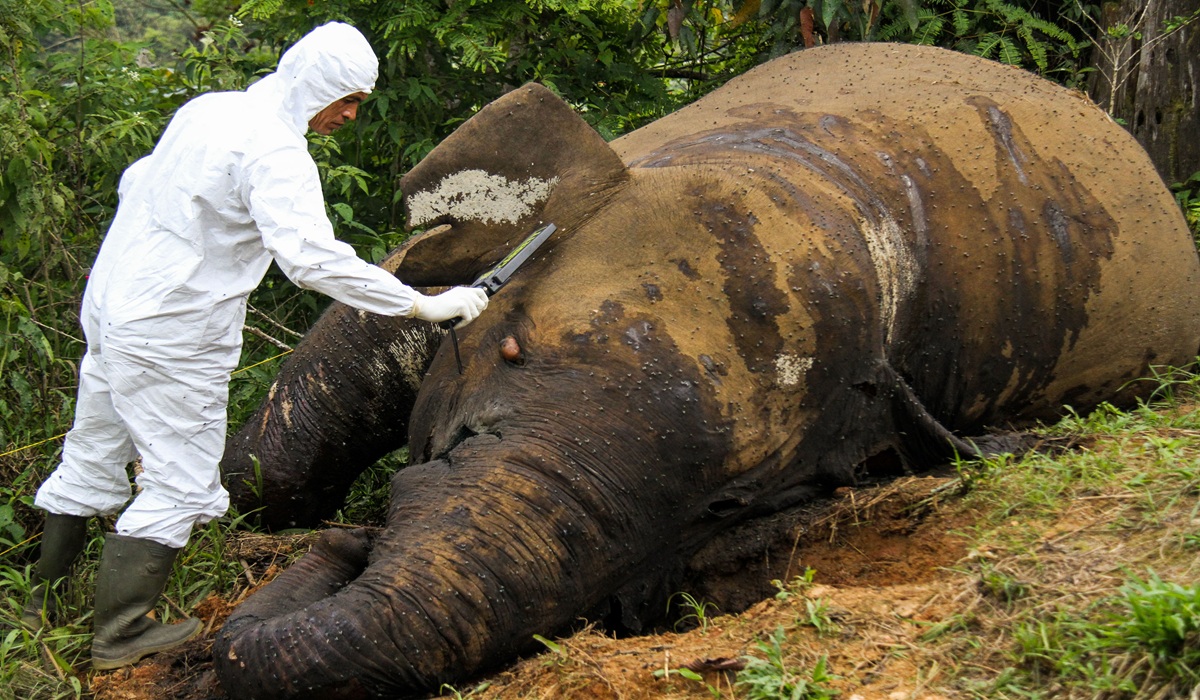
The deaths of a Sumatran elephant mother and her calf have once again served as a severe warning for Indonesia’s conservation efforts. Dr Abdul Haris Mustari, a conservation expert from IPB University, assesses this tragic phenomenon as clear evidence of weak law enforcement and the continued dominance of economic interests over ecological sustainability.
According to Mustari, the current population status of Indonesia’s iconic wildlife is at a deeply concerning level. Sumatran elephants and tigers, which play vital roles in the ecosystem, are being continuously pushed back by uncontrolled human activities. Mustari explained that these two animals are not merely forest inhabitants, but are keystone, umbrella, and flagship species. “By protecting the habitats of elephants and tigers, other biodiversity in Sumatra will automatically be protected,” he stated.
Indonesia does not lack legal frameworks. Mustari detailed several existing regulations, ranging from Law No. 5 of 1990 (updated via Law No. 32 of 2024) and Government Regulation No. 7 of 1999, to Ministry of Environment and Forestry Regulation No. P.106 of 2018. However, he emphasised that the primary issue lies in field implementation. “Our laws are currently more symbolic than operational. Law enforcement tends to be reactive, only moving after an animal has died or a case has gone viral on social media,” Mustari criticised. He also highlighted the insufficient number of conservation officers and the low effectiveness of current legal actions.
Massive deforestation for palm oil plantations, mining, industrial forest plantations (HTI), and infrastructure development has severed natural wildlife migration routes. This has triggered horizontal conflicts between humans and elephants, which enter residential lands as their habitats shrink. Furthermore, Mustari lamented that criminal sentences for wildlife offenders are often too light, failing to provide a deterrent effect. He noted that law enforcement often targets field-level perpetrators, while the intellectual actors behind international trade networks rarely face consequences.
As a solution, he urged a paradigm shift in national development. “Conservation in Indonesia should no longer focus on species in isolation, but on the ecosystem as a whole. Elephants and tigers cannot survive without preserved forests,” he asserted. He also called for continuous awareness-raising for both the public and law enforcement agencies to ensure wildlife protection becomes a shared priority.
The Seblat Landscape (BAS) remains a crucial habitat for Sumatran elephants. The government intends to encourage the construction of facilities such as tunnels or underpasses to ensure elephant migratory paths remain connected and uninterrupted by human activity. These decisive steps, according to Raja Juli, align with presidential instructions (Inpres) regarding the rescue of Sumatran and Bornean elephant populations and habitats. The Ministry of Forestry, through the Bengkulu Natural Resources Conservation Agency (BKSDA), is currently conducting an investigation into the discovery of two Sumatran elephants in Bengkulu. Additionally, President Prabowo Subianto has shown specific attention to Way Kambas National Park regarding the sustainability of Sumatran elephant habitats and populations.