
Dealer Car Stockpiles Under Threat, What Is Really Happening?
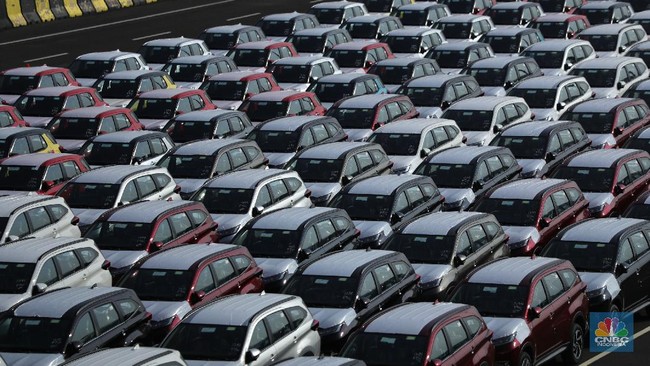
The increase in Bank Indonesia’s benchmark interest rate has sparked new concerns within the automotive industry. One key issue is the potential build-up of vehicle stock at dealerships if consumers begin to postpone car purchases due to increasingly expensive instalments.
Kukuh Kumara, Secretary General of the Association of Indonesian Automotive Industries (GAIKINDO), stated that conditions cannot be generalised across all dealerships. This is because stock management policies and sales programmes depend heavily on the strategies of each Brand Holder Agent (APM).
‘Regarding dealers, that is a different side. It depends on the brand. Local dealers tend to be independent. I do not have accurate information about them, but they will certainly be supported by programmes prepared by the brand,’ he told CNBC Indonesia on Monday (20/7/2026).
Manufacturers have a vested interest in ensuring vehicle distribution continues to flow from the factory to the consumer. Therefore, support for dealer networks will be tailored to each brand’s marketing strategy, including promotional programmes and the most effective sales schemes.
‘The brand will not want to let its stock sit idle. It wants it to flow to the dealer and then to the consumer,’ Kukuh said.
The biggest challenge arises when prospective buyers decide to delay transactions. This situation can hinder the turnover of vehicle stock that has already been produced by manufacturers and shipped to sales networks.
‘Once it is on hold, it is usually for a long time. Not just a week or two, it could be two, three, or four months. We lose momentum. The vehicles have been made at the factory, they cannot be folded away, they take up storage space and incur costs,’ Kukuh explained.
Consequently, each brand has a different strategy to keep vehicle distribution flowing. The impact of the interest rate hike cannot be uniformly assessed because each company’s ability to cope with a market slowdown varies.
‘This is relative, depending on each brand. They have a cushion for a certain period. It cannot be generalised as three or four months. We have to look at historical data and each company’s policies,’ Kukuh said.
Amid these conditions, manufacturers and financing companies are expected to continue offering various promotions to prevent consumers from postponing purchases. These sales programmes are one way to maintain a healthy turnover of vehicle stock at dealerships through to the end of the year.
‘We had thought there would be a tendency like that because there was talk of incentives that did not materialise. But it turns out, as evidenced by June sales which remained strong, sales from January to June compared to last year are also better,’ Kukuh noted.