
Deal! Waste-to-Energy Plant to be Built in Piyungan by Year-End
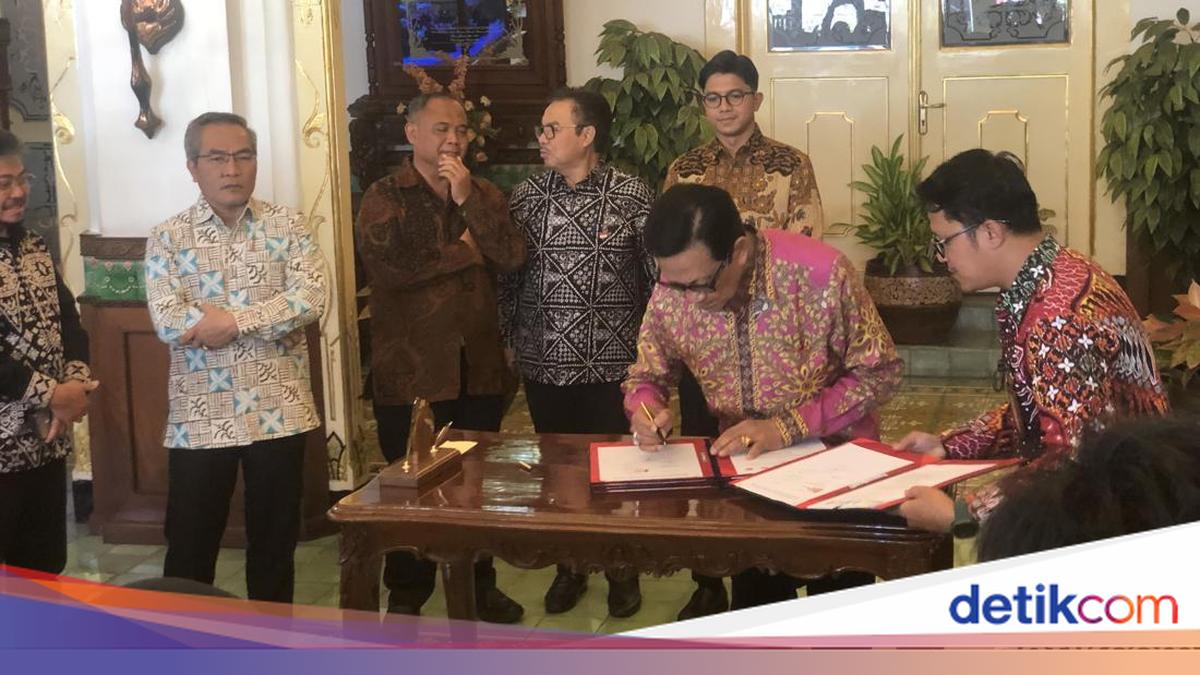
The Waste-to-Energy Processing Programme (PSEL) will be built in Piyungan, Bantul, starting at the end of 2026. This certainty was reached following an agreement between Danantara Investment Management (DIM) and the DIY regional government, marked by the signing of an MoU.
The MoU signing took place at the DIY Governor’s Office, Kepatihan Complex, Yogyakarta City, this afternoon. Besides Danantara and the DIY regional government, three regencies/cities also signed the MoU: the Mayor of Yogyakarta, the Regent of Bantul, and the Regent of Sleman.
DIM Investment Director and Chief Executive Officer of Denera, Fadli Rahman, explained that the investment value in this project reaches Rp 3 trillion.
“The investment value is estimated at around Rp 2.5 to Rp 3 trillion, which of course will depend on the design results this year,” Fadli explained at the Kepatihan Complex, Yogyakarta City, Tuesday (11/8/2026).
“Our target is to hold the groundbreaking at the end of this year, in December 2026, so that by the third or fourth quarter of 2028 it can already process waste for the Yogyakarta area,” he continued.
Fadli said the PSEL will be built on land near the Piyungan Final Disposal Site (TPA) covering 5.7 hectares. In the physical construction of the PSEL, Fadli said his party will absorb labour from surrounding residents.
After the MoU signing, the project has now entered construction preparation. This includes environmental studies, preparation of the detailed engineering design (DED), and land maturation.
“Near the Piyungan TPA, around 5.7 hectares. The location is different, but still adjacent to the Piyungan TPA. We expect significant labour absorption during the construction process itself, around 800 to 1,000 workers, which we will prioritise from local labour,” he explained.
“This is one of stage two, so one of 11 (PSEL) running in parallel. So there is no preliminary or prioritisation, indeed everything is running in parallel,” Fadli continued.
Processing 1,000 Tonnes of Waste per Day
DIY Governor Sri Sultan Hamengku Buwono X said waste from Yogyakarta City, Sleman and Bantul will be sent to the PSEL to meet a quota of 1,000 tonnes per day. The city/regency governments will not be charged any fees, but only need to arrange waste transport to the PSEL.
“The waste comes from the regencies/cities; those signing the MoU are only Sleman, Bantul, and the City. The other two regencies can still manage it themselves, still limited. So these three need participation from other parties for investment,” said the Sultan.
Meanwhile, Fadli added that the MoU also regulates technical matters if the agreed daily waste quota is not met. Before any penalty, various measures have been prepared and agreed upon.
One of these is a mitigation step to be taken if the waste quota has not been met. This step is believed to resolve the issue before a penalty is imposed.
“So before reaching the penalty point, there are mitigation steps that we will certainly discuss and cooperate on with the relevant regional government,” Fadli explained.
“It could absorb waste from other regencies, or we could increase the frequency of waste collection in the relevant regencies/cities, or we could even consider taking from the Piyungan TPA, so from stockpiles, not from daily generation, although the amount is somewhat limited,” he added.
PSEL Technical Details
Fadli explained that one thousand tonnes of waste from the three regencies/cities will be distributed to the PSEL every day. The waste is then stored in a giant airtight bunker to be dried. In this process, the waste does not need to be sorted.
“The waste will undergo a drying process for 5 days inside the bunker; the water in the waste will come out, and then the waste will become feedstock or supply for burning or heating water into steam, which will then turn a turbine and become electricity,” he explained.
The residue from burning the waste, Fadli said, will be ash. The ash will not be discarded but will be processed into products meeting European standards. As for combustion smoke, he continued, it will be filtered so that the output does not pollute the environment.
“The result of burning waste will be ash, bottom ash and fly ash, which are processed and meet high standards, European standards. This is what we will push for, so it is higher than Indonesian SNI environmental standards, far better,” Fadli explained.
“In addition, it will of course go through a strict filtration process so that the air emissions coming out become cleaner water vapour, even cleaner than the surrounding air, and the leachate that has come out will be processed back into clean water,” he said.
Generating 20 Megawatts of Electricity
Fadli continued that one thousand tonnes of waste processed daily can generate 18 to 20 megawatts of electricity. The electricity will be sold to PLN at 20 cents per kWh.
“So (18–20 megawatts) can power around 15,000 homes in the Yogyakarta area. We will cooperate with PLN, so there will be a signing or power purchase agreement with PLN, just like other PSEL locations,” he explained.
“In accordance with Presidential Regulation (Perpres) 109/2025, the electricity will be purchased by PLN at a price of 20 cents per kWh, which will cover cooperation for the next 30 years. So the electricity will be paid directly by PLN. The region does not incur costs for electricity,” Fadli concluded.
Source: jawawa.id (https://jawawa.id/newsitem/deal-waste-to-energy-plant-to-be-built-in-piyungan-by-year-end-1786449108)
Originally published by detikJogja (https://www.detik.com/jogja/bisnis/d-8614041/deal-proyek-pengolahan-sampah-jadi-listrik-dibangun-di-piyungan-akhir-tahun), translated from Indonesian