
Deadly Virus Rages: 2,000 Dead and 100 Cases in 24 Hours
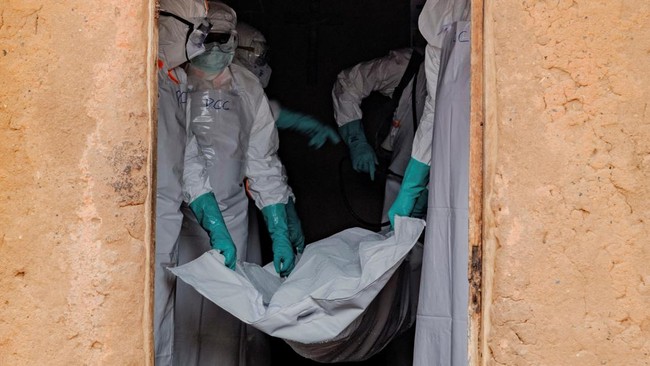
The deadly Ebola outbreak in the Democratic Republic of Congo has now officially become the most lethal in the country’s history. According to government data, at least 2,325 people have been reported dead, directly surpassing the death toll from the 2018-2020 outbreak period.
Citing The Guardian, the Congolese public health institute stated that the total number of confirmed cases has now surged sharply to 4,945 cases. This alarming figure includes the discovery of 101 new cases detected within just the last 24 hours.
The World Health Organization projects that this outbreak is on track to surpass the deadly record of the 2014-2016 West African Ebola outbreak as the largest in history. The West African outbreak, which affected Guinea, Liberia, and Sierra Leone, recorded 28,616 cases with 11,310 deaths.
The United Nations on Friday also issued a stark warning about this health crisis. They stressed that Ebola is winning the battle in Congo because the deadly epidemic is claimed to be taking one life every 30 minutes.
Six of Congo’s 26 provinces are now infected, with the main spread along the country’s northeastern border. Ituri Province, where the outbreak was first reported, has now recorded more than 3,400 cases of infection.
The drastic surge in cases makes this 17th outbreak in Congo’s history the fastest virus transmission ever known. By comparison, the 2014-2016 West African outbreak took nearly five months to reach 1,000 deaths, while the current outbreak has claimed more than 2,000 lives in less than three months.
Tragically, there is still no officially approved vaccine or treatment for the rare Bundibugyo virus strain responsible for the surge in cases. Clinical trials for two potential treatments only began last month in the Ituri region.
WHO Director-General Tedros Adhanom Ghebreyesus stated last week that two vaccines developed specifically for the Bundibugyo strain are currently being tested directly on humans.
Public health specialist Thomas Parisch, recently deployed to Congo with Médecins Sans Frontières, offered his perspective on the crisis. “Normally, as an outbreak progresses, the case fatality ratio should fall as contact tracing improves and patients are identified and treated earlier,” he said. “Instead, we are still seeing many cases detected very late, when treatment is unlikely to succeed, with many only identified after they have died in the community.”
A cross-border crisis is also emerging, with reports of at least 20 cases in Uganda, all centred in the capital Kampala. However, the last case in that area was reported on 21 June and no community transmission has been recorded.
Earlier in May, the surge in disease in Congo and Uganda was declared a public health emergency of international concern by the WHO. Genetic sequencing shows that the deadly virus actually began spreading several months earlier, in February.
Ebola is known to transmit from wild animals to humans, then spread massively within populations through direct contact with blood, secretions, organs, or bodily fluids of infected patients or corpses. The virus is also highly prone to transmission through contaminated surfaces and materials such as bedding or clothing.
According to WHO data, early symptoms of infection can include fever, fatigue, malaise, muscle pain, headache, and sore throat. These complaints are then quickly followed by vomiting, diarrhoea, abdominal pain, rash, and symptoms of serious impairment of kidney and liver function.
Source: jawawa.id (https://jawawa.id/newsitem/deadly-virus-rages-2-000-dead-and-100-cases-in-24-hours-1787010643)
Originally published by CNBC Indonesia (https://www.cnbcindonesia.com/news/20260818003155-4-760122/virus-mematikan-menggila-2-ribu-orang-tewas-100-kasus-dalam-24-jam), translated from Indonesian