
Deadlocked Election Leaves Netanyahu on the Brink: How Bad Is Israel’s Economy?
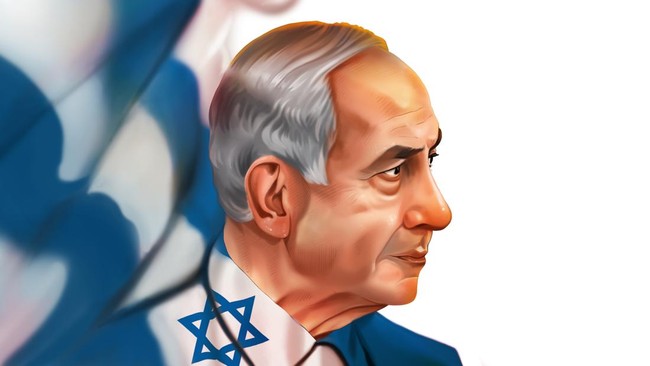
Jakarta, CNBC Indonesia – Israel’s economy is moving in two opposing directions amid war and ahead of a general election. Economic activity is still growing, but the protracted conflict is adding pressure to the state budget and people’s livelihoods.
Israel is currently in the global spotlight as it holds an election.
An Israeli election held during wartime ended without a clear winner, according to exit polls on Tuesday (27 October 2026). The preliminary results could deal a blow to Prime Minister Benjamin Netanyahu, who is seeking to remain in power.
The opposition bloc led by Gadi Eisenkot is projected to win the most seats. However, neither side has enough support to form a government, leaving coalition negotiations to determine the outcome.
Whoever is eventually elected leader will face a harsh reality.
At a time when the development of artificial intelligence (AI) is creating investment opportunities, the challenge is not merely to sustain growth but to ensure economic resilience as defence spending rises.
Israel has an important technology sector, particularly in cyber security and digital technology.
The development of AI is also creating opportunities for technology companies to attract investment and expand their business activities.
Foreign direct investment (FDI) in Israel hit a record US$26.2 billion in 2025, a 78% increase on 2024.
The surge was driven by major acquisitions in the cyber security sector by US technology giants: Alphabet’s acquisition of Wiz and Palo Alto Networks’ acquisition of CyberArk.
Trading Economics data show that Israel’s economy grew by 2.9% in 2025, following growth of 1% in 2024. The economy is forecast to grow by 3.5% in 2026.
Even so, developments in the technology sector cannot be taken as representative of the entire economy. Overall growth is still shaped by consumption, investment, government spending and the impact of conflict on production.
The war has also left the state with a hefty bill. The Bank of Israel estimates that the fiscal cost of the war from 2023 to 2026 will reach around ILS 350 billion (approximately Rp2,052 trillion, at ILS 1 to Rp5,861), excluding spending decisions related to the military operation against Iran that began in late February 2026. About half of the war’s cost has been financed through borrowing.
Fiscal pressures could continue amid plans to increase the defence budget.
In July 2026, the Bank of Israel said the government was considering additional spending of up to ILS 25 billion, which could take total defence spending to ILS 183 billion.
Price indicators, the labour market and public finances need to be considered together to understand the pressures Israel continues to face.
Six Indicators for Assessing Israel’s Economy
Trading Economics data show that Israel’s latest economic growth figure was 3.5%, compared with minus 0.4% in the previous period. Other indicators, however, present a more mixed picture.
Although Israel’s economy is forecast to grow faster in 2026, rising from 2.9% in 2025 to 3.5%, fiscal pressure is drawing attention. The government debt-to-GDP ratio is projected to rise from 68.5% to 76%. This means the projected economic expansion is expected to coincide with a growing government debt burden.
Unemployment rose to 3% from 2.8%, while inflation edged up to 1.6% from 1.5%. The government debt-to-GDP ratio also increased to 68.5% from 67.7%.
Meanwhile, Israel’s nominal GDP was recorded at US$611 billion, compared with US$542 billion in the previous data.
GDP per capita rose to US$42,596 from US$41,882. Both figures are expressed in US dollars and do not, on their own, indicate changes in people’s well-being, as they are affected by factors including prices and exchange rates.
Government Debt and Fiscal Headroom
The increase in the government debt-to-GDP ratio is one indicator to watch amid the need for higher defence spending.
According to Trading Economics data, the ratio rose from 67.7% to 68.5%.
The debt ratio cannot be considered in isolation. It should be assessed alongside government revenue and spending, economic growth, and financing needs arising from the conflict.
If defence spending continues to rise, there may be less budgetary room for other needs, depending on how the government finances it.
In this context, an end to the war and a reduction in military spending could create greater fiscal headroom.
Conversely, a prolonged conflict could sustain pressure on the budget and make it more difficult for the government to maintain economic growth.
Source: jawawa.id (https://jawawa.id/newsitem/deadlocked-election-leaves-netanyahu-on-the-brink-how-bad-is-israels-economy-1793191852)
Originally published by CNBC Indonesia (https://www.cnbcindonesia.com/research/20261028163104-128-780313/pemilu-buntu--netanyahu-di-ujung-tanduk-seburuk-apa-ekonomi-israel), translated from Indonesian