
DDMF: Strategic investment must encompass long-term economic resilience
Jakarta (ANTARA) - Danantara Development Management Fund (DDMF) says strategic investment must encompass long-term economic resilience.
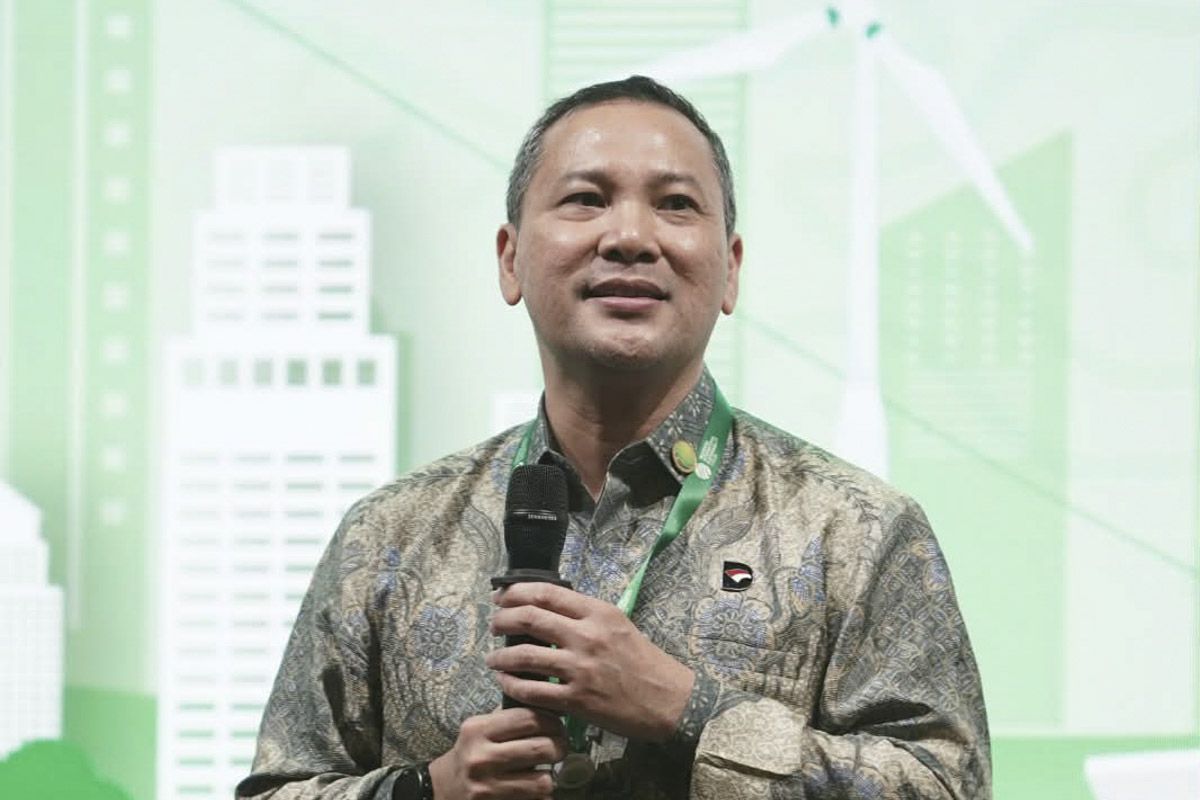
M. Rachmat Kaimuddin, Managing Director of Development Investment at PT Danantara Development Management Fund (DDMF), said strategic investment should be assessed by its development impact, rather than solely by returns on capital.
“Development investment cannot be assessed by financial returns alone. Its measures must include additional production capacity, quality jobs, stronger industry and innovation, a more equitable distribution of benefits between regions, and long-term economic resilience. DDMF wants to ensure that every rupiah invested can be accounted for through tangible, measurable benefits for Indonesia,” Rachmat said in a statement in Jakarta on Wednesday.
Amid increasingly complex development financing needs, strategic investment is expected to deliver tangible, measurable and sustainable economic and social benefits for Indonesia. Debate about development investment, therefore, should go beyond the level of financial return it generates.
For long-term strategic projects, more relevant measures include the extent to which investment strengthens production capacity, creates quality jobs, expands domestic value added, and improves economic and environmental resilience.
For DDMF, an investment institution mandated to oversee National Strategic Projects (PSN) with long-term social and economic impact, the challenge is to translate those benefits into a consistent, accountable framework relevant to investment decisions.
DDMF acts as a catalyst, bridging national development needs and long-term financing through collaboration among the government, state-owned enterprises, the private sector and institutional investors.
DDMF is currently developing the Danantara Dynamic Modelling Framework, a structural economic modelling framework that uses a Financial Computable General Equilibrium approach.
The aim is not to produce a single static figure, but to track the impact of investment over time, including its effects on national income, job creation, state revenue, sectoral and regional structures, capital formation and financing dynamics.
In this framework, the source of financing is an important variable. Investment relying solely on domestic liquidity may compete with the financing needs of other sectors.
By contrast, co-financing that mobilises international capital can expand investment capacity, but must be managed with due regard for external liabilities and macroeconomic sustainability.
For this reason, the role of catalytic capital is not to replace the market, but to reduce risk, bring projects to maturity and pave the way for private and institutional investment.
For every strategic project, assessment must go beyond economic output. The discussion emphasised three layers of measurement: short-term outputs, medium-term outcomes and long-term impact.
Alongside national income and employment, indicators could include accumulated learning, innovation capabilities, technology adoption, stronger domestic suppliers, regional equity, resource efficiency and emissions reductions.
Under this framework, investment is assessed not only by what is built, but also by the new capabilities that develop once a project is under way.
Source: jawawa.id (https://jawawa.id/newsitem/ddmf-strategic-investment-must-encompass-long-term-economic-resilience-1792572838)
Originally published by Antara (Indonesian) (https://www.antaranews.com/berita/5801669/ddmf-investasi-strategis-harus-cakup-ketahanan-ekonomi-jangka-panjang), translated from Indonesian