
DBS Indonesia Research: Sustainability Becomes a Corporate Competitiveness Agenda
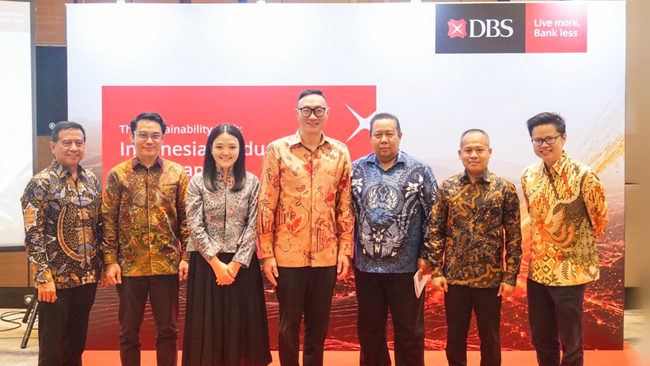
DBS Indonesia Research: Sustainability Becomes a Corporate Competitiveness Agenda
In recent years, sustainability has often been viewed as a compliance agenda, involving Environment, Social, and Governance (ESG) reporting or meeting regulatory expectations. However, amidst increasing geopolitical uncertainty, climate change, technological transformation, and shifts in global supply chains, sustainability now holds a far more strategic meaning for corporations.
The question becoming increasingly relevant for decision-makers is no longer whether sustainability is important, but how these changes will affect competitiveness, investment direction, and long-term corporate growth strategies. This is the focus of the latest research from Bank DBS Indonesia, titled ‘The Sustainability Shift: Indonesia’s Industrial Landscape in Five Key Sectors, Opportunities and Risks’.
Through an examination of five strategic sectors in Indonesia, this report demonstrates that sustainability is evolving from an environmental agenda into a component of business resilience strategy, industrial competitiveness, and long-term value creation. Amidst this complexity, many corporations are still in the stage of determining their ESG direction.
Bank DBS Indonesia serves as a trusted partner with a recognised international track record in sustainable finance. The bank also provides insight-based guidance and an understanding of business needs so that corporations can make decisions that are more precise, impactful, and sustainable, both for business continuity and the environment.
When Sustainability Becomes a Decisive Factor in Competitiveness
Changes in the global economic landscape are driving companies to consider sustainability in a broader context. Energy resilience is becoming increasingly vital amidst energy price volatility and geopolitical uncertainty. Digital infrastructure is becoming the new foundation for economic growth.
Supply chain resilience has become a primary concern following various global disruptions in recent years. Meanwhile, demands regarding traceability, transparency, and sustainability standards are increasingly influencing market access and investment decisions.
DBS Indonesia’s research finds that sustainability is now closely linked to three main agendas that will determine corporate competitiveness in the coming decade: economic and operational resilience, industrial competitiveness and market access, and resilience against climate risks and supply chain disruptions.
William Simadiputra, Head of Research at PT Bank DBS Indonesia, noted that sustainability is no longer a separate agenda. It is increasingly becoming part of how companies manage risk, allocate capital, and capture new growth opportunities.
“Moving forward, the winners in every sector will not be those who are merely skilled at creating value or solely resistant to shocks, but those who can weave all three together: value, resilience, and sustainability,” he stated in a release on Tuesday.
Five Sectors, Five Paths of Transformation
While facing the same direction of change, each industry possesses different dynamics.
Energy: From Energy Transition to Energy Resilience
In the energy, renewables, and infrastructure sectors, sustainability is increasingly linked to national energy security. New electricity demand driven by electric vehicles, industrial downstreaming, data centres, artificial intelligence (AI), and household electrification is projected to drive Indonesia’s electricity consumption from approximately 300 TWh in 2024 to over 1,800 TWh by 2060.
According to William, this shift opens significant investment opportunities across various parts of the electrification ecosystem, ranging from solar energy, geothermal, battery energy storage systems (BESS), and power grid modernisation to industrial electrification.
Digital Infrastructure: AI Creates a New Investment Cycle
Indonesia is currently the largest digital economy in Southeast Asia, with an economic value estimated to reach USD 99 billion by 2025. Simultaneously, approximately 79% of Indonesian users are familiar with AI, which is further driving the need for cloud computing, cybersecurity, and data centres.
“For many companies, the question today is no longer just how to access connectivity, but how to prepare digital infrastructure capable of supporting an AI-based economic growth,” said William.
He noted that these conditions make green data centres, renewable-powered infrastructure, and efficient cooling technologies increasingly relevant investment areas in the coming years.
Healthcare: Supply Chain Resilience Becomes a Priority
In the healthcare and pharmaceutical sectors, the main challenge stems from the dependence on imports of Active Pharmaceutical Ingredients (API). Currently, about 90% of APIs are still imported, while the demand for healthcare services continues to rise alongside the increasing prevalence of chronic and non-communicable diseases.
“In this context, the issue of sustainability is no longer solely related to environmental aspects, but also concerns supply resilience, access to healthcare services, and the ability to build more resilient health systems,” he said.
Growth opportunities arise through selective API localisation, strengthening domestic manufacturing, diversifying suppliers, and developing specialist healthcare services that remain relatively limited in Indonesia.
Agribusiness: Productivity is Key
In the food and agribusiness sectors, the focus is shifting from expansion towards productivity and food security.
He cited the palm oil industry, where future growth will increasingly depend on increasing productivity, replanting, and the ability to meet global traceability standards. In the poultry sector, the Free Nutritious Meal (MBG) programme and the addition of Grand Grand Parent (GGP) breeding stock are creating projections for demand.
Source: jawawa.id (https://jawawa.id/newsitem/dbs-indonesia-research-sustainability-becomes-a-corporate-competitiveness-agenda-1790794319)
Originally published by cnbcindonesia.com (https://cnbcindonesia.com/news/20260930190932-4-772286/riset-dbs-indonesia-sustainability-jadi-agenda-daya-saing-korporasi), translated from Indonesian