
DBS Indonesia CEO Reveals 3 Main Challenges for RI Energy Companies
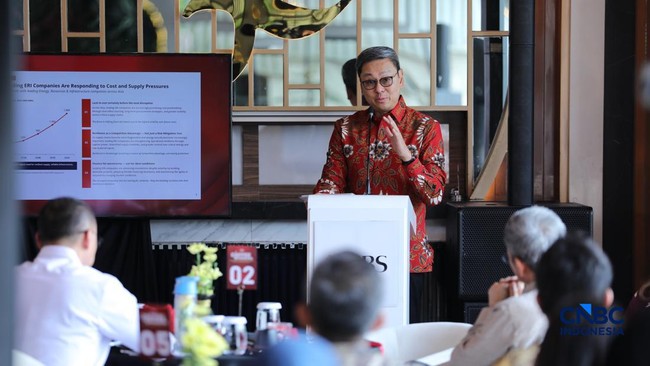
The President Director of Bank DBS Indonesia, Lim Chu Chong, stated that energy companies in Indonesia are facing three main challenges: natural resources, capital, and infrastructure.
He explained that geopolitical conditions are reshaping global trade flows. Conflicts, sanctions, and security concerns can rapidly affect access to energy, critical minerals, equipment, and key industrial supplies. “Issues that were once merely supply concerns can now directly impact business continuity and corporate growth,” he said during the CNBC Indonesia Coffee Morning event, ‘Managing Cost to Supply: Challenging Era for Energy, Resources, and Infrastructure Companies’, on Thursday (23/7/2026).
Another challenge is capital, as commodity volatility alters planning and investment decisions. “Energy prices, raw materials, shipping costs, and exchange rate movements can change very quickly, even faster than traditional budgeting cycles. This creates uncertainty across operations and capital projects,” Chu Chong noted.
Furthermore, the energy transition agenda is transforming the financing structure of the mining sector. This shift is driven by new regulations, carbon policies, technology, and the economic dynamics of fuels, forcing companies to rethink their long-term investment decisions while maintaining a balance between reliability, affordability, and sustainability.
Regarding infrastructure, he revealed that supply chains are becoming increasingly fragmented. Some companies are now pursuing supplier diversification and backup systems to maintain resilience. “Supply decisions can no longer be viewed purely from a procurement and operational perspective. These decisions now affect competitiveness, resilience, capital allocation, and ultimately, shareholder value,” he said.
To support the mining industry in Indonesia, Chu Chong affirmed that DBS Indonesia provides insights to help partners understand the market. “In an environment shaped by policy changes, commodity volatility, currency fluctuations, and supply chain disruptions, timely insight becomes a comparative advantage,” he explained.
DBS Indonesia also assists partners in allocating capital more effectively, whether by assessing project feasibility for bank funding, optimising capital structures, or developing transition roadmaps. Finally, the bank supports partners in executing corporate strategies and plans through working capital solutions, project financing, risk management, hedging strategies, and cross-border capabilities. “It is about navigating uncertainty, allocating capital wisely, and executing plans. This is where we believe our role at DBS Bank goes beyond merely being a provider of financing,” he concluded.