
Data transparency seen as key to cross-border music royalties
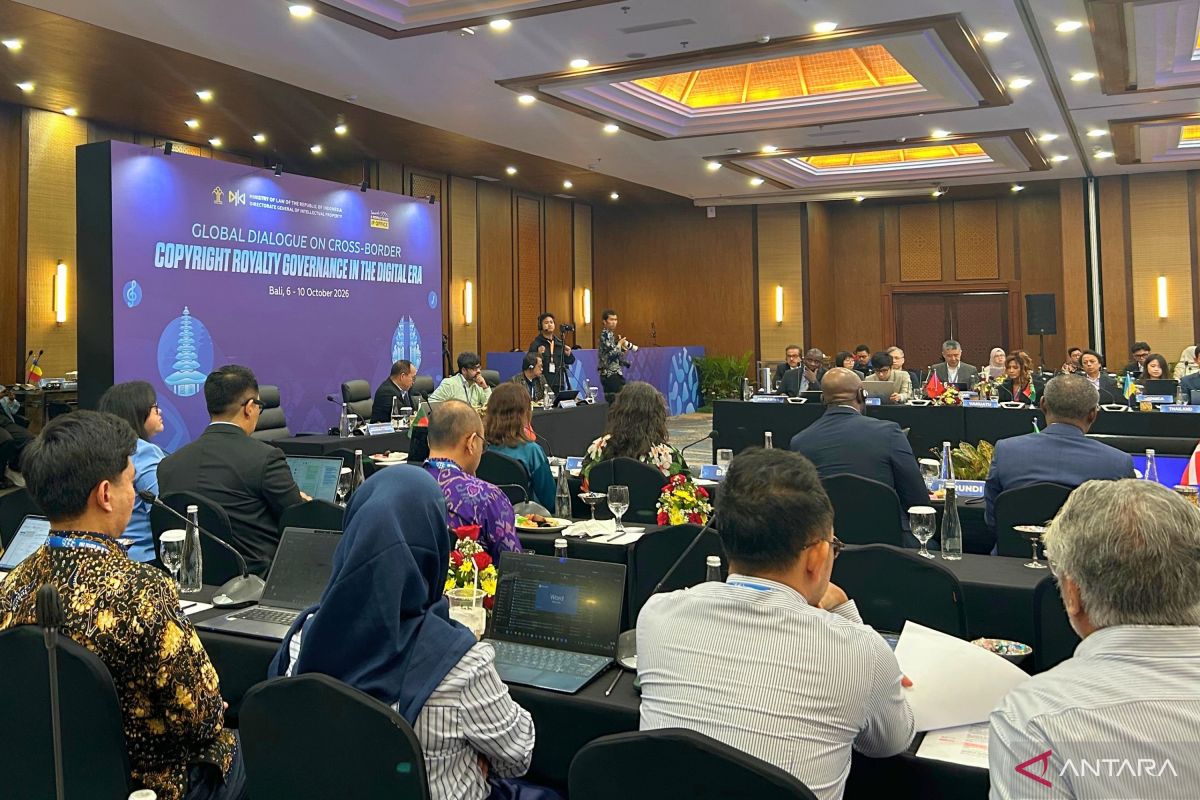
Badung, Bali (ANTARA) – Indonesia’s Deputy Permanent Representative to the United Nations, the World Trade Organisation and other international organisations in Geneva, Achsanul Habib, said data transparency was key to ensuring that the use of musical works and royalty flows could be accurately traced in a cross-border digital ecosystem.
Speaking at the Global Dialogue on Cross-Border Copyright Royalty Governance in the Digital Era in Badung Regency, Bali, on Thursday, he said information traceability was a major issue in ensuring royalty management could be monitored and held to account.
“Transparency needs to be viewed as a continuous chain, from system governance and the transfer of information across borders to the information received by auditors,” Habib said.
He said traceability at every stage was necessary to ensure information about the use of works and the management of royalties could be accurately verified. Transparency, he said, formed a continuous chain, from how systems were managed and information moved across borders to the information ultimately reaching auditors.
Habib said discussions on transparency should focus on the points where traceability might break down in cross-border royalty systems. The issue needed to be examined from technical, legal, institutional and operational perspectives, while identifying standards that could improve transparency between countries.
“Where is traceability still breaking down? What are the main obstacles – technical, legal, institutional or operational?” he said.
When information cannot be transferred consistently from one party to another, creators and rights holders may struggle to find out how and where their works are used and to track information about the royalties generated.
Nirmayla Syam of the World Intellectual Property Organisation (WIPO) said transparency was closely linked to interoperability and accountability.
She said information about the parties involved, the data they managed, and the revenue generated and retained along the chain was needed so that each party could be held accountable for managing that information and revenue.
“If we do not know who we are dealing with, what we are managing, and how much revenue is generated and retained, we cannot hold the parties accountable,” Nirmayla said.
She said this complexity was evident in the cross-border distribution of digital music. A single work could involve a creator, performer, record label, music publisher, aggregator and collective management organisation.
Each party, she said, held different information within the chain of use and management. If that information was not connected consistently, creators and rights holders could struggle to establish how and where their works were used.
Nirmayla said the experience of various initiatives showed that transparency issues were not solely about technology.
The Global Repertoire Database, for example, once involved major music publishers, collective management organisations and technology platforms, but was later discontinued because of issues including incentives for data holders to contribute, agreement on ownership and control of key catalogues, and data consistency from the time a work was created.
“Ultimately, as Indonesia’s proposal shows, this is a governance challenge,” she said.
The discussion then turned to finding governance solutions that could be applied internationally to improve transparency and interoperability. Past experience would inform consideration of potential solutions to be developed through international forums to strengthen cross-border cooperation.
Data transparency is an important part of protecting intellectual property in the music sector. Accurate records of rights and the use of works help creators and rights holders understand how their works are being used and obtain verifiable royalty information.
Stronger data governance and cross-border cooperation are needed to build a digital music ecosystem that is transparent, accountable and provides certainty for rights owners.