
Data Transparency Not Enough to Restore MSCI Trust, Says Analyst
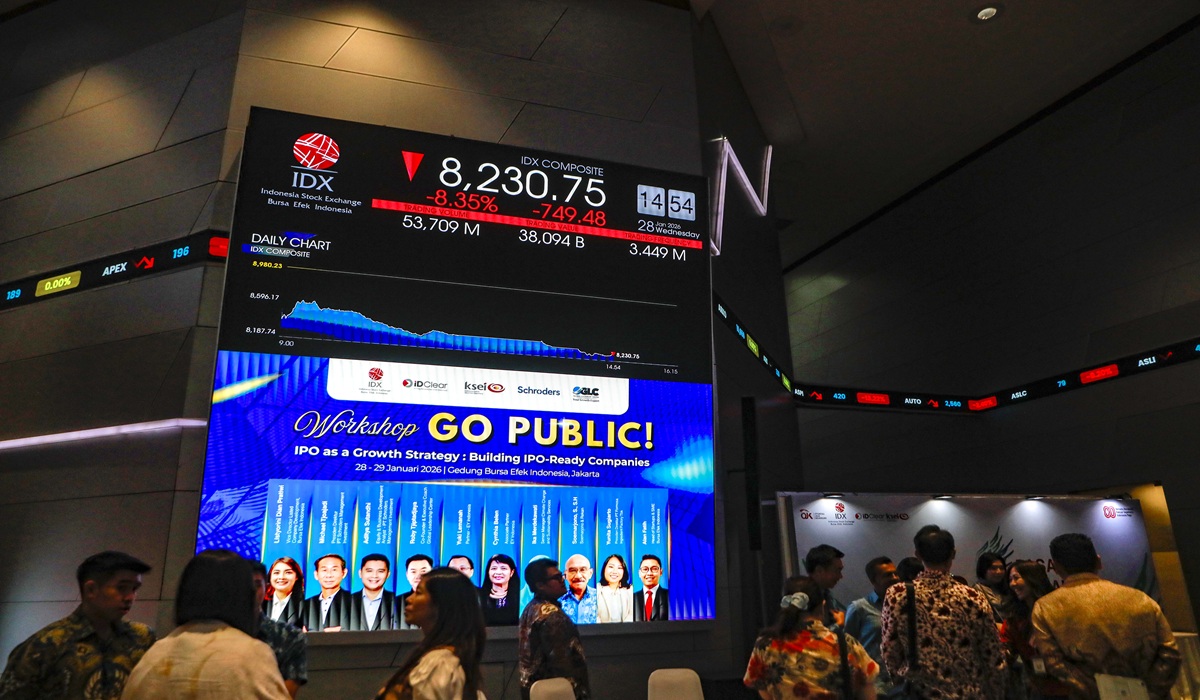
Capital market analyst and Founder of Traderindo.com Wahyu Laksono said that data transparency efforts by the Indonesia Stock Exchange (IDX) and the Financial Services Authority (OJK) show progress. However, fundamentally they are not yet sufficient to restore full confidence from global stock market index provider Morgan Stanley Capital International (MSCI) in the short term.
“Although the authorities have launched various reform ammunition, MSCI’s decision to maintain the freeze policy (freezing the addition of new constituents and adjustments to the Foreign Inclusion Factor/FIF) indicates that global markets still need proof of execution consistency, not just regulations on paper,” Wahyu said when contacted on Tuesday (11/8).
He outlined the progress that has been achieved, including the IDX together with OJK and KSEI proving responsive to criticism of share ownership opacity and coordinated trading. Several concrete steps that deserve appreciation include the disclosure of ownership data (>1%).
Then the public share ownership reporting threshold was expanded to the 1% level (from previously only >5%). This provides more transparent visibility into ultimate beneficial ownership.
Furthermore, the High Shareholding Concentration (HSC) framework, namely special reporting and monitoring of shares with high ownership concentration to mitigate the risk of price manipulation or artificial liquidity.
He said that no less important is the increase in the minimum free float limit, namely gradually raising the portion of listed companies towards 15% to ensure real market liquidity. Although the direction of reform is correct, Wahyu said, several crucial gaps remain the reason MSCI is being cautious. First, the assessment of information flow is still weak.
“In the accessibility review, Indonesia’s information flow indicator was downgraded from positive to negative. Global institutional investors still complain about the difficulty of independently confirming the number of shares that are truly freely floating,” he explained.
Second, testing effectiveness and the supervision period (implementation time). In this case, MSCI extended the monitoring period until the follow-up review (November 2026).
“MSCI needs a track record of consistency in implementing the new rules to ensure there are no loopholes exploited by coordinated shareholder groups,” Wahyu said.
Third, the risk of a frontier market downgrade. He said the retention of the freeze status is a firm signal from MSCI that the threat of a downgrade to Frontier Market can only be cancelled if the reform of ownership structure and market integrity proves permanently effective.
According to him, the implications of the MSCI review dynamics and the exchange’s transparency efforts for investors and the capital market in general can be broken down into several main points.
First, he said, foreign capital flows (passive inflows) remain held back. He explained that MSCI’s freeze policy restrains the potential entry of new foreign funds, particularly from institutional investors based on passive funds that replicate the MSCI Index.
“Without the addition of new shares or an increase in the Foreign Inclusion Factor weighting, the Indonesian stock market loses one of the short-term catalysts for driving capital inflows,” he explained.
Second, he continued, increased volatility in large-cap stocks. Large-capitalisation stocks that have concentrated ownership proportions or free float transparency issues are at risk of experiencing selling pressure or valuation re-rating.
“Every time the MSCI review period approaches, uncertainty regarding individual stock weight adjustments often triggers speculative responses that increase price volatility,” he said.
Third, rotation of investor strategy towards high transparency. Wahyu said more conservative domestic and foreign institutional investors tend to shift their portfolio portions to issuers that have clean public ownership, mature good corporate governance, and high real liquidity levels.
“Stocks with opaque shareholder structures or at risk of falling into the exchange’s special monitoring category are generally priced at a valuation discount,” he explained.
On the positive side, according to Wahyu, pressure from global institutions such as MSCI triggers faster regulatory reform from OJK and the IDX. In the long term, stricter data transparency standards will create a healthier, fairer investment climate protected from price manipulation practices, thereby increasing the competitiveness of the Indonesian capital market at the regional level.
“The IDX and OJK’s efforts are an initial foundation that is mandatory and adequate in terms of regulation, but not yet sufficient in terms of proof (execution track record),” he said.
“In order for the freeze status to be fully lifted and Indonesia’s weight to recover, the IDX needs to ensure the effectiveness of HSC rule enforcement, consistency of beneficial ownership disclosure, and ensure there is no free float liquidity manipulation in the field. Investors are advised to remain selective on stocks with strong fundamentals and independently clean public ownership structures,” he concluded.