
Data governance deemed important for sustainable food security
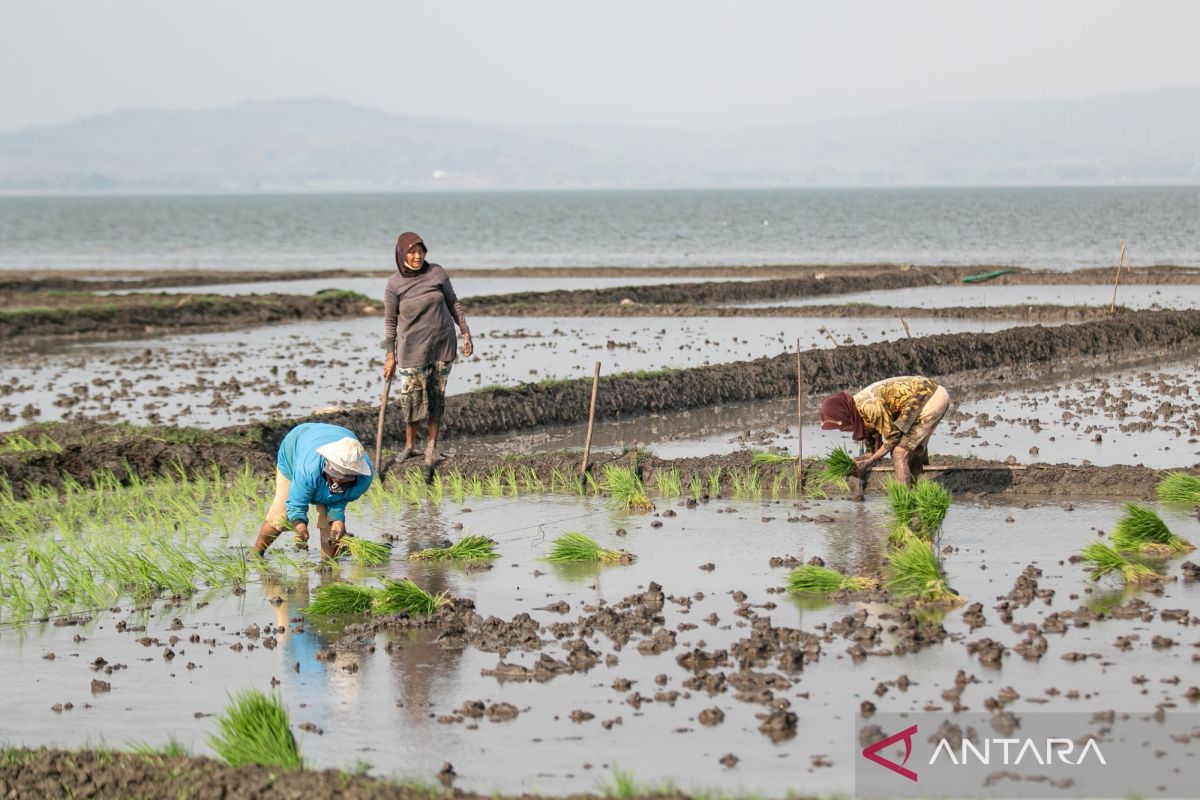
Lead Researcher of the 2024-2026 Koneksi project at the UGM Faculty of Engineering, Bambang Hari Wibisono, has assessed that the protection of productive agricultural land needs to be supported by more participatory data governance in order to answer the challenges of the times, from urbanisation and land conversion to ever-increasing food needs.
“If the public is only asked to update data without receiving clear benefits, participation will be difficult to sustain. Therefore, data needs to provide real benefits for farmers so that they are encouraged to continue contributing,” said Bambang in his statement in Jakarta on Friday.
He stated that a top-down or centralised policy approach will hinder community involvement in efforts to maintain food sustainability in Indonesia.
This emerged in the session “Cultivating the Future: Digital Governance for Sustainable Food Systems” at CIPS DigiWeek 2026, which brought together academics, government, and actors in the agricultural and food sector to discuss the role of digital governance in developing food systems.
According to him, the results of a collaborative Indonesia-Australia study found a number of challenges in protecting agricultural land, including minimal community involvement.
The research also tested a participatory mapping approach that directly involves farmers and residents in updating data.
The results, he said, show that the community has the capacity to provide information that supports the protection of agricultural land.
According to Bambang, community involvement is important because top-down land protection policies often do not fully reflect conditions and needs at the local level.
Meanwhile, University of Melbourne lecturer Serene Ho added that Indonesia and Australia are both witnessing how urbanisation and infrastructure development are putting pressure on productive agricultural land.
According to her, in both countries, highly productive land is often threatened with conversion because it is located in areas adjacent to economic growth centres.
For this reason, agricultural land must be protected by building data governance and institutions capable of bridging the needs of policy-making at the national level with the reality at the local level.
In line with this, HARA CEO Firnando Sirait emphasised that digital transformation in the agricultural sector is not merely about changing manual processes into digital ones.
“Digitalisation is not just about moving forms to a digital platform, but ensuring that data governance runs well, from who collects the data, when it is updated, to how the data is used,” said Firnando.