
Data Centres Key to Economic Growth, Airlangga Reveals USD20 Billion Investment Pipeline
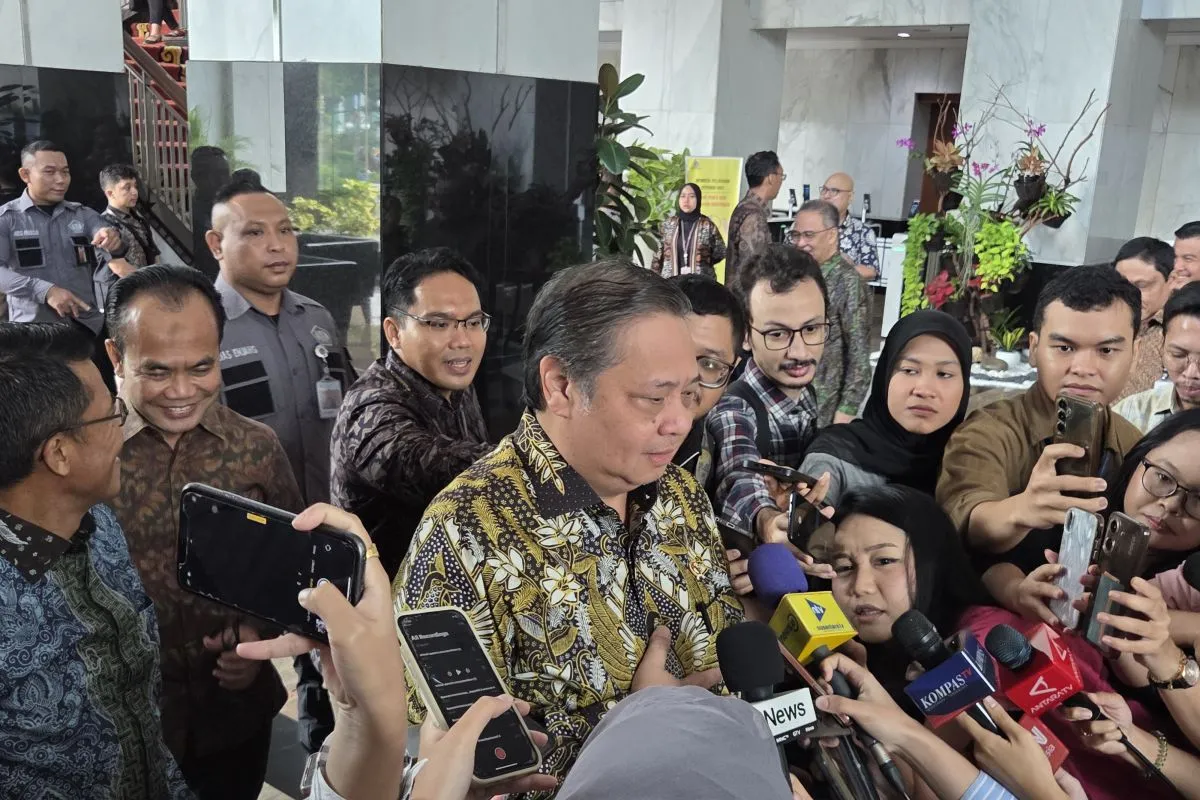
Coordinating Minister for Economic Affairs Airlangga Hartarto has revealed that a number of global investors are interested in building data centres in Indonesia with a total capacity of 1.3 gigawatts (GW). The incoming investment is estimated to reach USD15 billion to USD20 billion, driven by the increasing need for digital infrastructure to support the development of artificial intelligence (AI). “Currently, around 580 MW is already operational. Then, if we add approximately 1.3 GW more, the investment in the pipeline is around USD15-20 billion,” Airlangga said in Jakarta on Friday (10/7/2026). According to Airlangga, one prospective investor is the American technology company Nvidia, which will partner with an Australian firm. Additionally, PT Telkom Indonesia will also invest, while several global technology companies, or Big Tech, are preparing to expand their data centre capacity in Karawang. “In Karawang, almost all Big Tech companies will develop data centre expansions because data centres are now key to AI, which relies on quantum computing,” he said. Airlangga stressed that data centre development is one of the government’s main strategies to boost national economic growth above 8%. He noted that the digital economy and AI will become new engines of growth for Indonesia in the coming years. “Indonesia wants to grow more than 8%, and one of the levers is the digital economy. The key is AI, and AI will exist if the data centre infrastructure is good,” he said. He explained that Indonesia has several advantages to become a regional data centre hub, including land availability, competitive energy prices, and diverse energy sources such as geothermal, solar, and hydropower. The government is also continuing to strengthen electricity infrastructure to guarantee energy supply for the data centre industry. Beyond building digital infrastructure, the government is also preparing human resource development as the foundation for the AI and semiconductor industries. Airlangga affirmed that the success of digital transformation is determined not only by physical investment but also by the quality of national talent. The government has established a partnership with British semiconductor company Arm Ltd. to strengthen the upstream digital industry through chip design development. Arm is also one of Nvidia’s strategic partners in semiconductor technology development. Through this collaboration, the government and Danantara Indonesia are targeting the development of 15,000 semiconductor talents within the next three to five years. The programme is expected to produce a generation of Indonesian engineers capable of competing in the AI, Internet of Things (IoT), autonomous vehicle, and quantum computing industries. “This truly requires new human resources. We have partnered with Arm. We are starting from the most upstream side so that it will later strengthen the development of the national digital industry. The key is human resources,” Airlangga said. At the regional level, the government is also discussing data centre development with Singapore through the Singapore-Johor-Riau cooperation area. This initiative is expected to strengthen the ASEAN digital supply chain while positioning Indonesia as one of the largest data centre hubs in the region. “We are discussing how to synergise Singapore-Johor-Riau to become a data centre hub. This is very strategic,” Airlangga said. He noted that the development of the Batam-Bintan-Karimun (BBK) area, Nongsa Digital Park, and the Kendal Industrial Estate are part of this strategy. According to him, the industrial estate in Kendal is nearly at full capacity and will be expanded by approximately 1,000 hectares, while Nongsa Digital Park in Batam is also preparing for expansion. Airlangga assessed that the digital sector has become a new source of economic growth that is relatively unaffected by geopolitical turmoil or war. Therefore, various countries, including the United States, Europe, and ASEAN nations, are beginning to place digitalisation and semiconductors as top priorities for economic cooperation. The government is also strengthening regional cooperation through the ASEAN Digital Economic Framework Agreement (DEFA), which is targeted to be signed at the upcoming ASEAN Summit. The implementation of DEFA is believed to increase the region’s digital economic value while strengthening Indonesia’s position as the centre of the ASEAN digital economy. “We must maintain this momentum. Among other ASEAN countries, I can say Indonesia is more prepared. Therefore, the development of digital talent, data centres, and the semiconductor industry must continue to be encouraged so that Indonesia does not fall behind in the global digital economy competition,” Airlangga said.