
Data Centres Have Already Brought Disaster to Areas Near Indonesia, Residents' Fate Is Bleak
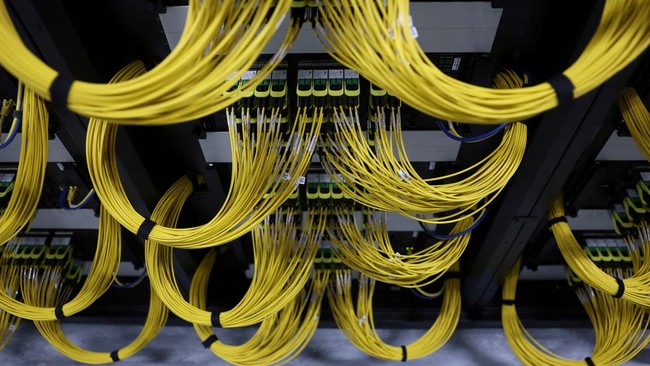
The artificial intelligence (AI) industry boom has once again triggered environmental alarm bells. Australian data centre giant NextDC has just reported an increasingly worrying surge in water and electricity consumption, as demand for computing capacity skyrockets in pursuit of massive profits.
According to financial reports for the period ending June 2026, NextDC’s water usage effectiveness (WUE) ratio jumped sharply from 2.25 to 2.40 litres per kilowatt-hour (kWh). A similar trend occurred in its power usage effectiveness (PUE), a measure of how much electricity a data centre draws for cooling and operations.
NextDC’s PUE continued to climb from 1.44 to 1.49. More concerning, both resource-waste metrics have deteriorated consecutively over the past three years.
Amid its business rivalry with AirTrunk and CDC, NextDC has argued that the increase was caused by expansion projects and technical issues such as meter anomalies and leaks. However, such operational excuses have not necessarily eased public concerns.
For policymakers and the wider public, these figures serve as tangible evidence of the serious threat that data centre megaprojects pose to the availability of clean water supplies and the stability of local electricity grids. Ultimately, it is the public who will bear the harm.
This pressure has led various governments and cities around the world to take firm stances, ranging from freezing, restricting, to outright banning new data centre construction to prevent energy crises and water scarcity.
The Canberra government itself is now drafting much stricter national regulations to curb these environmental impacts, including requiring every data centre to build its own independent renewable energy generation rather than continuously drawing electricity from the public grid.
Ironically, while the burden on natural resources becomes increasingly uncontrollable, NextDC’s business performance has soared. The company successfully posted a net profit of A$82.1 million (Rp1 trillion), reversing a loss from the previous year, with underlying EBITDA reaching A$248.8 million and boosting its share price by 3.3% in Friday afternoon trading.
Source: jawawa.id (https://jawawa.id/newsitem/data-centres-have-already-brought-disaster-to-areas-near-indonesia-residents-fate-is-bleak-1787903447)
Originally published by CNBC Indonesia (https://www.cnbcindonesia.com/tech/20260828111549-37-763057/data-center-sudah-bawa-petaka-di-wilayah-dekat-ri-nasib-warga-miris), translated from Indonesian