
Data Centre Projects Face Backlash and Suspensions in Indonesia, Malaysia and Thailand
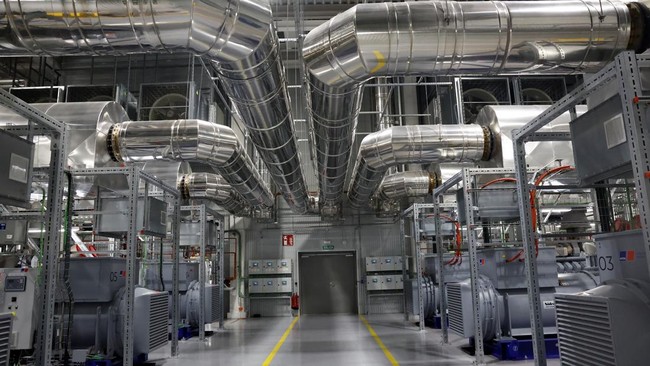
Jakarta — As Southeast Asia emerges as the world’s newest major data centre operations hub, a wave of protests and project suspensions has hit data centre developments in several countries in the region. One such delay has occurred in Indonesia.
Construction of BDX’s data centre in Jatiluhur, West Java, has officially been halted because the project had not secured an environmental impact assessment (AMDAL) or a building approval (PBG).
Soon afterwards, residents in the Nongsa area of Batam protested over a clean-water crisis that they said was possibly triggered by data centre construction in the area. Disruptions to the water supply have reportedly continued for months.
Similar action has been taken in Thailand. A total of 49 projects were halted and approval decisions for 117 projects were suspended in September 2026, following concerns about insufficient regulatory detail and monitoring systems.
Several projects in Thailand’s Eastern Economic Corridor have also faced protests from residents over mounting pressure on dwindling water reserves.
In Johor, Malaysia, residents protested outside the offices of China-based ZData Technologies last February. The demonstration was prompted by dust pollution from construction activity near residential areas and its impact on clean-water supplies.
Southeast Asia becomes the largest data centre market
Southeast Asia now accounts for the largest share of total data centre capacity under development in the Asia-Pacific region. Real estate firm Cushman & Wakefield says the region represents as much as 50 per cent of total capacity, with Malaysia and Thailand accounting for the largest portions.
Singapore was the leading data centre hub during the 2010s. However, it imposed a construction moratorium from 2019 to 2022 because data centres were considered highly intensive users of water and electricity.
Following the emergence of large language models (LLMs) and a surge in artificial intelligence (AI) use, developers began looking for new locations as alternatives to Singapore. Data centre capacity in Malaysia has since increased tenfold in three years to 1,110 MW in 2026, with a further 3,088 MW under construction or planned.
Indonesia is also following suit, with plans to develop 1,699 MW of data centre capacity in Greater Jakarta and establish Batam Island as a secondary hub. Microsoft is reportedly building five data centres in Indonesia as part of an investment worth US$1.7 billion.
Threats from electricity and water consumption
This rapid expansion has raised serious concerns about rising electricity consumption. Energy consultancy Wood Mackenzie estimates that data centres account for 24 per cent of Johor’s total electricity consumption, a figure projected to climb to 40 per cent by 2035.
“The rapid growth of data centre construction in Johor could create bottlenecks in the local electricity grid, while increasing the need to upgrade transmission networks and add new power supply capacity,” Wood Mackenzie research analyst Alvin Tan said, according to The Guardian on Monday (9 November 2026).
Thailand’s Energy Minister Akanat Promphan has voiced similar concerns. He said data centres require enormous amounts of power, which is generated using expensive imported gas. To prepare for this huge demand, he stressed the need to establish a new category of electricity users subject to higher tariffs.
Alongside electricity, water scarcity is another critical issue, given the large volumes of water consumed by data centres.
Drought-prone Johor is estimated to need up to 675 million cubic metres of water per day for data centre operations. Research firm Tenggara Strategics says data centre water consumption in Indonesia also tends to be higher because many facilities are located in low-lying areas with hot and humid conditions.
Meanwhile, the Khlong Luang Reservoir in eastern Thailand, the main water source for the industrial area of the Eastern Economic Corridor—where data centre projects are concentrated—is becoming increasingly shallow and vulnerable.
“The Khlong Luang Reservoir in Chonburi, eastern Thailand, is a major pressure point. Although the reservoir is shallow and under severe strain, the authorities continue to channel water to the industrial area,” said Somnuck Jongmeewasin, research director at EEC Watch.
Source: jawawa.id (https://jawawa.id/newsitem/data-centre-projects-face-backlash-and-suspensions-in-indonesia-malaysia-and-thailand-1794207031)
Originally published by CNBC Indonesia (https://www.cnbcindonesia.com/tech/20261109115327-37-783492/ramai-ramai-tolak-data-center-proyek-disetop-di-ri-malaysia-thailand), translated from Indonesian