
Data Centre Policy in West Java Under Scrutiny, Paramadina Rector Warns: Do Not Repeat Past Mistakes
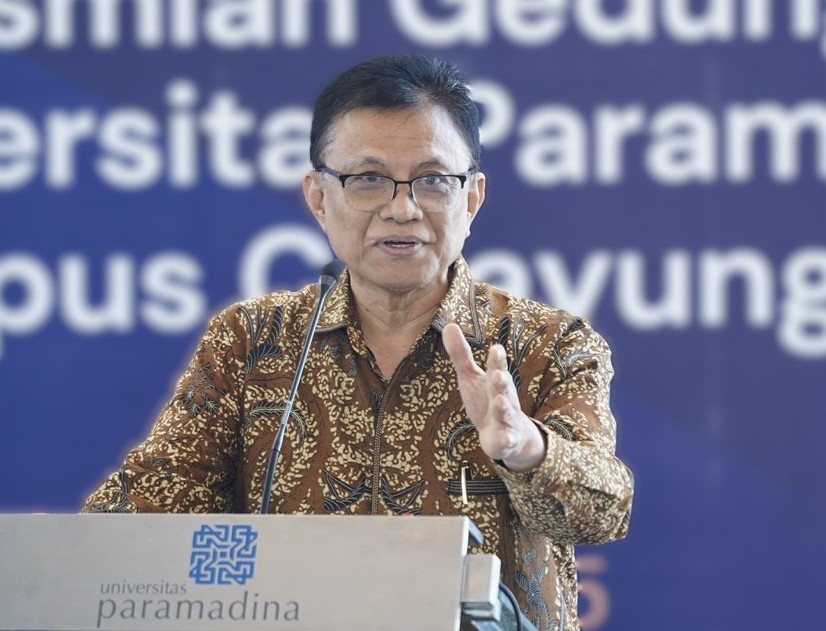
The investment policy for data centres in West Java has come under intense scrutiny. Senior Economist at the Institute for Development of Economics and Finance (Indef) and Rector of Paramadina University, Professor Didik J. Rachbini, has warned the government not to repeat past policy mistakes that caused Indonesia to lose its momentum in semiconductor industry investment.
“Indonesia is facing a massive investment opportunity. Several regions are targets for data centre investment, including Batam, West Java, Maduna, and Bali. We must not allow this opportunity to result in us falling into the same pit twice,” Didik stated in an official statement on Sunday.
Didik Rachbini revealed that the high level of investor interest demonstrates that Indonesia is increasingly recognised as a prime location for digital infrastructure development. The government itself has set an investment target for artificial intelligence (AI)-based data centres valued at IDR 360 trillion.
According to Professor Didik, Indonesia’s readiness is supported not only by its large digital market but also by its experience in operating data centre infrastructure. Currently, at least 182 data centres are operating in Indonesia, with 94 located in Jakarta and 16 in Batam.
“This means Indonesia already possesses the experience and capability to run increasingly sophisticated data centre technology operations,” he said.
Specifically for Batam, Didik noted that investment opportunities are estimated to reach US$15-20 billion, with a national capacity target of approximately 1.3 gigawatts. With regional economic growth around 7%, Batam has the potential to become a new economic growth hub based on data centre investment.
However, Didik highlighted issues in West Java. The construction of data centres in this region was unilaterally halted by the provincial government, citing violations of environmental regulations, water supply concerns, and other considerations. Such policies could send a negative signal to investors at a time when Indonesia urgently needs large-scale investment to drive economic growth.
“If ongoing investments are halted unilaterally, it serves as a heavy blow to investors. Investment certainty and comfort are at stake,” he asserted.
Didik Rachbini reminded that investment certainty must be a serious priority for both central and regional governments. Indonesia is at a critical momentum to capture data centre investments, especially as the demand for AI infrastructure and cloud computing rises rapidly.
He linked the current situation to Indonesia’s experience during the 1970s and 1980s. At that time, Indonesia served as a base for the semiconductor industry in Southeast Asia. However, policies restricting production automation led several global technology companies to move their investments to other countries, particularly Malaysia.
“In the 1980s, we made policy errors that caused semiconductor investment opportunities to vanish. We must not let the same mistake happen again,” Didik emphasised.
Didik Rachbini explained that several global technology firms, such as Fairchild Semiconductor, National Semiconductor, and Monsanto, once established chip assembly bases in Jakarta and Bandung. However, policy conflicts regarding production automation in 1985 caused a shift in government direction.
At that time, according to Didik, the government encouraged the use of manual labour and restricted automation in the name of job absorption. This policy ultimately failed to align with the needs of the semiconductor industry, which relies heavily on technology and automated production.
“High-tech investment certainly requires high-tech oriented policies. If the approach is to restrict automation, investors will seek more competitive locations,” he explained.
He added that investors subsequently shifted their production bases to Penang, Malaysia. As a result, Indonesia lost its momentum to develop the semiconductor industry, while Malaysia successfully strengthened its position as one of the world’s leading chip industry hubs.
Professor Didik noted that Malaysia now controls approximately 13% of the global market share for chip testing, assembly, and packaging activities. This situation serves as a vital lesson for Indonesia in facing current technological investment competition.
“The opportunities lost in the past must not be repeated. Investment competition today is much more intense, and investors have many country options to choose from,” he said.
He emphasised that the central government must immediately anticipate potential obstacles from regional governments that could disrupt the investment climate. Regional policies must align with the national agenda to attract investment and strengthen the digital economy.
“It starts with regional governments. Regions must become investment-friendly, rather than becoming a source of uncertainty for investors,” he said.
Didik revealed that Batam is one of the regions with the greatest potential to seize this momentum. Batam’s proximity to Singapore is a significant advantage, especially as Singapore begins to limit new data centre developments due to land and energy constraints.
“Batam can seize this opportunity and become a major data centre hub in the region,” he noted.
Didik stated that the opportunity is even greater because Indonesia is one of the largest digital economies in ASEAN. Indonesia has over 200 million internet users, and investment from global technology companies continues to flow in to strengthen cloud computing and AI infrastructure.