
Data Centre Investment Reaches Billions of Dollars: The Benefits for Indonesia
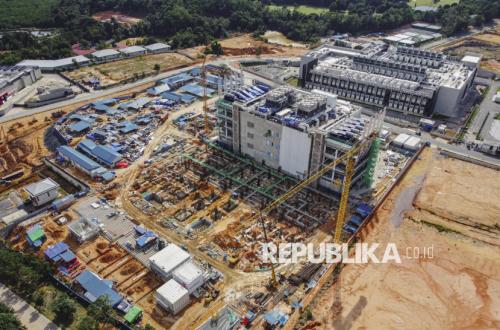
In the era of artificial intelligence (AI), data centres are no longer merely places to store data. They are infrastructure that determines a country’s ability to process data, develop technology and capture value from the digital economy. Investments worth billions of dollars are flowing into data centre construction in countries around the world, including Indonesia. Data centres provide the capacity not only to use technology, but also to develop it, produce it and capture its economic value.
Indonesia is one of the region’s largest digital markets. The country’s digital economy is estimated to be worth close to US$100 billion in 2025, the largest in Southeast Asia. But a large market needs infrastructure to support it. The more digital activity expands and AI develops, the greater the demand for computing capacity.
Coordinating Economic Affairs Minister Airlangga Hartarto sees this relationship as part of the national economic growth agenda. “Indonesia wants to grow by more than 8 per cent, and one of the drivers is the digital economy. The key is, of course, AI, and AI is possible if its infrastructure, including data centres, is good,” Airlangga said.
From Data to Value
Deputy Minister of Communication and Digital Nezar Patria said strengthening AI infrastructure and computing capacity was crucial if Indonesia was not to remain merely a technology user. “We do not want to be just a market or a user. We want to secure a strategic position in the global AI industry value chain,” Nezar said.
His remarks are relevant because digital activity continues to generate vast quantities of data, from banking transactions, online shopping and digital services to business operations. But data does not automatically create value. It must be processed, stored and accessed through computing infrastructure. This is where data centres play a role.
This infrastructure enables cloud computing, financial technology (fintech), e-commerce, AI, cybersecurity, digital government services and a range of technology businesses to operate at scale. Its economic value can also be substantial. The government has recorded interest in an additional 1.3 GW of data centre investment in Indonesia, worth US$15–20 billion. In simple terms, every additional 100 MW represents around US$1.2–1.5 billion in investment.
The investment’s impact does not stop at building facilities. It generates demand for construction, energy, networks, technology, maintenance and skilled workers, while expanding economic activity and the government’s revenue base. Chile offers an example of how data centres can drive wider economic growth. The Chilean government estimates that AWS’s investment of more than US$4 billion in three data centres will contribute around US$10 billion to gross domestic product (GDP) and support more than 7,000 full-time jobs each year. This illustrates that the benefits of data centres are not only about computing capacity, but also about the extent to which investment creates jobs, mobilises supply chains and builds a country’s digital capabilities.
Computing needs are now growing as AI advances. While the first phase of digitalisation focused on connectivity, the next requires large-scale computing, GPUs, cloud computing, networks, electricity and data centres. A large digital market does not automatically make Indonesia a winner; what matters is its ability to develop technology and turn data into higher-value products and services.
Competition to build this capacity is becoming increasingly apparent in Southeast Asia. World Bank data for the first half of 2025 put Indonesia’s total data centre capacity at around 1.17 gigawatts (GW), compared with 3.17 GW in Malaysia and 1.25 GW in Singapore. CSIS Indonesia estimates that Indonesia’s capacity could grow by 16.8 per cent a year through to 2029, reaching around 1.41 GW.
However, this expansion must also take energy and water into account. Data centres require large amounts of electricity and, depending on the cooling technology used, may also need water. “Energy and artificial intelligence (AI) technology will be important pillars of development. AI itself requires a very large amount of energy to operate,” said ITB researcher Professor Reini D. Wirahadikusumah.
Ultimately, Indonesia has strong foundations for developing its AI capacity: a large digital market, growing computing needs and potential energy resources. The challenge is to turn these advantages into efficient and sustainable AI capacity, so that incoming investment does more than build data centres and creates greater value for the Indonesian economy.
Source: jawawa.id (https://jawawa.id/newsitem/data-centre-investment-reaches-billions-of-dollars-the-benefits-for-indonesia-1791903156)
Originally published by Republika (https://ekonomi.republika.co.id/berita/tmu81i490/investasi-data-center-tembus-miliaran-dolar-ini-manfaatnya-bagi-indonesia), translated from Indonesian