
Dasco Receives Labour Representatives in DPR, Receives Complaints on National Wage System
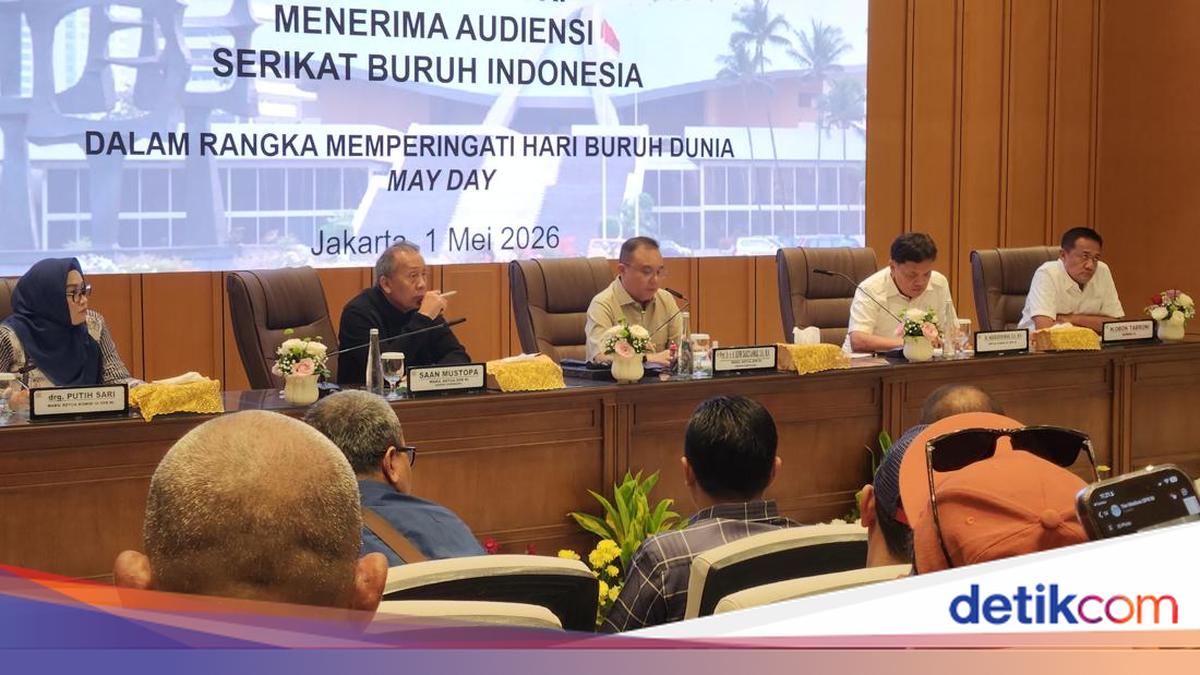
The meeting took place in the Abdul Muis room at the DPR RI building, Jakarta, on Friday (1/5/2026). Attendees included Deputy Speaker of the DPR RI Saan Mustopa, Chairman of Commission III of the DPR RI Habiburokhman, Deputy Chairman of Commission IX of the DPR RI Putih Sari, and member of Commission IX Obon Tabroni.
Representatives from the Gerakan Buruh Bersama Rakyat (Gebrak) alliance stated that one of the aspirations conveyed was regarding the Job Creation Law, calling for it to be drafted in support of workers. They requested to be involved in the discussions on the law.
“We ask the DPR to immediately discuss the Manpower Law that is pro-worker by involving elements from labour unions,” said one of the Gebrak representatives, Sunarno, during the meeting.
In addition, the workers called for improvements to the wage system in Indonesia. One issue highlighted was the significant difference in labour wage standards across various regions in Indonesia.
“So the wage in one region compared to another is quite a large gap. For example, the lowest UMK of Rp 2.3 million in some areas of Central Java, West Java, and East Java compared to Rp 5.9 or at least Rp 6 million perhaps in some regions. And the difference is quite far,” he said.
“Well, the government or the state should be able to create a concept or carry out a reform of the national wage system towards a decent national wage,” he added.
Furthermore, they highlighted online drivers, both two-wheeled and four-wheeled, whose status they believe should be elevated to permanent workers. This is because online drivers are often treated arbitrarily by the applicators.
“In general, we in the Labour Union agree on how the government establishes their status as workers. So that they are not partners. Because if they are partners, as we know so far, it is still unilaterally determined by the applicator side,” he said.