
Dasco Praises BI for Strengthening Rupiah and Reducing Indonesia's Dependence on US Dollar
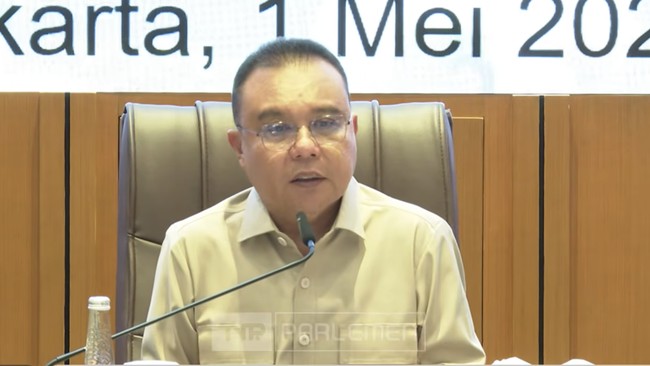
Deputy Speaker of the Indonesian House of Representatives (DPR RI), Sufmi Dasco Ahmad, has expressed appreciation for Bank Indonesia (BI) over its measures to strengthen the rupiah’s position in international transactions through cooperation with the central banks of China and Hong Kong. According to him, the policy represents a serious effort to reduce Indonesia’s dependence on the United States dollar in cross-border trade and financial transactions. The appreciation was conveyed following the signing of a Bilateral Currency Swap Arrangement (BCSA) between Bank Indonesia Governor Perry Warjiyo and People’s Bank of China (PBOC) Governor Pan Gongsheng in Shanghai, China, on 11 June 2026. As part of the cooperation, a Memorandum of Understanding (MoU) was also signed regarding the expansion of Local Currency Transaction (LCT) implementation, which now includes Hong Kong. The signing was conducted together with Hong Kong Monetary Authority (HKMA) Chief Executive Eddie Yue. According to Dasco, the agreement opens up opportunities for transactions between Indonesia, Mainland China, and Hong Kong using their respective local currencies, namely the rupiah and renminbi, without having to depend on the US dollar. In addition to expanding the use of local currencies, both countries also agreed on the implementation of cross-border QRIS. With this system, transactions between Indonesian and Chinese businesses can be conducted directly using the inter-country connected QRIS payment system. The system is currently said to involve 191 payment service providers in China and 24 providers in Indonesia that are mutually integrated. Dasco assessed that BI’s move will have a significant impact on trade between the two countries, whose value continues to rise. In 2025, total export-import transactions between Indonesia and China were recorded at US$154.5 billion. With the latest agreement in effect, trade transactions between the two countries have the potential to increasingly use the Local Currency Transaction (LCT) scheme, namely the rupiah and renminbi, thereby reducing the need for US dollars. He explained that the broader use of local currencies in international trade can strengthen the rupiah’s position while reducing risks arising from US dollar fluctuations in trade and investment transactions. The cooperation between BI, the People’s Bank of China, and the Hong Kong Monetary Authority is also considered a strategic step to deepen Indonesia’s economic and financial integration with its main trading partners in the Asian region.