
Dasco: No More Power Outages
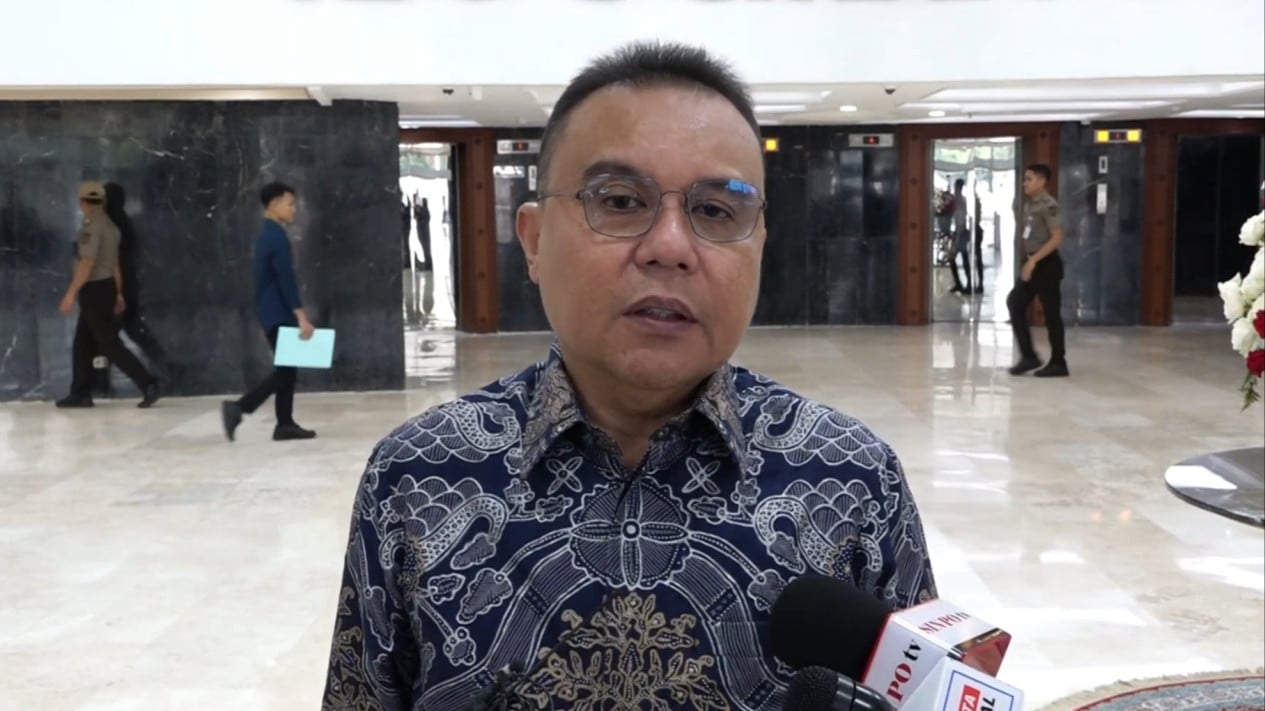
Deputy Speaker of the House of Representatives, Sufmi Dasco Ahmad, has assured that there will be no further power outages in various regions. He provided this certainty after a meeting with the Ministry of Energy and Mineral Resources, PLN, the State Intelligence Agency, and the Attorney General’s Office on Monday, 22 June 2026. “We have broken everything down, so God willing, the power outages will not happen again in the coming weeks,” Dasco said during the KSPI national meeting in Central Jakarta on Tuesday, 23 June 2026.
The Gerindra Party politician stated that Indonesia’s current situation is heavily influenced by global developments, including the war between the United States and Iran. He explained that the government is continuously striving to maintain the confidence of foreign investors to prevent negative impacts on the public and avoid mass layoffs. “In our country, a new war has begun. A war against layoffs caused by the effects of the global war that has spread to our nation. A war on how we can work together to maintain the trust of foreign investors,” Dasco said.
Nevertheless, he noted that certain parties are exploiting this situation to create a narrative that Indonesia is not in a stable condition. In reality, he said, based on available data, Indonesia’s fiscal condition and economic fundamentals remain very strong in facing global conditions. “But it is being stirred up to make it seem as though our country is experiencing a moment of collapse, when that is not the case,” he stated.
Previously, Minister of Energy and Mineral Resources Bahlil Lahadalia revealed three factors causing the power outages in several areas of Java. This was disclosed by Bahlil after meeting President Prabowo Subianto at the Presidential Palace Complex in Central Jakarta on Monday, 22 June 2026. “We also discussed the sustainability of service stability, PLN’s service to the public, especially regarding electricity,” Bahlil told reporters. “And earlier, together with the PLN CEO, we dissected the issue; there are three problems,” he continued. The first, Bahlil said, was due to constraints at gas-fired power plants, though he did not elaborate further on the specific issues concerning the PLTG.