
Dasco: House Commission II Ready to Discuss Election Law Revision, Open to Public Input
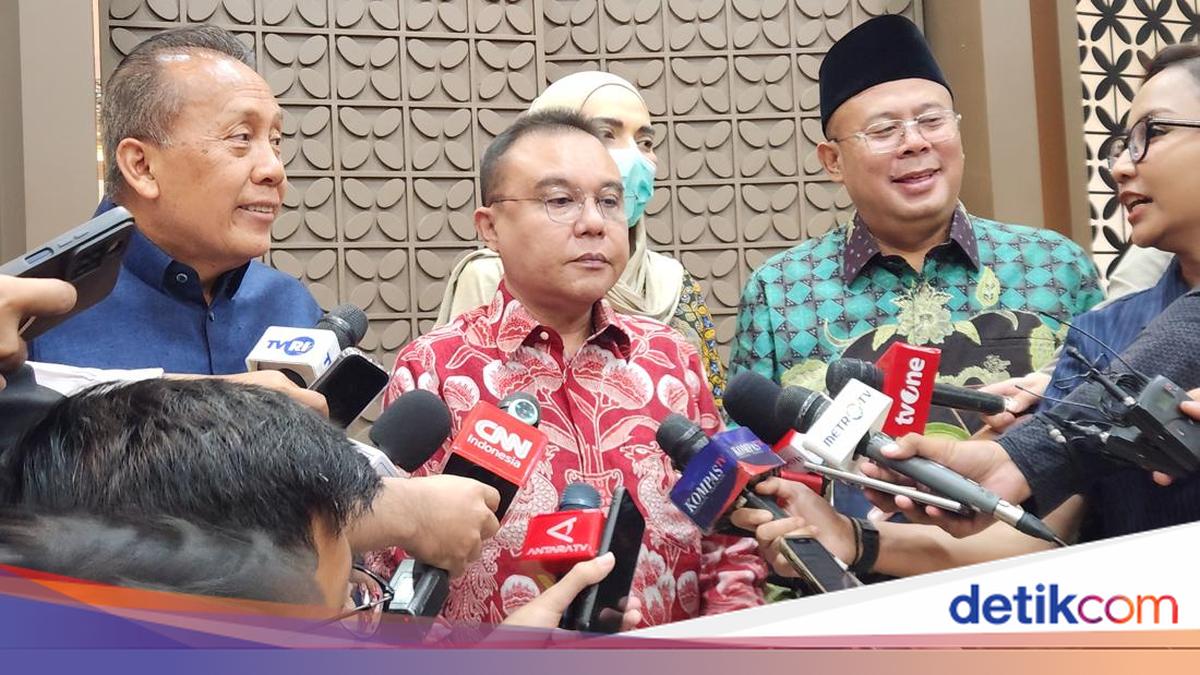
Deputy Speaker of the House of Representatives, Sufmi Dasco Ahmad, stated that House Commission II is ready to discuss the revision of the Election Law. Dasco noted that all party representatives within Commission II are prepared to proceed with the discussions.
“I have just met with the leadership of Commission II, and they stated that for the Election Law revision, all parties within Commission II are ready to discuss changes, covering both the academic papers and the draft of the articles, clause by clause,” Dasco said at the parliamentary complex in Senayan, Jakarta, on Wednesday (3/6/2026).
Dasco emphasised that the House will listen to public input during the revision process, noting its importance in enriching the discussions. “In the near future, the leadership of Commission II will organise public participation to receive more input to enrich the elements that require revision,” he added.
He further stated that the revision of the Election Law would be conducted with caution, as the House wishes to avoid a situation where the passed law is immediately challenged and overturned by the Constitutional Court. “I have repeatedly stated that we will be more careful, so that this time it is not subsequently challenged and granted by the MK (Constitutional Court),” he said.
The Speaker of the House, Puan Maharani, previously mentioned that the revision of the Election Law had been discussed both formally and informally with various party chairpersons. She noted that the timeline for the discussions is becoming increasingly tight. “From previous sessions regarding the Election Bill, all parties have conducted discussions, as I mentioned, both informally and formally with the chairpersons and all colleagues, to facilitate talks regarding this matter,” Puan said following a plenary session at the DPR RI in Jakarta on Tuesday (12/5).
For context, several Constitutional Court rulings regarding the Election Law are slated for discussion during the revision process. These include changes to the parliamentary threshold, the removal of the presidential nomination threshold, and the mandatory requirement for a minimum 30 per cent quota for female legislative candidates.