
Darma Turns Old Bicycles into Electric Bikes, Cutting Costs by up to 95%
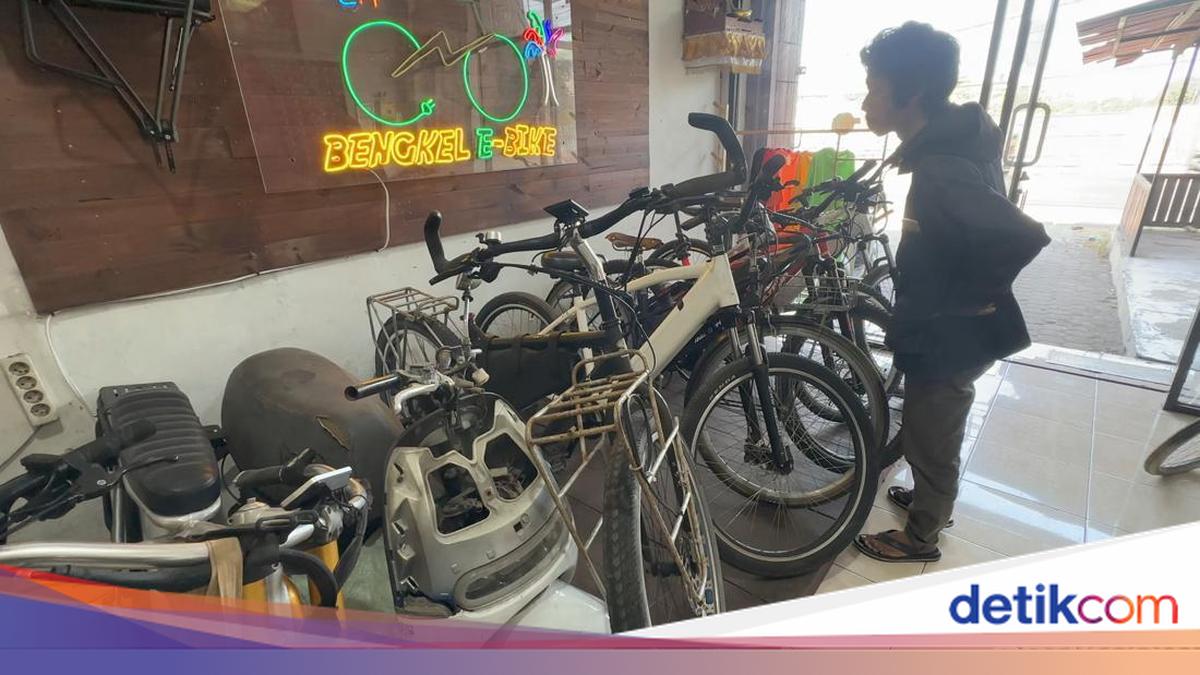
Old bicycles can be converted into electric vehicles for a starting price of Rp 7.6 million. Dharmawan Kusna H is pursuing this opportunity through Bengkel E-Bike in Darmasaba, Abiansemal, Badung, offering electric bicycles that he says can cut operating costs by up to 95% compared with petrol motorbikes.
Darma’s business grew out of his hobby of tinkering with bicycles, which began in 2009. He tested electric and petrol engines before deciding to focus on developing electric bikes.
“I didn’t start this electric-bike business all at once. It began with my hobby in 2009. I liked tinkering with bicycles and tried fitting them with electric and petrol engines to compare which was more durable and safe,” Darma told detikBali on Sunday (18 October 2026).
The conversion business began to develop during the COVID-19 pandemic in 2019-2020. As more people took up cycling, Darma started receiving requests to fit electric motors and promoted his services on social media.
“When COVID came in 2019-2020, more of my friends started cycling and I made electric bikes for them. I casually advertised on social media at first, and it turned out there was quite a lot of interest, which continues to this day,” he said.
Darma considers electric bikes more practical to maintain because they do not require engine oil changes. Owners only need to clean the components and replace grease in certain parts.
“I find the electric-bike mechanism much simpler and lower-maintenance. There’s no need to change oil; it just needs cleaning and perhaps some grease replacement. Maintenance is much easier because you just replace the battery and the bike runs smoothly,” Darma said.
Conversion costs start at Rp 7.6 million
Electric-bike conversions at Bengkel E-Bike start at Rp 7.6 million, depending on the required range. Available options cover distances of between 40 and 200 kilometres, depending on battery capacity.
The components installed include a drive motor, main wiring, controller, display, throttle and pedal-assist sensor. Most bicycles can be converted, except those with a thru-axle wheel system.
The work takes one to two days if the spokes and rims have already been assembled. If the process starts from scratch, including battery assembly, it can take five days to a week.
In terms of operating costs, electric bikes are said to be cheaper than petrol motorbikes. Darma puts the cost of using an electric bike at around Rp 1,000 per kilometre, while a motorbike costs Rp 20,000 per 100 kilometres, based on fuel consumption of one litre for every 48 kilometres.
“The minimum cost for installing an electric-bike system is around Rp 7.6 million. The price can be reduced, but that would mean a shorter range. Very cheap options are widely available on the market, but we don’t sell them because their quality is far below standard,” he said.
For exercise and improved mobility
Converted electric bikes are also used to support bicycle-tour businesses in Bali, helping tourists travel to attractions.
However, Darma said the fuel crisis had not automatically boosted sales. In his view, people still need to be informed about the benefits of electric bikes for transport and exercise.
“The fuel crisis does not immediately drive up sales. We still need to introduce people to how useful electric bikes can be for the wider public, both as a means of transport and as a way to exercise,” Darma said.
Besides hobbies and tourism, converted electric bikes are used to support the mobility of people with disabilities. Their hybrid system allows riders to pedal while receiving electric assistance.
“But it still preserves the experience of cycling, which feels different from an electric motorbike that only uses a throttle. Here, we combine electric power with our own effort, so we still get exercise,” Darma said.
Bengkel E-Bike uses compact, lightweight lithium-ion batteries. Darma said no customer had needed to replace a battery from the business’s beginnings during the pandemic through 2026.
Used customer batteries are also donated to the Sumba Sustainable initiative, which repurposes them as a source of lighting in remote areas.
“We don’t simply throw away battery waste; we donate it to Sumba Sustainable. They use the used batteries for lighting in remote villages that are not connected to electricity,” he said.
Darma hopes the government will encourage the use of bicycles and electric bikes to help reduce fuel queues, promote health and ease traffic congestion.
Source: jawawa.id (https://jawawa.id/newsitem/darma-turns-old-bicycles-into-electric-bikes-cutting-costs-by-up-to-95-1792324217)
Originally published by detikBali (https://www.detik.com/bali/bali-bungah/d-8712728/darma-sulap-sepeda-tua-jadi-sepeda-listrik-bisa-hemat-biaya-hingga-95), translated from Indonesian