
Dark Energy Proven to Continue Accelerating Cosmic Expansion
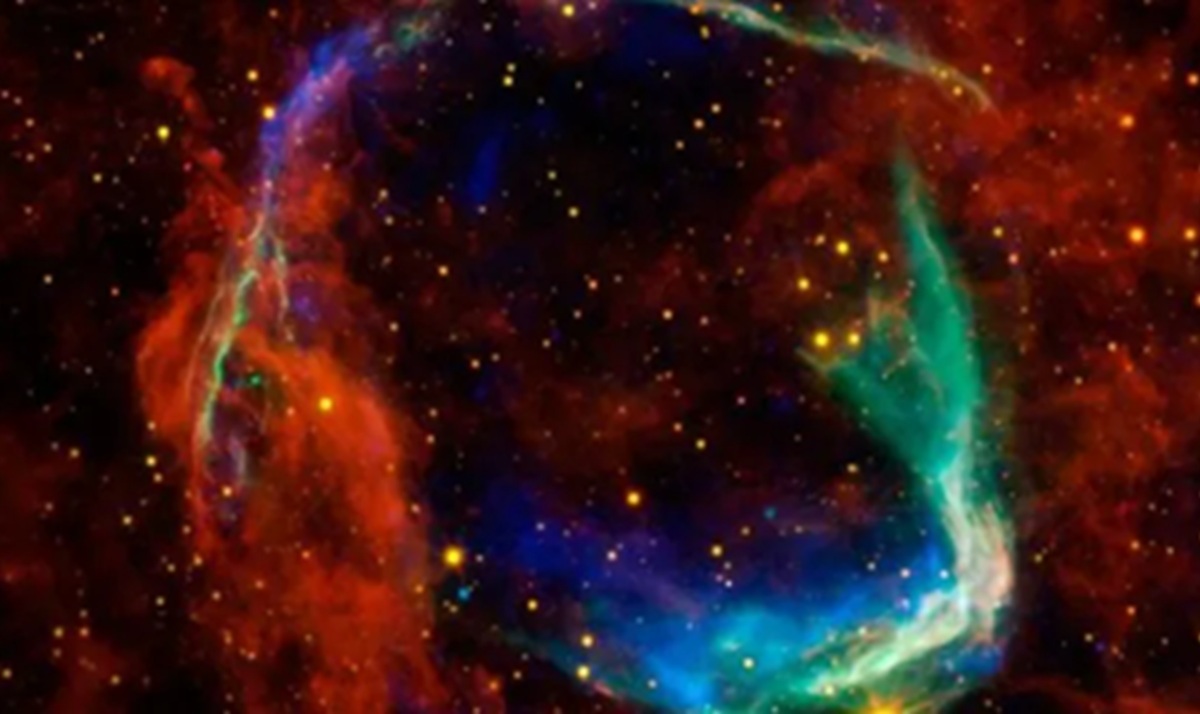
The mystery of why the universe’s expansion rate continues to accelerate is back on track with established theory. According to new research published in the journal Monthly Notices of the Royal Astronomical Society, the mysterious force known as dark energy is confirmed not to be weakening, but rather continues to accelerate the stretching of cosmic space. This finding refutes a surprising claim made in November 2025 that the universe’s expansion was slowing due to weakening dark energy. For astronomers, the latest research results are a relief, saving them from what was termed a ‘cosmology crisis.’ ‘Fortunately, we have avoided this crisis, but the mystery of why the expansion rate of the universe is still accelerating remains,’ said Phil Wiseman, research leader from the University of Southampton, UK, in an official statement. ‘The previous, well-received measurements were actually fine, and our current understanding of the universe’s fate remains robust. By proving our measurements are correct, we can return to trying to understand what dark energy actually is, rather than wondering if it really exists.’ Back in 1998, astronomers first discovered that the universe is not just expanding, but its speed is continuously increasing. This phenomenon was detected through observations of massive cosmic explosions called Type Ia Supernovae. Dark energy was then coined as the name for the mysterious force driving this expansion, which is now known to constitute about 70% of all matter and energy in the universe. The erroneous 2025 claim arose from a misjudgement of the brightness levels of Type Ia Supernovae. This type of supernova occurs when a dead star called a white dwarf absorbs excessive matter from a companion star, triggering a nuclear explosion with a highly uniform brightness. Due to its constant nature, astronomers dubbed it a ‘standard candle’ for measuring cosmic distances. Last year’s study incorrectly concluded that the brightness of Type Ia Supernovae changed as the universe aged, which then triggered the false conclusion that dark energy was weakening. However, Wiseman and his team found a fatal error: the previous researchers assumed the age of the exploding white dwarf was the same as the age of its host galaxy. Furthermore, that research failed to account for galaxy mass corrections commonly used in cosmology. ‘Extraordinary claims require very careful testing,’ said Adam Riess, a member of the research team who also won the Nobel Prize in Physics in 2011 for the discovery of dark energy. ‘What we found is that when we calibrate these supernovae, accounting for different environments and host populations, the evidence for cosmic acceleration remains very consistent.’ Although this debate briefly shook the scientific world, the researchers agree that such ups and downs are what matures science. ‘This is how progress is made,’ added Mark Sullivan, a team member from the University of Southampton. ‘Even though the (2025) idea turned out to be incorrect, it opened up new ways of thinking about how supernovae explode and how we can measure dark energy more accurately.’