
Daop 8 projects 533,000 passengers for Eid transport in 2026
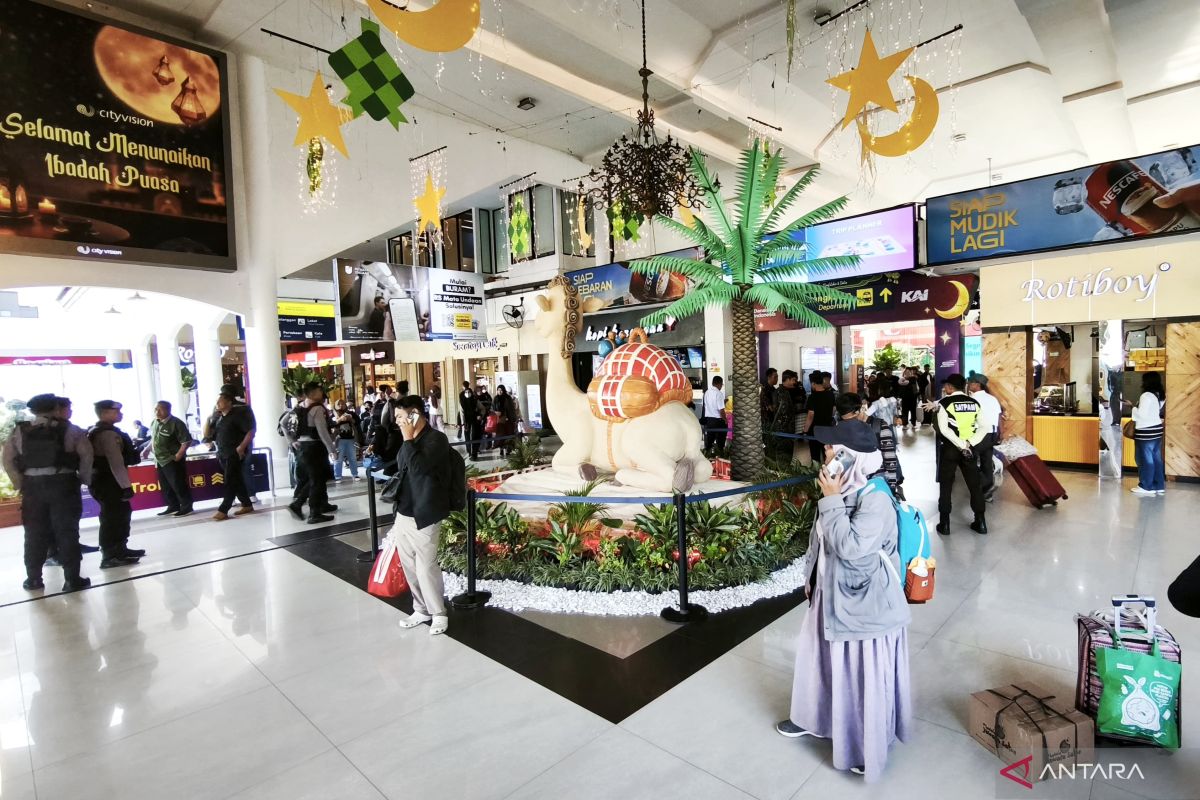
Surabaya — PT KAI Regional Operations (Daop) 8 Surabaya is projecting to serve 533,115 passengers during the 2026 Eid holiday transport period, representing a 7 per cent increase compared to the 2025 Eid transport realisation of 498,755 passengers.
Mahendro Trang Bawono, Public Relations Manager for PT KAI Daop 8 Surabaya, stated that the projection was compiled based on seating capacity, passenger trends from previous years, and ticket sales development leading up to Eid al-Fitr.
“The seating capacity provided for long-distance train journeys during the period of 11 March 2026 (H-10) to 1 April 2026 (H+10) in the Daop 8 Surabaya region is 561,528 seats,” Mahendro said when met in Surabaya on Saturday.
Meanwhile, he noted that based on data up to Saturday (14 March) at 10:00 WIB, ticket sales for long-distance trains during the Eid transport period in the Daop 8 Surabaya region had reached 361,137 tickets, or approximately 64 per cent of total capacity.
“This figure comprises 23,736 departing passengers and 21,027 arriving passengers, though these figures still have potential to increase until all train journeys today conclude,” he said.
Mahendro identified three stations with the highest passenger volume on that day: Surabaya Pasarturi Station with 13,579 passengers, comprising 7,486 departing and 6,093 arriving passengers.
Additionally, Surabaya Gubeng Station recorded 13,074 passengers consisting of 7,940 departing and 5,134 arriving passengers.
Malang Station recorded a volume of 7,729 passengers, with 4,930 departing and 2,799 arriving passengers.
“The high ticket sales on that date demonstrates strong public enthusiasm for travelling by train ahead of Eid,” he stated.
Meanwhile, the government has introduced a 30 per cent discount programme for commercial economy train tickets valid during 14–29 March 2026 in support of public mobility.
In the Daop 8 Surabaya region, 188,288 discounted tickets are available, and 116,333 have been sold so far, representing approximately 62 per cent, leaving 71,955 tickets available for public use.
“Passengers can also utilise connecting train services to have more flexible travel time and route options,” he added.