
Daop 6 Yogyakarta: Long-distance Passengers Grow by 19 Per Cent in August
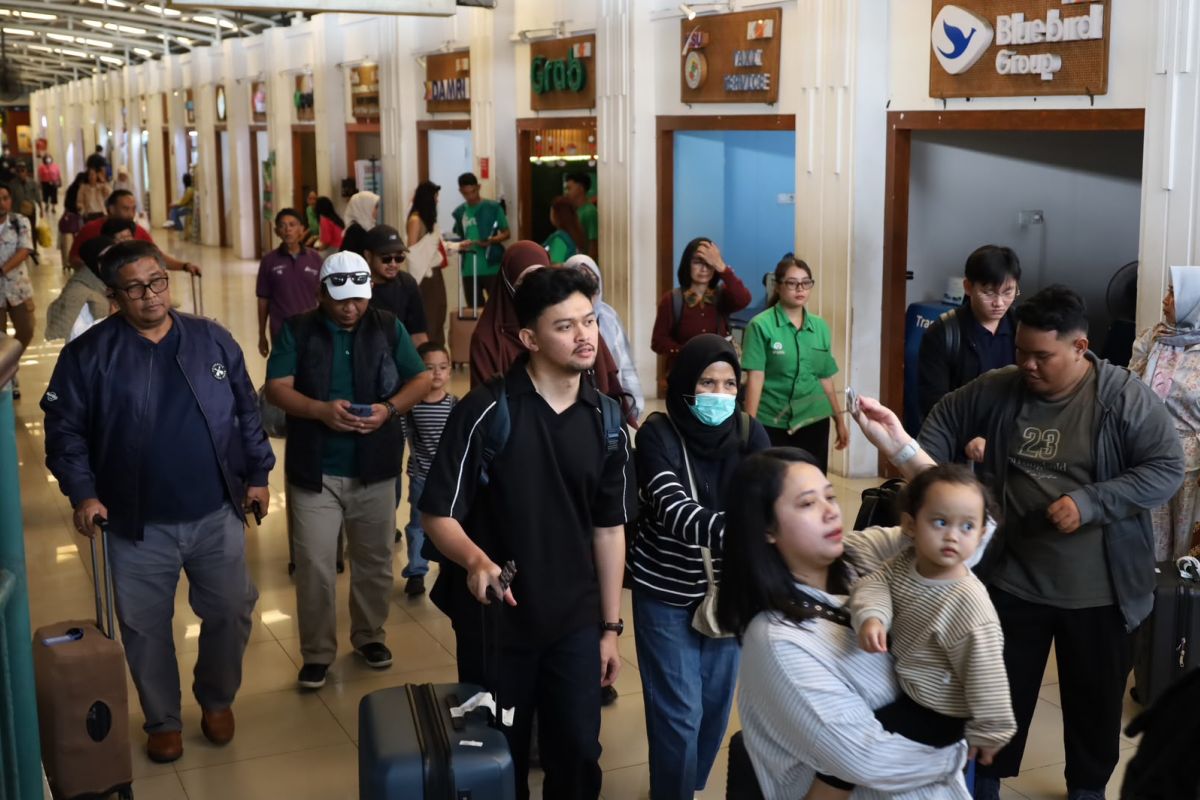
PT KAI (Persero) Regional Division 6 Yogyakarta recorded a long-distance train passenger volume of 1,264,608 people throughout August 2024, representing a 19 per cent growth compared to the same period the previous year, which saw 1,059,279 passengers.
Feni Novida Saragih, Public Relations Manager of Daop 6 Yogyakarta, detailed in Yogyakarta on Monday that these figures consist of 635,828 departing passengers and 628,780 arriving passengers across various stations within the Daop 6 region.
“This achievement is supported by the performance and reliability of the facilities, infrastructure, and operations of Daop 6, which maintain the safety, punctuality, and comfort of train travel,” said Feni.
She explained that this surge in public mobility was driven by long holiday weekends during the Indonesian Independence Day and the Birthday of Prophet Muhammad SAW.
Based on operational data, Yogyakarta Station and Lempuyangan Station were the busiest hubs. For departures, Yogyakarta Station recorded the highest volume with 317,201 passengers, followed by Lempuyangan Station (146,403), Solo Balapan Station (97,477), Klaten Station (25,726), Purwosari Station (19,627), and Wates Station (12,487).
Regarding arrivals, Yogyakarta Station also led with 309,639 passengers, followed by Lempuyangan Station (146,002), Solo Balapan Station (102,556), Klaten Station (23,874), Purwosari Station (19,443), and Wates Station (12,223).
Feni added that stations such as Solo Balapan, Klaten, Purwosari, and Wates also contributed significantly to supporting passenger distribution across the Special Region of Yogyakarta and Central Java.
To maintain this positive trend, Daop 6 is consistently improving station and onboard facilities, strengthening safety aspects, and optimising digital services for ticket bookings and real-time travel information.
“Moving forward, KAI will continue to provide transport services that are safe, secure, comfortable, punctual, and sustainable to support public mobility as well as the growth of the economic and tourism sectors,” said Feni.