
Danantara's Strategy to Reduce Import Dependency
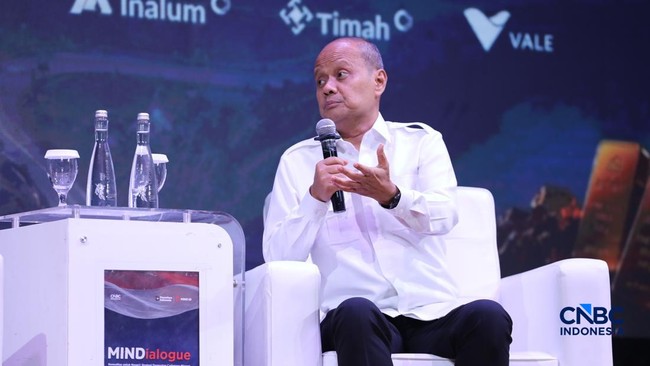
Danantara’s Chief Technology Officer, Sigit Puji Santosa, stated that Indonesia’s industrial sector does not always have to rely on imports, especially given currency volatility and extraordinary global conditions. “I think it is impossible for us to keep importing. Import substitution does not mean we have to displace others, no. But we ensure that we can have resilience in the industries we build, especially the defence industry, and also for the continuity and sustainability of the products and industries we develop,” he said during the Mindialogue 2026 event in Jakarta on Wednesday. Sigit cited the defence industry’s significant need for propellant, where the number of producers is limited and large orders can take years to fulfil. “Thankfully, we conducted R&D with the government and partners, achieved NATO standard certification, and most importantly, the materials are 100% from Indonesia. Now we are scaling up from 10 tonnes to 70 tonnes, and then to 1,000 tonnes. Once we reach 1,000 tonnes, we can fulfil the propellant needs and potentially export when our requirement reaches 2,300 tonnes,” he detailed. Sigit emphasised that reducing import dependency is very possible, for instance by having Indonesian human resources collaborate with the best sources, and he confirmed the government is very supportive of this. He also urged Indonesians to be grateful for the nation’s extraordinary natural wealth, stressing the importance of managing these resources and providing more optimal added value, particularly through downstream processing. Danantara, he continued, has an aggressive strategy to ensure downstream processing runs well, including a comprehensive integration process from upstream to downstream. “In the 70s and 80s, our mineral activity was mostly extractive. We were positioned at the downstream end where production and assembly industries had a missing link in the middle. So, in building a sustainable industry, Danantara will build from upstream to downstream,” he explained. The major challenge in natural resource utilisation has long been the focus on extractive industries, given that technology and human resources were not yet adequate, and the required investment was substantial. Fortunately, Indonesia now has Danantara, meaning the large investment needs to drive the downstream programme can be met. “So the investment challenge, it’s not a problem anymore,” he concluded.