
Danantara's Role in Strengthening the Economy: Focusing Investment on Impactful Industries
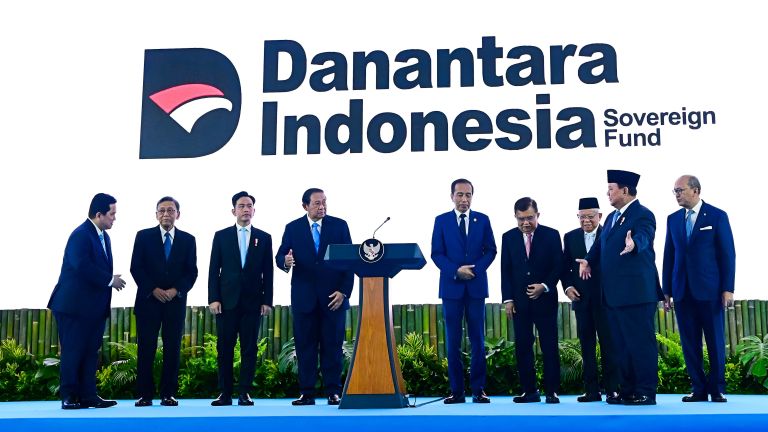
President Prabowo Subianto has stated that Indonesian investment continues to grow amid a global economic slowdown, with the IMF projecting growth to decelerate to 3.0 percent in 2026. Realised investment reached Rp1,931 trillion throughout 2025 and Rp1,010 trillion in the first half of 2026, creating millions of jobs.
In his State of the Nation address last week, the President emphasised that Danantara Indonesia is expected not only to play a role in the restructuring and consolidation of state-owned enterprises but also to support the strengthening of national investment in a gradual and measured manner. This role is reflected in 19 downstreaming projects that have broken ground, as well as a national strategic project to process waste into electricity.
“Danantara can drive better economic activity in Indonesia, including economic growth and job absorption, as long as its investments are well targeted and carefully managed,” said Doni, speaking by telephone from Jakarta.
According to him, investments managed by Danantara need to be directed towards projects that are efficient, provide good rates of return, and are aligned with the direction of economic development. Downstreaming of natural resources can be one option because it has scale and significant return prospects, but it needs to be accompanied by the development of supporting industries so that the economic benefits are broader.
“If there is a large investment, the strategy is a large investment that also encourages small industries,” he said.
From a business perspective, Feiral Rizky Batubara, Deputy Chairman of the Permanent Committee for Renewable Energy Development Planning at the Indonesian Chamber of Commerce and Industry, assessed that Danantara can take on the role of an anchor investor that helps open space for long-term collaboration, without neglecting the need for prudent, feasibility-based project selection.
According to Feiral, the success of investment cannot be measured solely by the amount of capital raised, but also by the collaboration space created for national companies. Large-scale investment can open opportunities through joint ventures, co-investment, the provision of goods and services, and the involvement of domestic companies in supply chains, as long as national industrial capacity is also continuously strengthened.
Kadin, Feiral said, views the success of Danantara’s investment as ideally measured not only by financial return but also by its ability to strengthen the capacity, business scale, and competitiveness of Indonesian companies. Therefore, large investments are considered to need linkages with domestic industry so as to create a multiplier effect for local suppliers, MSMEs, workers, and supporting industries. The involvement of national industry also needs to be designed from the outset through mapping of supply chains and supporting industry needs.
“With this approach, Danantara can become a bridge between large capital and national industrial capacity. So, investment not only produces assets and profits, but also helps create a new economic ecosystem and strengthen the foundation of Indonesian industry in the long term,” said Feiral.
On the ground, Danantara has begun implementing its downstreaming agenda through 19 projects that have broken ground. These projects cover various sectors, from minerals and energy to agriculture, with a value of around Rp225 trillion. Danantara is also developing the clean energy sector through a pilot waste-to-energy project in Denpasar, Bali, designed to process 1,500 tonnes of waste per day with an investment value of Rp3 trillion and targeted to operate in the first half of 2028, part of a national target of 33 waste-to-energy plants by 2029.
This positive trend is also reflected in macro data. Investment grew 6.87 percent in the second quarter of 2026, surpassing household consumption growth of only 5.06 percent. Meanwhile, downstreaming grew 6.9 percent and realised investment in the first half of 2026 reached Rp1,010.6 trillion with absorption of 1.45 million direct workers, up 15 percent.
In line with this, Minister of Investment and Downstreaming/Head of BKPM and CEO of Danantara, Rosan Roeslani, said that investment is one of the main pillars of the national economy. Rosan also stressed that the success of investment is not measured solely by the size of realised figures, but by the quality of the impact produced for the community.
“As the President said, economic growth and investment figures are not the end goal, but how we can create public welfare. Every rupiah of investment must create good, quality jobs, while also improving the quality of life of our people,” he said.
Source: jawawa.id (https://jawawa.id/newsitem/danantaras-role-in-strengthening-the-economy-focusing-investment-on-impactful-industries-1787331044)
Originally published by olenka.id (https://olenka.id/peran-danantara-perkuat-ekonomi-fokuskan-investasi-ke-industri-berdampak), translated from Indonesian