
Danantara's Inclusion in KSSK Risks Blurring Authority Boundaries, Economists Warn
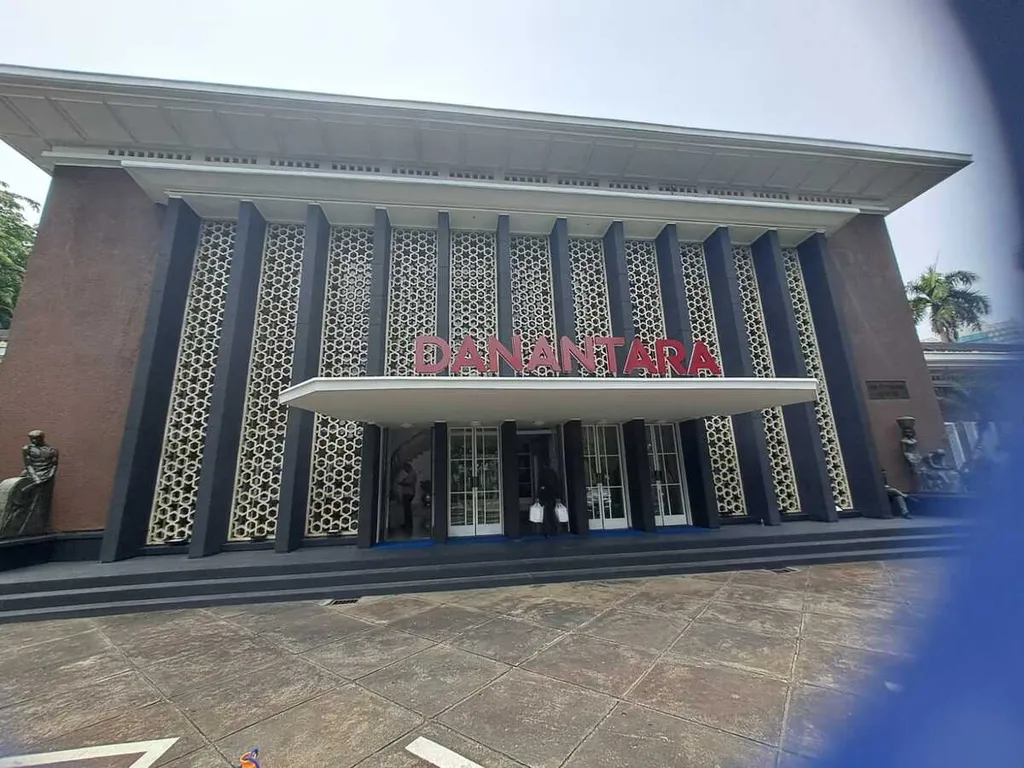
JAKARTA, KOMPAS — President Prabowo Subianto’s instruction for the Danantara Investment Management Authority to be involved in every decision taken by the Financial System Stability Committee (KSSK) risks compromising the independence of Indonesia’s financial authorities.
The involvement is considered likely to blur the governance and independence of the forum that safeguards financial system stability unless it is clearly regulated.
Previously, the instruction regarding Danantara’s involvement in KSSK decision-making was conveyed by President Prabowo while chairing a meeting with KSSK members at the Presidential Palace in Jakarta on Monday evening (27 July 2026).
The meeting, also attended by Danantara Investment Management Authority (BPI) CEO Rosan Roeslani and Deputy Speaker of the House of Representatives (DPR) Sufmi Dasco Ahmad, was attended by KSSK members who lead the financial authorities.
They were Minister of Finance Purbaya Yudhi Sadewa, Chair of the Board of Commissioners of the Financial Services Authority (OJK) Friderica Widyasari Dewi, Chair of the Board of Commissioners of the Deposit Insurance Corporation (LPS) Anggito Abimanyu, and Acting Governor of Bank Indonesia (BI) Destry Damayanti.
The meeting took place just hours after the government announced Perry Warjiyo’s resignation as BI Governor and appointed BI Senior Deputy Governor Destry Damayanti as Acting BI Governor.
After the meeting, Destry said the President had asked KSSK to continue strengthening coordination, not only among its members but also with Danantara. “Together we will provide support; KSSK will support the government in line with the policy direction set by the government,” Destry said.
Danantara BPI CEO Rosan Roeslani added that Danantara would be involved in every KSSK decision so that the resulting policies consider not only fiscal and monetary aspects but also their impact on the business and investment world. According to him, Danantara will also attend joint meetings with KSSK every month.
However, the plan to involve Danantara in KSSK is seen as needing to be accompanied by clear institutional limits. Ronny P Sasmita, an analyst at the Indonesia Strategic and Economic Action Institution, said that if one follows the spirit of the Financial Sector Development and Strengthening Law (P2SK Law), Danantara’s presence within KSSK falls in an area that warrants scrutiny from a governance perspective.
“Normatively it may still be debatable whether it is permissible, but from a governance standpoint, this decision must be weighed very carefully so as not to blur the boundary between the regulator and the market participant or investor,” he said when contacted on Tuesday (28 July 2026).
Ronny argued that Danantara could still be involved if its position were purely as a provider of information or technical input regarding investments that could potentially affect financial system stability. However, Danantara’s involvement must not extend to participating in the formulation or decision-making process.
According to him, such involvement should ideally be based on need for specific issues (by invitation) with a transparent protocol, covering who issues the invitation, the agenda under discussion, and the capacity of its attendance.
“If this boundary is not maintained, latent conflicts of interest will emerge because Danantara is an entity with portfolio interests, not a stability authority. Within the financial system stability framework, information is indeed important, but independent judgement is far more important,” Ronny said.
He warned that the biggest risk would arise if Danantara’s presence in KSSK, initially ad hoc in nature, turned into routine practice.
“In public policy practice, something that begins as an exception very easily becomes a precedent, and then becomes an informal norm. If that happens, KSSK faces the risk of institutional erosion because the boundary between policymakers and an entity with economic interests becomes blurred,” he said.
According to Ronny, such perception could affect the credibility of policy in the eyes of the market. “Once the perception emerges that the KSSK forum is no longer fully independent, the risk premium could rise, trust is eroded, and ultimately this weakens KSSK’s own primary objective,” he said.
A similar view was expressed by economist Syafruddin Karimi of Andalas University. According to him, Danantara’s involvement can only be justified if the government firmly positions it as a technical resource without voting rights (non-voting), not as a member of the financial system stability forum.
He stressed that KSSK has a clear division of mandates. The Ministry of Finance implements fiscal policy, BI safeguards monetary and payment system stability, the OJK supervises the financial services sector, while the LPS is responsible for deposit insurance and bank resolution.
Meanwhile, Danantara has a different mandate, namely managing state investments and assets. “Sound governance demands explicit role separation. If this boundary blurs, the market will read KSSK as a forum that is starting to serve the state’s investment financing agenda, rather than solely safeguarding financial system stability,” Syafruddin said.
According to him, KSSK must safeguard the independence of BI, the OJK and the LPS through firm governance guardrails, including by restricting Danantara’s status, eliminating voting rights, filtering access to sensitive information, and regulating potential conflicts of interest through written protocols.
Therefore, Syafruddin believes the government should clarify the legal basis if it wishes to involve Danantara routinely in the KSSK forum. If Danantara is only occasionally invited to provide data, a written protocol and access restrictions would suffice.
However, if Danantara attends routinely, participates in strategic discussions, or influences the direction of decisions, the government needs to pursue legislative amendments or at least issue transparent technical regulations subject to the limits of the law.
“Such steps are important so that there is no interpretation that the government is altering KSSK’s architecture merely through administrative practice. In good governance, legality must precede practice, not chase after practice once controversy has emerged,” Syafruddin said.
YB Suhartoko, a lecturer at the Faculty of Economics and Business at Atma Jaya Catholic University of Jakarta, said that KSSK’s principal duties and functions are coordinating monitoring, rapid crisis handling, and the resolution of systemic banks.
On the other hand, Danantara’s core task is to drive economic growth by consolidating, optimising and developing state assets and wealth.
On the one hand, Danantara’s entry as a major player in the financial market into KSSK is expected to act as a catalyst for financial system stability, meaning that financial system stability is achieved quickly.
“However, from a role perspective, if Danantara’s interests become dominant within KSSK, there is potential for instability,” he said.
He added that the government’s fiscal interests are already represented by the Ministry of Finance. Beyond that, KSSK members should ideally be independent institutions with a largely coordinative character.
Source: jawawa.id (https://jawawa.id/newsitem/danantaras-inclusion-in-kssk-risks-blurring-authority-boundaries-economists-warn-1785257417)
Originally published by kompas.id (https://www.kompas.id/artikel/danantara-masuk-kssk-ekonom-ingatkan-risiko-kaburnya-batas-kewenangan), translated from Indonesian