
Danantara Transformation Begins to Show, 22 SOE Profits Surge Significantly
More than a year after President Prabowo Subianto launched the Daya Anagata Nusantara Investment Management Agency (BPI Danantara) on 24 February 2025, the transformation impact driven by the state investment management institution is beginning to be reflected in the improved performance of a number of state-owned enterprises (SOEs). Based on data from April 2025 to April 2026, 22 SOEs recorded significant profit growth, with one even surging by 1,339 per cent.
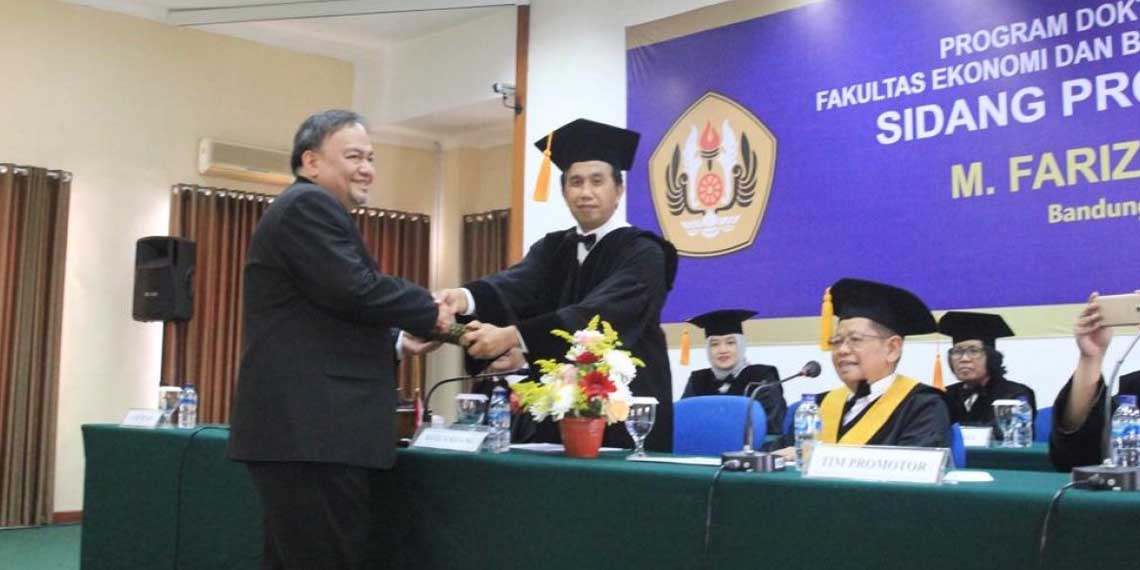
Communication expert and practitioner Dr. M. Fariza Irawady assessed that this achievement is an early indicator that President Prabowo’s vision to strengthen national economic independence is starting to be realised through more integrated investment governance.
“President Prabowo has ignited the nation’s flame of hope through a clear development vision. Danantara then became the instrument that translates that hope into tangible results that are beginning to be felt,” Fariza explained in Jakarta on Sunday (5/7/2026).
According to him, Danantara’s main strength lies in its ability to connect the government’s strategic vision with professional state investment management. Under the leadership of Chief Executive Officer (CEO) Rosan Perkasa Roeslani, Danantara is considered capable of functioning as a motor for asset consolidation while encouraging the strengthening of SOE governance.
This, Fariza said, is reflected in the improved financial performance of various state-owned companies across several strategic sectors.
In the energy sector, PT Pertamina (Persero) posted a profit of Rp24.97 trillion, an increase of approximately 80 per cent compared to the previous period’s Rp13.9 trillion. PT Pupuk Indonesia also recorded a profit surge from Rp1.59 trillion to Rp4.82 trillion, growing by 202 per cent.
Meanwhile, the banking sector remained the largest profit contributor. Bank Rakyat Indonesia (BRI) posted a profit of Rp21.2 trillion, up 15 per cent; Bank Mandiri Rp21.3 trillion, growing 13 per cent; Bank Negara Indonesia (BNI) Rp7.2 trillion, up 6 per cent; while Bank Syariah Indonesia (BSI) recorded a profit of Rp2.8 trillion, an increase of 18 per cent. Bank BTN became the SOE with the highest profit growth, surging 1,339 per cent to Rp1.4 trillion.
In other sectors, Mining Industry Indonesia (MIND ID) recorded a profit of Rp14.1 trillion, growing 31 per cent; Pegadaian Rp4.3 trillion, up 87 per cent; Pelindo posted a profit of Rp1.5 trillion, increasing 169 per cent; while InJourney recorded a profit of Rp300 billion, growing 33 per cent.
Beyond boosting profits at already healthy companies, Danantara is also considered to have successfully accelerated the recovery of several SOEs that had previously suffered losses. PT Krakatau Steel, for example, managed to turn around from a loss of Rp981 billion to a profit of Rp635 billion. PT Danareksa shifted from a loss of Rp72 billion to a profit of Rp43 billion.
Similar improvements also occurred at PT Kimia Farma, which reversed its performance from a loss of Rp160 billion to a profit of Rp108 billion; PT Len Industri from a loss of Rp228 billion to a profit of Rp314 billion; PT Semen Indonesia from a loss of Rp66 billion to a profit of Rp106 billion; PT Agrinas Pangan from a loss of Rp12 billion to a profit of Rp465 billion; and PT Adhi Karya, which recorded profit growth of 667 per cent to Rp69 billion.
According to Fariza, this recovery is inseparable from the restructuring programme and capital support provided through Danantara Asset Management (DAM). He stressed that the profit surge does not merely reflect increased corporate earnings, but also signals that the process of consolidation, efficiency, and governance discipline is beginning to yield results.
“The profits generated by SOEs must become new energy for development. When the performance of state companies improves, the government’s fiscal space and investment capacity to run priority programmes also become stronger,” he added.
Fariza, who has served in communications and public relations roles at several ministries, including the Ministry of State Apparatus Empowerment and Bureaucratic Reform (PANRB), the Ministry of Communication and Informatics, and the Coordinating Ministry for Political, Legal, and Security Affairs, assessed that Danantara’s success is also important to view from a public communication perspective. According to him, public trust in large-scale economic projects can only be built if the narrative of optimism is supported by tangible achievements.
Fariza said President Prabowo has consistently pushed the agenda of downstreaming, industrialisation, and strengthening the management of national strategic assets. In this context, Danantara is an important instrument to translate that vision into more operational implementation.
He also appreciated the leadership of Rosan Roeslani and the Danantara team, who are considered to have successfully maintained the direction of state investment transformation in a professional, accountable, and results-oriented manner.
“The profit growth of a number of SOEs is an indicator that the governance transformation is moving in the right direction. This is important capital to strengthen the competitiveness of SOEs while supporting the financing of various government strategic programmes,” he said.
Nevertheless, Fariza reminded that Danantara’s future challenges remain significant. Consistency in implementing good governance, transparency, and the ability to maintain public trust will be determining factors for the sustainability of this transformation.
“Ultimately, the measure of Danantara’s success is not merely the size of the funds under management, but the extent to which state wealth truly works to improve public welfare. The synergy between President Prabowo’s grand vision and Danantara’s execution is a crucial combination. The President ignites hope, while Danantara works to realise it,” he concluded.