
Danantara to Fund Industrialisation, DSI to Plug Export Leaks
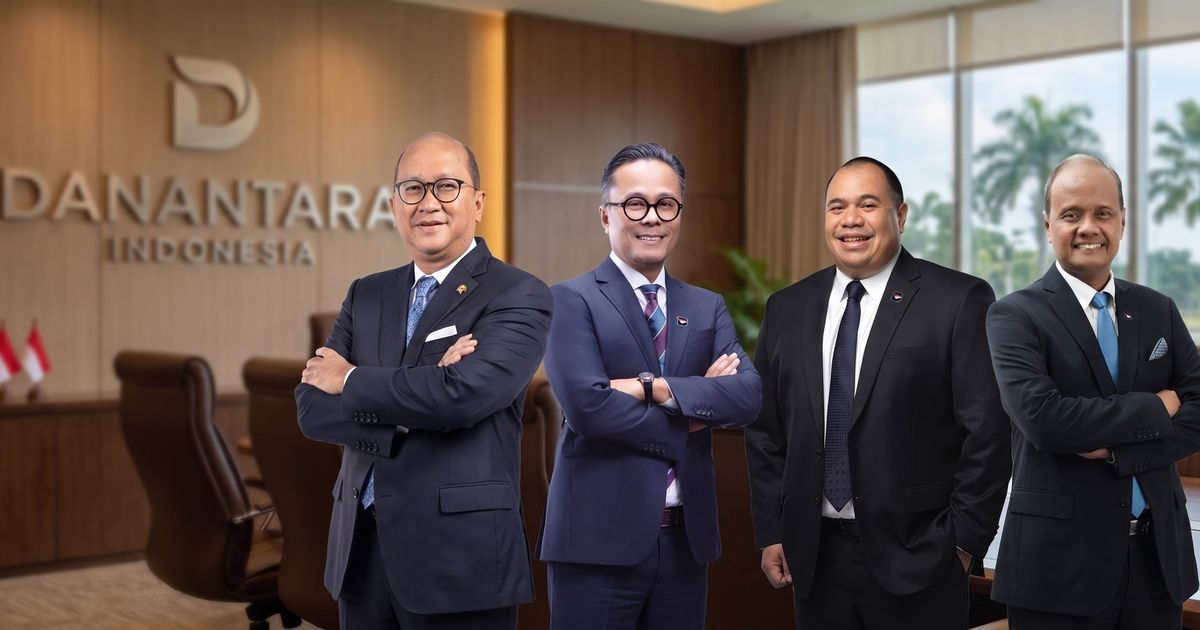
President Prabowo Subianto has positioned Danantara Indonesia and PT Danantara Sumber Daya Indonesia (DSI) as two important instruments in the new national economic architecture. Both have different functions but are directed towards the same goal: ensuring that the nation’s wealth and natural resources do not stop as raw assets or commodities, but are transformed into investment capital, industrialisation, technology, jobs, and public welfare.
Prabowo explained the roles of the two institutions when delivering the Government’s Statement on the Draft Law on the 2027 State Budget (APBN) along with its Financial Note at the DPR Plenary Session in the Parliament Complex, Senayan, Jakarta, on Friday (14/08/2026). On the same morning, during the MPR Annual Session and the Joint Session of the DPR and DPD, the President also detailed the initial results of the state-owned enterprise (BUMN) restructuring by Danantara and DSI’s performance since it began operations on 1 June 2026.
In his budget speech, Prabowo placed Danantara in the context of Indonesia’s need to finance long-term economic transformation without all projects having to depend on the state budget. Meanwhile, DSI is placed on the upstream side of the economic value chain: ensuring that commodity wealth leaving Indonesia is properly recorded, priced more transparently, and generates foreign exchange commensurate with its economic value.
With this design, the government intends to build a cycle. Export leakages are closed, revenues and foreign exchange are strengthened, BUMNs are made more productive, profits are consolidated, and then that capital strength is reinvested into new strategic industries and projects.
Danantara for Long-Term Projects
Prabowo referred to Danantara as Indonesia’s sovereign wealth fund, which must build the nation’s capacity for decades to come. Its role, according to the President, should not be understood merely as a manager of BUMN shares or assets. Danantara is expected to become an instrument capable of preparing, developing, and financing long-term strategic projects that are important for Indonesia’s future but may not be fully fundable by commercial investment with short-term horizons.
The government sees that there are strategic projects with significant economic benefits but which require very large capital, long construction periods, and returns on investment that only emerge years later. Infrastructure, industrialisation, technology, energy, and cross-generational projects fall into this investment character. If entirely financed by the state budget, the government’s fiscal space would become increasingly narrow. Conversely, if entirely left to short-term commercial financing, some projects might not obtain capital due to risk or excessively long payback periods. Danantara is positioned in this space.
According to Prabowo, through this sovereign wealth fund instrument, state capital can be invested in a disciplined and professional manner into strategic projects, while also acting as a catalyst to attract other financing.
Reducing the State Budget Burden
This role becomes increasingly relevant as the 2027 Draft State Budget is designed with state expenditure reaching Rp4,097.2 trillion, while state revenue is around Rp3,426 trillion. The government plans financing of Rp671.2 trillion with a deficit of 2.40% of GDP. On one hand, Indonesia requires massive investment to pursue 6% economic growth, expand industrialisation, build infrastructure, carry out an energy transition, and improve human resource quality. On the other hand, the government wants to maintain the deficit and fiscal sustainability. Danantara can therefore function as a bridge between the need for large investments and the limitations of the state budget.
The logic is that not every productive project must be financed using taxes or additional government debt. Projects capable of generating cash flow can obtain financing from Danantara, BUMNs, the private sector, or institutional investors. With the right investment structure, Danantara’s capital can even become an anchor investment to attract private sector and global investor funds, so that every rupiah of state capital has a greater leverage effect.
26 Downstreaming Projects Already Started
This role has actually begun to be implemented in 2026. In an earlier state address on the same day, Prabowo said Danantara had initiated 26 downstreaming projects in two waves. A total of 13 projects held groundbreaking ceremonies on 6 February 2026, followed by another 13 projects on 29 April 2026. These projects include processing coal into dimethyl ether (DME) to replace LPG, downstreaming copper and gold, processing industrial salt, processing alumina into aluminium, and various waste-to-energy projects.
According to the President, these projects will create tens of thousands of jobs. Downstreaming is thus intended to change the economic structure: resources previously sold in raw or intermediate forms are processed further within Indonesia so that more added value, jobs, corporate income, and taxes are created domestically.
BUMN Profits Recycled into Investment
Danantara is also the centre of a change in how the government treats BUMN profits. Prabowo previously revealed that BUMN profits after corrections reached Rp186 trillion in 2024 and then surged to Rp326 trillion in 2025, an increase of 75.3%. BUMN dividends rose from Rp85.5 trillion to Rp142.3 trillion. If dividends are reduced by State Capital Participation (PMN), the net contribution of BUMNs, according to the President’s calculation, increased from Rp53 trillion in 2024 to Rp138 trillion in 2025. For 2026, the government projects dividends to reach Rp200 trillion without PMN. The government does not want this increase to be absorbed solely by routine spending.