
Danantara to Build Permanent Magnet Factory from Rare Earth Metals
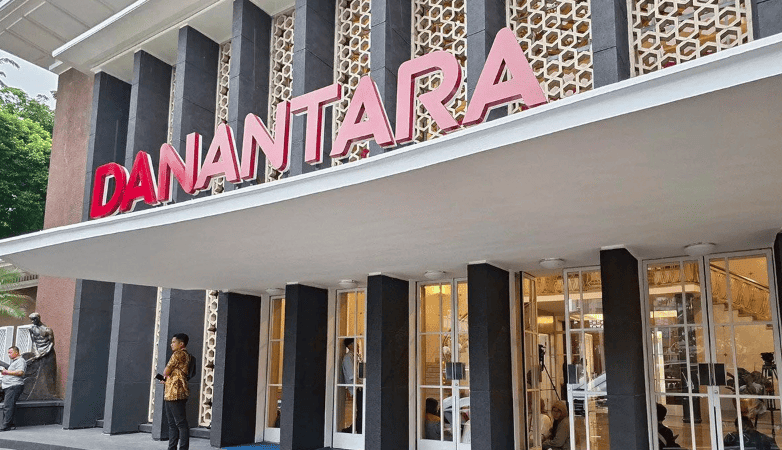
Danantara Chief Technology Officer Sigit Puji Santosa has revealed that Indonesia will build a permanent magnet factory from rare earth metals, with construction set to begin in the near future. “God willing, by 2028, permanent magnets will be available in Indonesia and so forth. This is an integrated unit we are building, right through to transportation vehicles,” Sigit said at the MINDialogue event themed ‘Commodities for the Nation: Strategy for Strengthening Mineral Reserves for Indonesia’s Economic Stability and Sovereignty’ in Jakarta on Wednesday.
Permanent magnets are a downstream product of rare earth metals using NdFeB (Neodymium-Iron-Boron) raw materials. Sigit explained that neodymium is the raw material for permanent magnets used in electric vehicle traction motors. A traction motor is the electric motor used to drive a vehicle. “In the permanent magnet, there will be the traction motor, right through to the motor and the EV car. So, we are looking at this holistically from upstream to downstream,” Sigit said.
Beyond the electric vehicle industry, Sigit noted that rare earth metal downstream processing also extends to the defence sector. He said the potential for developing rare earth metals in defence lies in armour steel. “We, together with our colleagues at Krakatau Steel, are considering and have already been able to enter the armour steel segment. However, we must perfect it and prepare everything up to materials for semiconductors, radar, sensors, and so on,” Sigit stated.
In developing the mineral industry specifically for managing rare earth metals, Sigit said Danantara is partnering with the Ministry of Energy and Mineral Resources and the Ministry of Higher Education, Science, and Technology. Additionally, Danantara has established PT Perusahaan Mineral Nasional (Perminas), which will manage the rare earth metals. He expressed hope that Indonesia will not only develop extractive industries related to rare earth metals. “This refinery is what we will pursue. Thank God we have obtained extraordinary partners and we will soon develop this together with colleagues at BRIN and colleagues at universities,” Sigit concluded.