
Danantara Targets Technology Transfer Investments, Beyond Mere Downstreaming
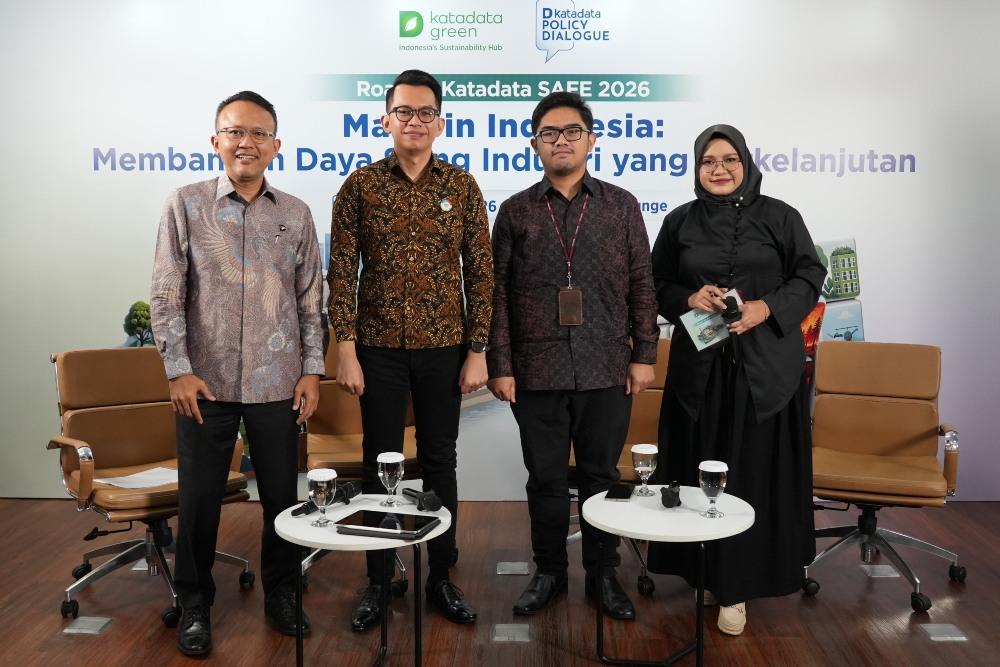
JAKARTA — The Danantara Investment Management Agency (BPI Danantara) has affirmed that the government’s future investment strategy will no longer focus solely on downstreaming natural resources, but also on fostering new industrial development through technology transfer and strengthening national industrial capabilities.
BPI Danantara Managing Director of Industrialization Ardy Muawin stated that investments entering Indonesia must create domestic added value through technological mastery, talent development, and the formation of a national supply chain.
“Through Danantara, the government seeks to encourage investment in strategic sectors capable of creating domestic added value. The focus is not only on downstreaming natural resources, but also on building new industries supported by technology transfer, talent development, and the creation of a national supply chain,” Ardy said in a statement on Wednesday (29/7/2026).
Ardy assessed that Indonesia has been too dependent on commodity exports and the advantage of low-cost labour. This pattern, he argued, is insufficient to propel Indonesia into a developed nation.
“If we merely follow market mechanisms, Indonesia will continue to sell natural resources and cheap labour. The question is, is that the future we want as a nation?” he said.
Therefore, Danantara is not merely chasing investment realisation figures, but ensuring that incoming investors bring technological capabilities that can be developed domestically.
Similarly, Indonesia Battery Corporation (IBC) President Director Aditya F. Arif said technological mastery is the biggest challenge in building the national battery industry. He explained that IBC began industrial development through strategic partnerships with global companies to learn battery technology and manufacturing processes. However, dependence on foreign technology must not be permanent.
“We start with partnerships with global players to learn how to operate the technology. But we cannot stop there. The ultimate target is to build our own capability and own the technology,” he said.
Aditya added that the battery industry is evolving very rapidly, so Indonesia must strengthen research, innovation, and collaboration with universities to prepare human resources capable of keeping pace with technological developments.
“What we are building is not just a battery factory, but Indonesia’s technological capability. Therefore, IBC does not only stand for Indonesia Battery Corporation. For us, IBC also means Indonesia Battery Champion,” he said.
Meanwhile, Deputy Coordinator of the Secretariat of the Task Force for the Acceleration of Downstreaming, Dimas Muhamad, said Indonesia needs to learn from South Korea and Vietnam, which successfully transformed their economies through industrial sector development.
“If we want to become a developed country and provide quality jobs, we must have a robust industry as the backbone of economic development,” he said.
According to Dimas, the success of industrialisation cannot be measured solely by the size of incoming investment. Indonesia must also be able to build national companies that master technology and possess global competitiveness.
“Made in Indonesia is not enough. What we need is Made by Indonesia. We must have national companies capable of absorbing technology, innovating, and becoming global champions,” he said.
He explained that successful industrial transformation rests on three main aspects: investment, technology infusion, and innovation. Therefore, the government needs to introduce policies that encourage the development of strategic industries while providing room for innovation.
“If we agree that Indonesia must pursue green industrialisation, then we must also build an equally strong coalition. This is not just about helping industry, but about creating quality jobs and making Indonesia a productive nation capable of creating its own technology,” Dimas concluded.