
Danantara Targets Sport Tourism, Where Rp6.5 Billion Investment Yields Rp2 Trillion Impact
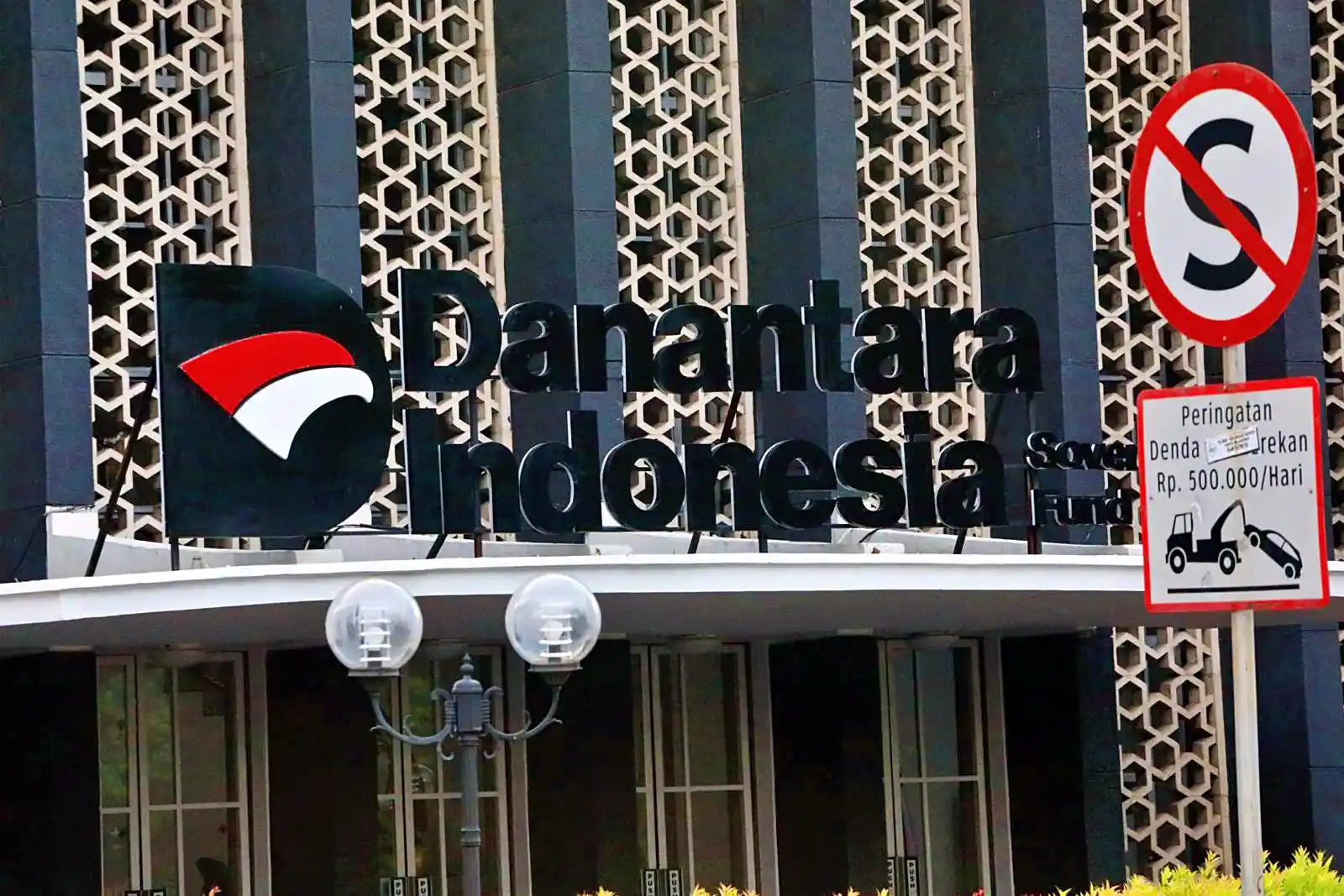
The Daya Anagata Nusantara Investment Management Agency (Danantara) is opening long-term funding opportunities for Indonesian sports. Danantara views sport tourism as one of the sectors most ready for development due to its immense economic potential.
This sector also requires relatively low capital, supported by existing assets and infrastructure. Djamal Attamimi, Managing Director of Global Business Development, Corporate Finance & Investments at Danantara, stated this during the Global Leadership Forum Indonesia Sports Summit (ISS) 2026.
In the forum titled ‘Financing the Future of Sport: Trust Funds, Strategic Capital, and National Development’, Djamal noted that sports are not merely about athletic achievements. He argued that sports possess significant economic potential that requires capital support and proper governance. Therefore, a sustainable funding system is necessary to optimally develop the sports industry.
Djamal cited the development of sport tourism as an example of an area capable of providing significant economic impact. He explained that the budget for developing sport tourism reached Rp6.5 billion in 2025. From that budget, the absorption rate reached 98.88 per cent, generating economic activity of approximately Rp2 trillion across several provinces.
“An initial capital of Rp6.5 billion provides an economic impact of Rp2 trillion. This demonstrates that the multiplier effect of sports-related activities is quite high,” Djamal said in a press release on Sunday, 13 September 2026.
According to Djamal, this impact shows that sports can be a vital driver of the economy. This potential grows even larger if sports development is carried out through long-term investment planning. He mentioned that Indonesia’s sports economic value reached nearly Rp40 trillion in 2024, supported by a large market of approximately 280 million people.
While public interest in various sporting activities is high, this potential must be accompanied by industrial certainty to provide a clear basis for investors. Djamal identified three aspects that need strengthening in the development of the sports industry: the classification of the sports industry, the measurement of economic impact, and the certainty of funding duration.
“Capital will only arrive if the identification and definition of the sector within the ecosystem itself are clear,” he said.
Djamal explained that the character of the sports industry makes its funding needs different from other sectors. Sports investment does not always yield immediate results. Developing athletes, organising competitions, and building infrastructure require long periods; for instance, developing an athlete can take around 12 years, a sports league may take 15 years to reach maturity, and stadiums can have an economic lifespan of up to 40 years.
Consequently, Djamal believes short-term funding schemes are less suitable for certain sports projects. “Short-term funding seems less appropriate for some sports projects. Funding needs to be adjusted to the time required so that investments can produce an optimal impact,” he explained.
Djamal then positioned sport tourism as a sector ready for development, noting its capital requirements are relatively light compared to other sports projects. Indonesia already possesses assets and infrastructure that can be optimised to support both sporting activities and tourism development.
“The opportunity that can be realised immediately is sport tourism. The capital requirement is relatively low and the assets we possess are already available,” he said.
He noted that sport tourism can integrate sports with various economic sectors, including tourism, hospitality, transport, culinary, and the local community economy. Through this model, sporting activities can provide a broader economic impact.
Djamal also assessed that the 2028 National Sports Week (PON) in West Nusa Tenggara (NTB) and East Nusa Tenggara (NTT) could serve as a strategic momentum to strengthen the sports ecosystem in both regions. PON 2028 could also trigger the development of supporting infrastructure, including stadiums, hotels, airports, and access roads, which can subsequently be used for sustainable sports and tourism.
Meanwhile, the CEO of Danantara, Rosan Roeslani, expressed appreciation for the hosting of ISS 2026. According to Rosan, ISS 2026 is a momentum to strengthen collaboration to advance Indonesia’s sports ecosystem.
“For this reason, sports require sustainable funding support, strong partnerships, and long-term investment. Danantara Indonesia is ready to collaborate with all stakeholders to support the development of an increasingly strong and competitive Indonesian sports ecosystem,” said Rosan.
Rosan emphasised that sports are not just about achievements; they also play a role in human development and increasing economic activity, serving as an instrument to enhance national competitiveness. Collaboration between the government, business world, investment institutions, sports federations, and other stakeholders is essential to build a sustainable sports industry. With a large market and available sports assets, sport tourism offers promising development opportunities, serving as an entry point for sports investment and expanding regional economic impact.
Source: jawawa.id (https://jawawa.id/newsitem/danantara-targets-sport-tourism-where-rp6-5-billion-investment-yields-rp2-trillion-impact-1789300286)
Originally published by kabarbursa.com (https://www.kabarbursa.com/makro/danantara-bidik-sport-tourism-modal-rp65-miliar-berdampak-rp2-triliun), translated from Indonesian