
Danantara Targets Rp200 Trillion from State-Owned Enterprises, Plans Major Restructuring by 2030
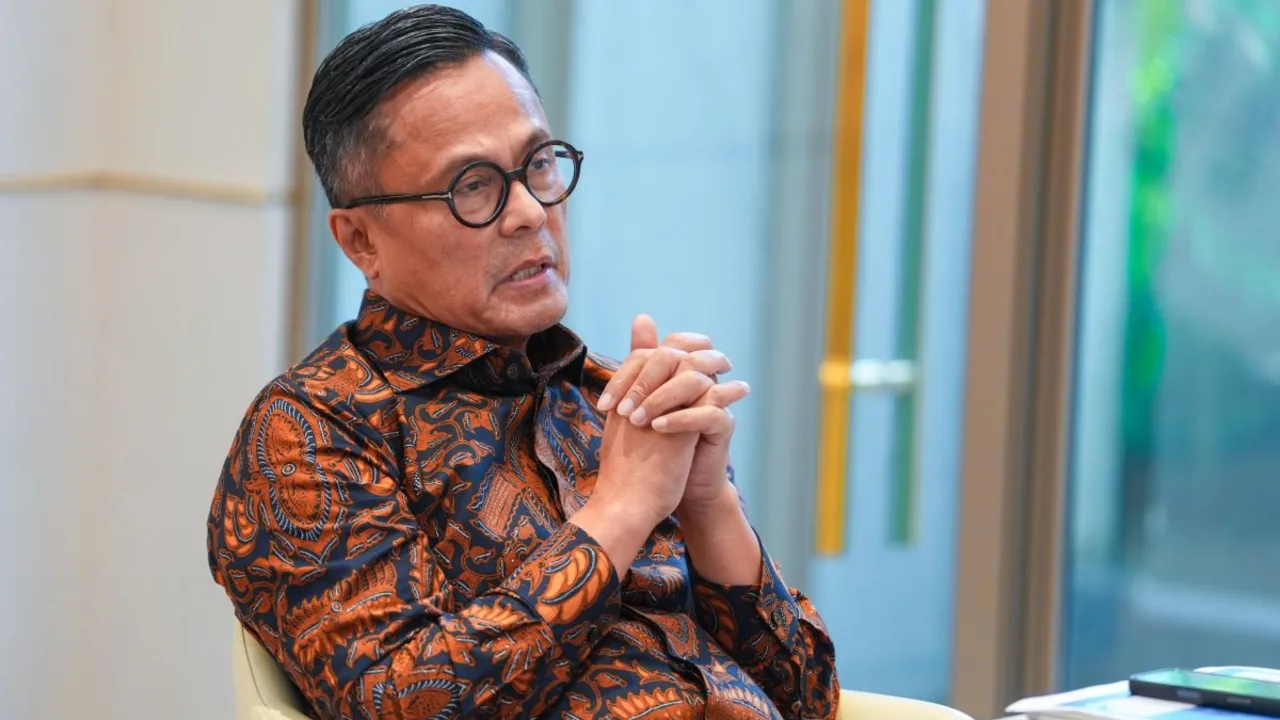
Indonesia’s Daya Anagata Nusantara Investment Management Agency (Danantara) is targeting a Rp200 trillion contribution from state-owned enterprises (SOEs) in 2026. The target forms part of a transformation of state-owned companies intended to increase profits, strengthen investment and support the national economy.
Danantara Indonesia Chief Operating Officer and Head of the SOE Regulatory Agency Dony Oskaria said the combined net profit of SOEs reached Rp214.9 trillion in January–August 2026, up 18.4 per cent year on year. He presented the figures at the Danantara Technology Innovation Investment Forum 2026 in Jakarta on Monday (26 October 2026).
Danantara is also aiming for SOE net profit of Rp360 trillion for the whole of 2026. However, the Rp200 trillion contribution target does not mean that the entire amount has already been realised as new investment.
Danantara targets Rp200 trillion in SOE contributions
Net SOE contributions, after accounting for state capital injections (PMN), rose from Rp53 trillion in 2024 to Rp138 trillion in 2025. The government projects that contributions will reach Rp200 trillion in 2026 without additional PMN.
Net contributions, net profit, dividends and investment funds are different indicators. Profit is what a company earns; dividends are the portion of profit distributed to shareholders; net contributions also take account of certain financial relationships between the state and SOEs.
SOE net profit reaches Rp214.9 trillion
Combined SOE net profit for January–August 2026 reached Rp214.9 trillion, compared with Rp181.5 trillion in the same period a year earlier. This was an increase of Rp33.4 trillion, or 18.4 per cent year on year.
The annualised return on equity (ROE) also rose to 8 per cent from 7.4 per cent. Dony said that business-model reform, operational efficiencies and improved management were part of the transformation process.
Reaching the 2026 net profit target of Rp360 trillion will require further gains through the end of the financial year.
52 per cent of SOEs are loss-making
Danantara still faces profitability challenges across its portfolio of state-owned companies. Dony said that 52 per cent of the 1,074 companies in the SOE portfolio were making losses, with the group’s losses estimated at around Rp20 trillion a year.
A layered corporate structure also creates inefficiencies in transactions between companies, with losses estimated at US$2 billion a year. Overhauling loss-making companies and simplifying business structures are projected to create potential savings of US$3.5 billion a year.
That figure is an estimate of the savings restructuring could generate; it has not all been realised.
Eight companies account for 97 per cent of dividends
Dony said that around 97 per cent of the dividends received by Danantara came from just eight companies, despite its portfolio comprising 1,074 entities.
This imbalance is one of the reasons for the restructuring. Danantara is preparing mergers, consolidation, divestments, liquidations and financial overhauls to improve the contribution of companies that are not operating efficiently.
Danantara plans to restructure around 750 companies
Danantara is preparing to reorganise around 750 companies by the end of the year, using different approaches according to each entity’s circumstances and prospects.
This is a component of the restructuring plan, not a list of all the companies that will be closed. Danantara also said that around 364 companies had been streamlined over the past 18 months.
In the longer term, the number of companies managed by Danantara is expected to fall to fewer than 200 entities by 2029–2030.
Transformations at Semen Indonesia and Pertamina begin to show results
Dony said net profit at PT Semen Indonesia (Persero) Tbk had increased by as much as 427 per cent following a series of transformation measures. In the energy sector, the merger of three Pertamina downstream business entities was said to have generated savings of around US$1 billion in six months.
Changes have also been made to airport businesses by developing commercial revenue beyond aviation services, including retail and property.
SOE profits earmarked for productive investment
Higher SOE profits are expected to strengthen funding capacity for productive investment, including industrial development, downstream processing of natural resources and national strategic projects.
The government previously said that 26 downstream-processing projects had reached groundbreaking stage in 2026. They include converting coal into dimethyl ether, copper and gold processing, industrial salt production, and the development of alumina and aluminium facilities.
The actual use of SOE profits will still depend on allocation decisions, funding structures and governance. The Rp200 trillion contribution target does not automatically become an investment budget for all these projects.
Danantara seeks more efficient SOEs by 2030
Danantara’s transformation is focused on simplifying corporate structures, strengthening governance, improving workforce quality, promoting technological innovation and enhancing financial management.
It aims to create a leaner group of state-owned companies with greater international competitiveness by 2029–2030. Success will depend on its ability to reduce losses, raise profitability and maintain the continuity of SOEs’ core services and business activities.
With combined profits reaching Rp214.9 trillion through August 2026, the targets of Rp200 trillion in net contributions and Rp360 trillion in net profit for 2026 still have to be demonstrated by year-end. Restructuring hundreds of companies will be a central part of efforts to improve efficiency and strengthen national investment.
Source: jawawa.id (https://jawawa.id/newsitem/danantara-targets-rp200-trillion-from-state-owned-enterprises-plans-major-restructuring-by-2030-1793019036)
Originally published by topik.id (https://www.topik.id/danantara-bidik-rp200-triliun-dari-bumn-siapkan-perombakan-besar-hingga-2030), translated from Indonesian