
Danantara Targets Half of New Asia Forum’s Investment Goal for Indonesia
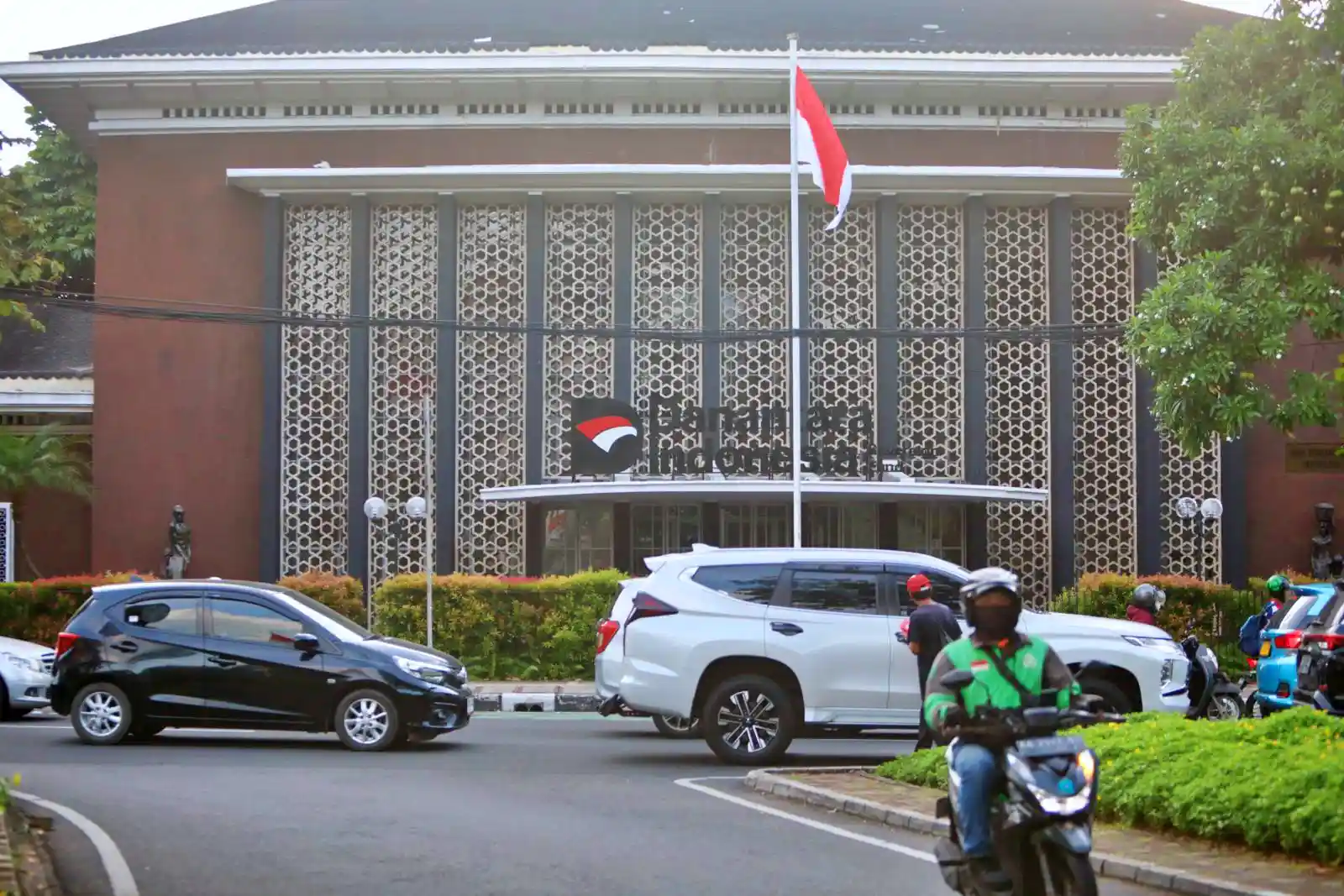
BPI Danantara is targeting Indonesia to attract 40–50 per cent of the total US$30 billion in investment through the New Asia Forum. This is equivalent to US$12 billion to US$15 billion, or around Rp216.54 trillion to Rp270.6 trillion.
Danantara Managing Director for Global Relations and Communications Pahala Mansury said the target was realistic given Indonesia’s contribution to economic growth in Southeast Asia.
“Looking at the growth figures, perhaps 40–50 per cent of it will go to Indonesia,” Pahala said at a New Asia Forum press conference at Wisma Danantara on Thursday, 22 October 2026.
Danantara wants to use the forum to attract investment from global companies as well as domestic businesses. Pahala explained that the US$30 billion investment target would not rely on Danantara alone. Its achievement would also involve the private sector and various business organisations.
Those encouraged to participate include members of the Indonesian Chamber of Commerce and Industry (Kadin), the Indonesian Employers Association (Apindo), and other businesspeople. Danantara is also encouraging investors to present projects suitable for financing, or bankable projects, through the forum.
“We are also encouraging private-sector parties, Kadin members, Apindo members and large businesses to make use of this forum,” Pahala said.
According to Pahala, the New Asia Forum will also provide an opportunity for other Southeast Asian countries to present investment projects. These include Vietnam, the Philippines, Thailand and Malaysia. Danantara hopes the forum will bring project owners together with investors able to provide financing.
Meanwhile, Danantara Investment Management Managing Director for Investment Stefanus Ade Hadiwidjaja said Danantara would serve as an investment catalyst. He said Danantara would not be the sole source of financing for the projects on offer.
“Danantara’s major focus is to crowd in capital, bringing in funds to be invested in Indonesia, from both global and local companies, whether private-sector or state-owned,” Stefanus said.
Stefanus stressed that Danantara did not have to be the largest investor in every project. Investment success would also be measured by Danantara’s ability to attract additional capital from other investors.
With this approach, the total investment entering Indonesia is expected to multiply the capital invested by Danantara. “For every dollar, every rupiah invested by Danantara, the investment that comes back into Indonesia is much greater. That is the idea,” Stefanus said.
The strategy positions Danantara as an investment catalyst seeking to connect promising projects with global and domestic sources of finance.
Danantara’s US$15 billion investment target: how does it compare with national investment realisation?
Indonesia’s target of attracting US$12 billion to US$15 billion through the New Asia Forum needs to be viewed in the context of national investment realisation. That figure is equivalent to around 21.4–26.8 per cent of total investment entering Indonesia in the first half of 2026.
The Ministry of Investment and Downstreaming/Investment Coordinating Board (BKPM) recorded national investment realisation of Rp1,010.6 trillion from January to June 2026, a year-on-year increase of 7.2 per cent.
For 2025 as a whole, investment realisation in Indonesia reached Rp1,931.2 trillion, up 12.7 per cent on the previous year. The figures show the scale of investment already recorded in the national economy, while also providing context for the size of the target the international business forum aims to mobilise.
However, an investment target set through a forum cannot be directly equated with national investment realisation. The comparison illustrates only the scale of the amount being sought; it does not guarantee that all the funds will enter Indonesia.
By source of financing, BKPM recorded foreign investment (PMA) of Rp507.6 trillion in the first half of 2026. Domestic investment (PMDN) stood at Rp502.9 trillion.
This composition shows that foreign and domestic capital both play a major role in supporting national investment. For Danantara, this is relevant to a strategy that relies on participation by global companies and Indonesian businesses to finance the projects on offer.
BKPM also listed Hong Kong, Singapore, China, Japan and Malaysia as the five largest sources of foreign investment in the second quarter of 2026. Together, they accounted for 79.6 per cent of total foreign investment during the period.
The concentration of investment sources highlights the importance of relations with regional investors in efforts to attract capital. However, national foreign investment data do not show how much funding from these countries and territories will come through the New Asia Forum.
Danantara’s project track record may also serve as one indicator of its ability to mobilise capital. Medcom reported on 22 October 2026 that Danantara was planning to invest US$2.5 billion to acquire a 25 per cent stake in the joint venture that oversees JBS Group’s operations in Australia and New Zealand.
The same report said three waste-to-energy projects in Bali, Bekasi and Bogor had entered the construction phase. It also reported that Danantara had completed its acquisition of Novotel Thakher Makkah on 11 August 2026, which has a capacity of 1,461 rooms.
These activities demonstrate investment and project-development activity. However, planned investment, projects under construction and completed acquisitions have different statuses and cannot simply be added together as new investment realised in Indonesia.
For this reason, the key measure of the New Asia Forum target’s success will not be only the value of investment announced. It will also require clarity on how many commitments become definitive agreements, which projects reach financial close, and how much funding is actually disbursed into projects in Indonesia.
Clarifying the definition of the US$30 billion target is also important. If the figure represents investment commitments, progress should be monitored through project follow-up and the disbursement of funds. If it represents the value of projects presented to investors, not all of that value will necessarily become investment.