
Danantara targets 15,000 semiconductor talents in 3-5 years
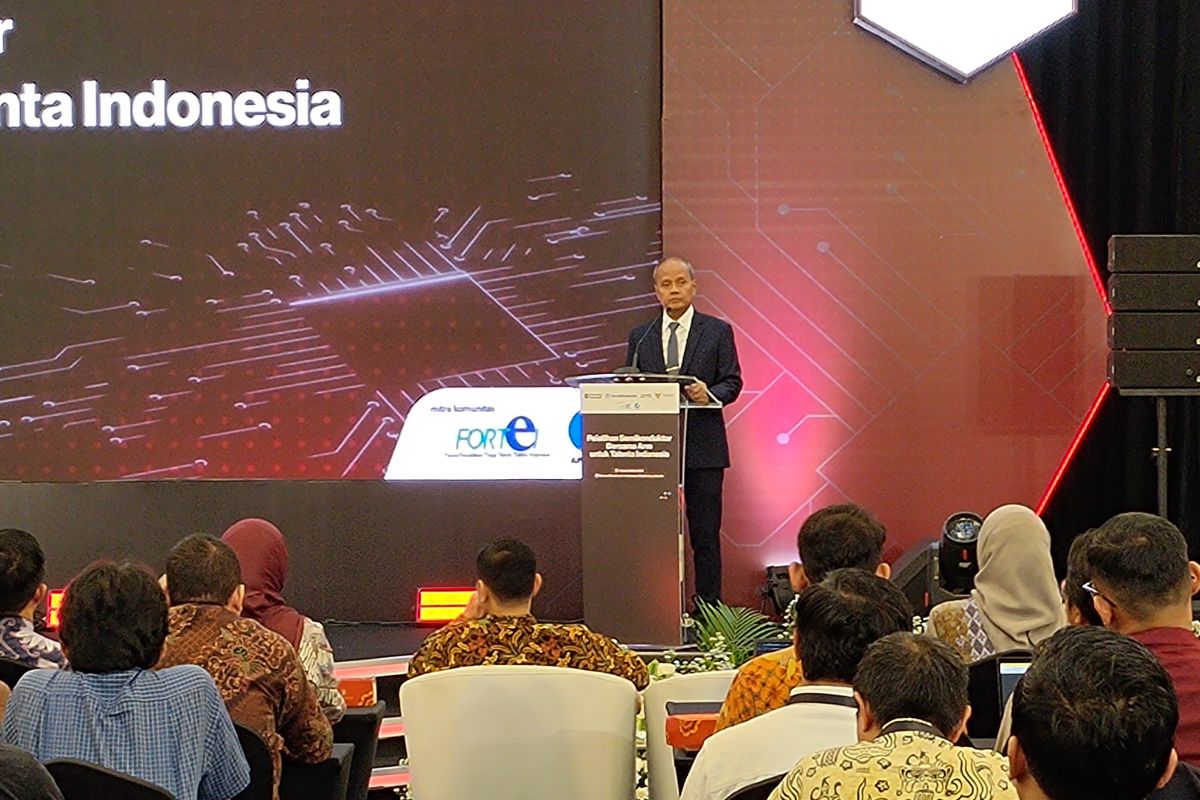
Danantara Chief Technology Officer Sigit Puji Santosa said during the opening of a semiconductor training in Jakarta on Wednesday that Indonesia places human capital development at the core of its semiconductor push.
Danantara organizes the training program in collaboration with British semiconductor company Arm Ltd. and Indonesia’s Ministry of Higher Education, Science, and Technology, with support from the Coordinating Ministry for Economic Affairs.
In its initial phase, the capacity-building initiative draws about 1,000 participants selected from over 4,500 applicants through a digital recruitment process.
Santosa pointed out that the training participants are expected to emerge as pioneers in developing technology to produce semiconductors in Indonesia.
As directed by President Prabowo, he continued, Danantara positions the development of Indonesia’s semiconductor industry as one of the foundations for industrial growth.
He stressed that developing technology-based industries is becoming increasingly important as economic growth depends on higher productivity and stronger technological capabilities.
“Semiconductors are one of the keys to Indonesia’s future industry,” he affirmed.
He further noted that Danantara had begun preparing future industrial sectors centered on semiconductor technology, including AI-powered automotive systems, semiconductor design for Internet of Things (IoT) applications, utilities, and other technological needs.
To that end, Danantara decided to focus on building an adequate talent pool.
“We are fostering an ecosystem for the semiconductor industry starting with talent development,” Santosa remarked, referring to the training program running through May 22.
According to him, trainees with the most outstanding evaluation results will have an opportunity to join Danantara or state-owned enterprises relevant to the semiconductor agenda.
Coordinating Minister for Economic Affairs Airlangga Hartarto noted that the global semiconductor industry is projected to reach a value of US$1.5 trillion by 2030.
He highlighted Indonesia’s strong potential in chip-related industries, citing its productive population of 190 million people, smartphone penetration rate of 75 percent, and the growing use of semiconductors in the automotive and IoT sectors.
The minister added that Indonesia currently has the capacity to produce two million vehicles annually and exports around 600,000 units to 70 countries, with each vehicle requiring at least 150 semiconductor chips.
“We are confident that the talents trained by Arm will become future leaders of Indonesia’s semiconductor industry,” he stated.
Related news: Danantara, Higher-Ed Ministry strengthen semiconductor ecosystem
Related news: Indonesia needs 150,000 more engineers for the digital sector: Govt
Related news: Indonesia, Arm partnership targets faster mastery of chip technology
Translator: Aria A, Tegar Nurfitra