
Danantara Takes Over Coal Exports, East Kalimantan Assesses Impact on Jobs and Investment
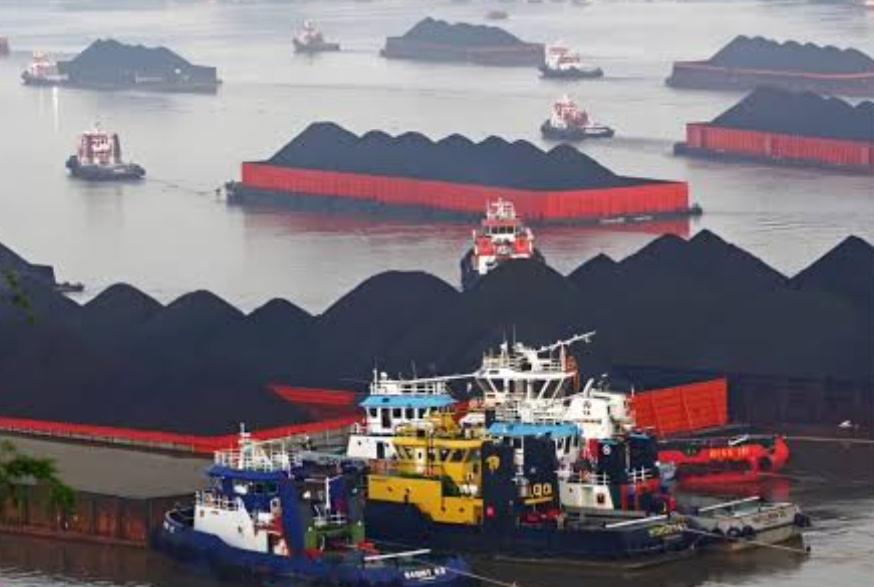
The government has begun implementing a single-exporter policy for several strategic commodities through PT Danantara Sumberdaya Indonesia. The policy, effective from 1 June 2026, requires the reporting of coal, palm oil, and iron alloy exports through Danantara as the sole exporter, while also tightening the obligation to place export proceeds (DHE) domestically.
Amid the implementation, the East Kalimantan Provincial Government views the central government’s move as aimed at strengthening export oversight and preventing practices detrimental to the state. However, the policy is also expected to impact the investment climate and business activities in the coal sector, which has long been the backbone of the regional economy.
Bambang Arwanto, Head of East Kalimantan’s Energy and Mineral Resources (ESDM) Office, stated that the export mechanism through Danantara is already stipulated in Government Regulation Number 24 of 2026 concerning procedures for exporting strategic minerals. "It is already included in Government Regulation Number 24 of 2026 on procedures for exporting strategic minerals. Article 3 explains that the government regulates exports, either directly or through Danantara as the owner or intermediary," Bambang said on Monday (15/6/2026).
According to him, the government has an interest in unifying export governance so that state data is more accurate and irregularities can be suppressed. "The government’s need is to unify exports so there is no under-invoicing or under-transferring. So everything can be centralised and the government can detect if there is fraud or export activities that cause losses to the state," he said.
While supporting the central government’s objectives, Bambang acknowledged that the policy cannot be separated from its impact on the business world. This is especially so as the government is simultaneously cutting national coal production volumes in the Work Plan and Budget (RKAB). He noted that the national production quota, which previously stood at around 795 million metric tonnes, has now been reduced to approximately 600 million metric tonnes, a cut of around 195 million tonnes.
"We know the new RKAB has just been issued and there is a reduction in coal volume from around 795 million metric tonnes to 600 million tonnes. There is a reduction of about 195 million tonnes," he said. Bambang assessed that the production cut will affect companies’ investment interest and plans. "The investment process from start to finish is related to sales. It is not just about the company’s need for coal, but there is trust involved. So it will certainly affect capital owners and investment interest," he stated.
As the largest contributor to national coal supply, East Kalimantan is expected to be the region most affected by the production quota reduction. Bambang said around 60 per cent of the national coal supply originates from East Kalimantan. Therefore, the national production cut automatically impacts business activities in the region. "Regarding the RKAB reduction, we know that around 60 per cent of the national coal supply comes from East Kalimantan. So the impact is certainly quite significant," he said.
He revealed there are approximately 180,000 workers engaged in the coal sector in East Kalimantan. Of that number, around 44,000 workers in the core sector are potentially affected. "Those working directly in the coal sector number around 180,000 people. Those directly affected are around 40,000 to 44,000 workers," he said.
A broader impact, Bambang said, could potentially occur in supporting sectors such as transportation, heavy equipment, and shipping, which depend on the coal industry. "If you include derivative sectors like trucking, heavy equipment, and shipping, the number of workers is around 300,000. If the supporting sectors are also affected, the number would be even larger," he said.
Nevertheless, Bambang stressed that these figures represent potential impacts and should not be interpreted as a wave of layoffs. "It does not necessarily mean layoffs. The exact data is with the Manpower Office. But if we talk about those affected, from the coal sector to its supply chain, the number of workers is around 80,000," he clarified.
According to him, with a production cut of around 195 million tonnes and East Kalimantan’s contribution of 60 per cent, the impact on the regional economy cannot be considered small. "If the reduction is around 195 million tonnes and 60 per cent is supplied by East Kalimantan, then the impact is certainly significant," he said.
Despite this, the East Kalimantan Provincial Government stated it continues to support the central government’s efforts to improve the governance of strategic commodity trade. "We certainly support the government’s desire to regulate exports and imports so there is no discrepancy between government and private sector data. That is important to avoid under-invoicing practices and ensure the state is not harmed," Bambang concluded.
Source: jawawa.id (https://jawawa.id/newsitem/danantara-takes-over-coal-exports-east-kalimantan-assesses-impact-on-jobs-and-investment-1781621421)
Originally published by kaltimkita.com (https://www.kaltimkita.com/detailpost/danantara-ambil-alih-ekspor-batu-bara-kaltim-hitung-dampak-ke-pekerja-dan-investasi), translated from Indonesian