
Danantara Supervisory Board Member Explains Why Foreign Investors Doubt Indonesia’s Capital Market
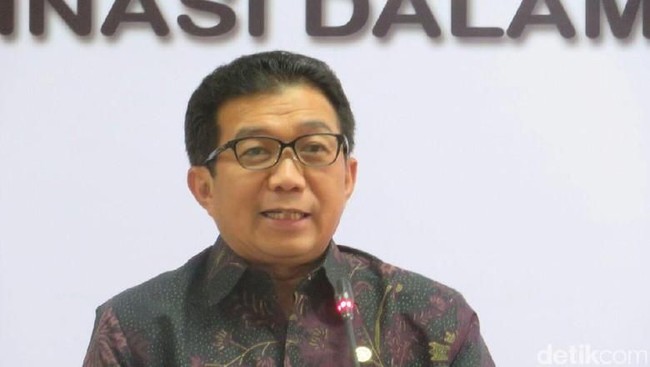
Jakarta, CNBC Indonesia – Muliaman D. Hadad, deputy chairman of the Supervisory Board of Danantara Indonesia, said market integrity was one of the issues drawing attention from international parties to Indonesia’s capital market. The concern relates to transparency over share ownership structures and unusual trading.
Muliaman said international investors’ concerns were not about the quality of each listed company’s financial statements. Instead, they questioned whether information on share ownership and trading activity in Indonesia’s capital market reflected the actual situation.
“Some international parties are questioning the integrity of our market. They are not disputing the quality of each of our issuers’ financial statements. Nor are they saying that our companies’ annual reports are poor,” Muliaman said at the 2025 Annual Report Awards in Jakarta on Monday (23 November 2026).
He said international parties were asking whether the free float reported by issuers truly represented shares available to the public. They also questioned whether share prices were being determined through genuine market interaction or were instead influenced by concentrated ownership and opaque trading.
Muliaman stressed that this was a matter of market integrity, not merely corporate integrity. This posed a particular challenge because, when the market system is considered lacking in integrity, all companies—including issuers with good governance—can suffer the consequences.
He explained that this differed from a breach committed by an individual company, where the party at fault could be identified directly. When the integrity of the market system is questioned, however, all companies’ access to global investors could narrow, while the reputation of the market as a whole would be affected.
“A financial reporting manipulation scandal can cause investors to leave an entire market, even if hundreds of other issuers are clean and performing well. When trust is lost, even the most reputable companies bear the cost,” Muliaman said.
For that reason, he said efforts to improve integrity must address both corporate integrity and market integrity. Responsibility for corporate integrity rests with the board of directors and board of commissioners of each issuer.
He identified three priorities for directors and commissioners seeking to strengthen corporate integrity. First, annual reports should be treated as statements of integrity, not merely as documents to meet compliance obligations.
Muliaman said financial reporting was not just a regulatory requirement but a means for companies to tell the public that nothing was being concealed. Every reported figure should therefore reflect reality, and every disclosure should be made in good faith rather than simply to meet minimum requirements.
Second, companies must ensure that their reported free-float figures genuinely reflect the situation. More important than the size of the free float is whether shares classified as public shares are actually available for trading or are concentrated among certain parties.
Third, companies need to build a culture of integrity from the top down. Muliaman said integrity must not be merely an office slogan, but must be reflected in every decision, board meeting and interaction with regulators.
Source: jawawa.id (https://jawawa.id/newsitem/danantara-supervisory-board-member-explains-why-foreign-investors-doubt-indonesias-capital-market-1795477830)
Originally published by CNBC Indonesia (https://www.cnbcindonesia.com/market/20261123222947-17-787800/dewas-danantara-beberkan-alasan-asing-ragukan-pasar-modal-ri), translated from Indonesian