
Danantara Sets Up DSI to Oversee Natural Resource Exports and Prevent Under-Invoicing
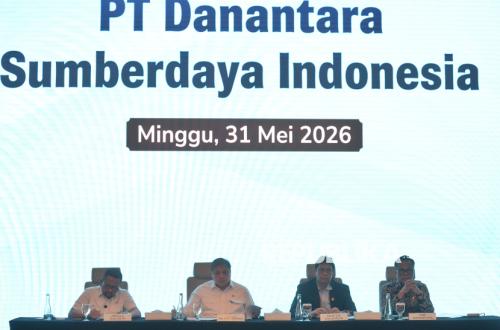
Chief Operating Officer (COO) Danantara Indonesia Dony Oskaria stated that the establishment of PT Danantara Sumber Daya Indonesia (DSI) does not add new bureaucracy to natural resource export governance. DSI, he said, will create added value for the nation, society, and businesses through more transparent and accountable export management.
“Several aspects are expected to add value from the processes the government will implement via DSI for our natural resource exports,” Dony said during a press conference on the Operational Preparation of PT Danantara Sumber Daya Indonesia at Wisma Danantara in Jakarta on Sunday, 31 May 2026.
Dony hopes the policy will boost state revenue. He said DSI will strengthen oversight of practices suspected of reducing government revenue, such as under-invoicing and transfer pricing in commodity exports.
“As previously stated by Mr Purbaya, if there is no significant impact, something is wrong,” said the West Sumatran native.
He added that monitoring mechanisms will be simplified as all export data and activities can be monitored integrally. Dony said the Ministry of Finance can more easily track potential state revenue by communicating directly with Danantara.
“Mr Purbaya can simply contact Danantara to check issues—why revenue was previously suspected of under-invoicing or transfer pricing, which should no longer occur with the establishment of DSI,” Dony stated.
The head of BP BUMN also hopes DSI will benefit society through improved performance of companies in the natural resource export chain. He said transparent corporate governance directly impacts net income or profits.
“Most of these companies are publicly listed, so the public will also benefit more,” he added.
Dony said the government wants DSI to benefit the business sector. Therefore, during the six-month transition period from June to December 2026, the government will hold discussions with industry players.
“During the six-month transition phase, we will conduct numerous discussions, including setting price benchmarks to be discussed with the government and all business stakeholders,” Dony added.
To support operations, Danantara has received human resource support from several ministries and government agencies involved in trade and investment governance. Dony noted key figures from the Ministry of Finance, Ministry of Trade, and BKPM (Investment Coordinating Board) will fill various positions at DSI.
Dony stressed that natural resource export regulation will not be unilaterally handled by Danantara. He said DSI’s success depends on collaboration among all stakeholders in the national export ecosystem.
“This is not solely independent action by Danantara; we also expect support from stakeholders involved in the process of regulating our natural resource exports moving forward,” Dony said.