
Danantara says Bekasi waste-to-energy plant to operate from mid-2028
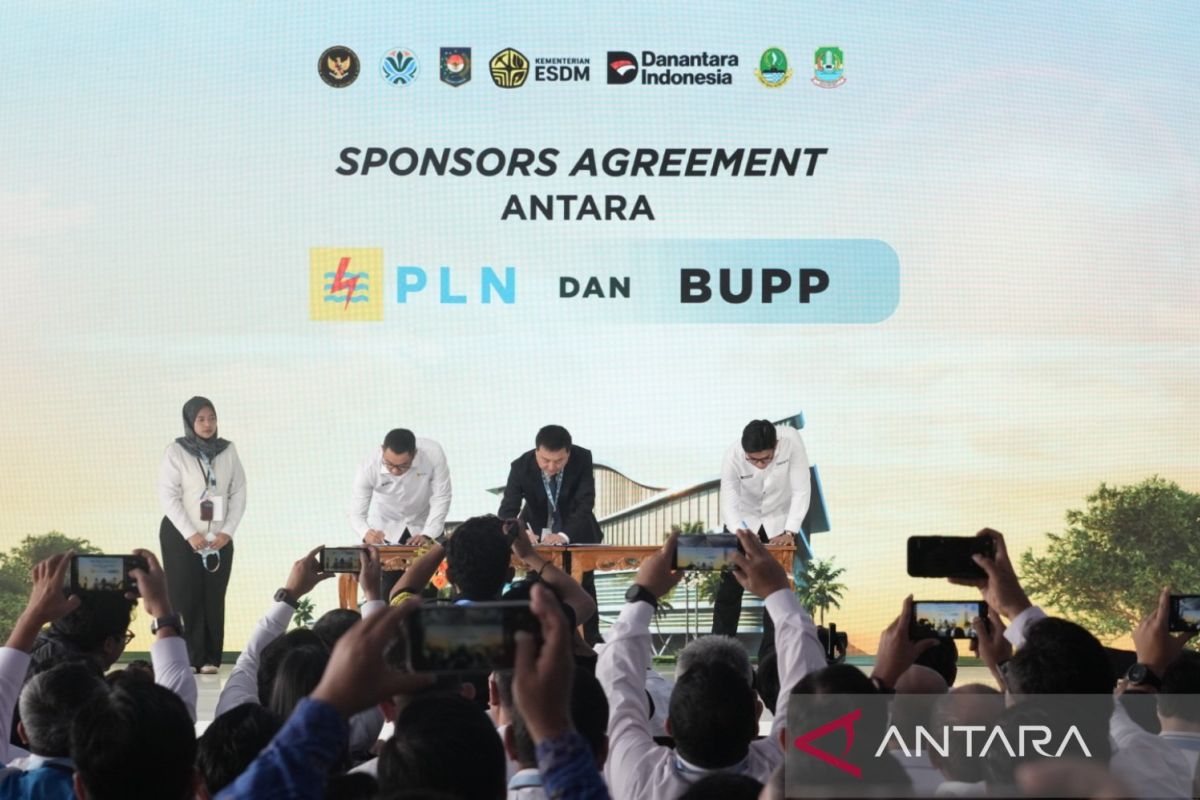
The groundbreaking of this waste-to-energy facility marks the arrival of a concrete solution to Indonesia’s waste emergency, particularly in Bekasi.
Bekasi (ANTARA) - The Waste-to-Energy Processing Facility (PSEL) in Ciketing Udik, Bantargebang, Bekasi, West Java, is targeted to begin operations in mid-2028 following the groundbreaking by Danantara Indonesia and Daya Energi Bersih Nusantara on Wednesday.
Danantara Indonesia Chief Investment Officer Pandu Sjahrir said the Bekasi PSEL is the second project to enter the construction phase after the Denpasar Raya PSEL, which began construction in July 2026. The project is part of efforts to manage urban waste.
“The groundbreaking of this PSEL marks the arrival of a concrete solution to Indonesia’s waste emergency, particularly in Bekasi. The Bekasi PSEL is expected to create environmental, energy and economic value for the surrounding community,” Pandu said in Bekasi on Wednesday.
The Bekasi PSEL is designed to process up to 1,500 tonnes of waste per day into clean energy in the form of electricity. The energy produced will be channelled to the PT PLN (Persero) grid.
In this project, the electricity generated by the PSEL is purchased by PLN through a Power Purchase Agreement (PJBL) with each PSEL Business Entity Developer and Operator (BUPP). The electricity purchase price is set at USD 0.20 per kWh for all capacities.
According to him, the construction of the Bekasi PSEL is one of the steps to address the waste problem while generating economic and energy benefits for the community.
Pandu also expressed hope that the PSEL project will create nearly 1,000 green jobs while providing clean energy for tens of thousands of households.
“This step proves that synergy between the central government, regional government, Danantara Indonesia and various stakeholders can deliver concrete solutions for integrated waste management in Indonesia,” he said.
In operation, the Bekasi PSEL will use moving grate incinerator technology equipped with an Air Pollution Control System (APCS). This technology was selected taking into account the characteristics of waste in Indonesia.
The system is designed to significantly reduce waste volume in a relatively short time while suppressing emissions generated from the processing.
The technology used is designed to follow the European Union Industrial Emissions Directive (EU IED) standards, which serve as one of the strict environmental benchmarks.
In addition to incineration technology, waste management in the Bekasi PSEL area will synergise with pyrolysis technology. This technology is used to process existing waste piles into renewable energy in the form of fuel oil.
Army Chief of Staff General TNI Maruli Simanjuntak said the facility could be a solution for processing waste piles that have long been a problem in several regions.
“This facility provides the capability to process existing waste piles that have been a concern in various regions. We hope this model can be developed in more locations to provide a broader impact on waste management in Indonesia,” Maruli said.
The construction of the Bekasi PSEL has also obtained several important foundations before entering the construction phase. One of them is the Environmental Impact Analysis (AMDAL) document.
The Ministry of Environment (KLH) handed over the AMDAL document to Bekasi Environment Nusantara as the Bekasi PSEL Business Entity Developer and Operator (BUPP) on Monday (24/8).
The document was prepared through a study of various potential environmental impacts of the project. The issuance of the AMDAL is one of the important stages before the project enters the construction phase.
In addition to the AMDAL, the groundbreaking of the Bekasi PSEL was also accompanied by the signing of a Power Purchase Agreement (PJBL) or Power Purchase Agreement (PPA) with PLN.
The agreement serves as the commercial basis for the absorption of electricity generated by the PSEL into the PLN grid. With the PJBL in place, the project has offtake certainty while supporting the long-term operational sustainability of the facility.
Coordinating Minister for Food Zulkifli Hasan (Zulhas) assessed that collaboration between various parties is key to accelerating the handling of the waste problem.
“With strong collaboration, we are optimistic that waste piles that have long been a problem in various regions can be addressed more quickly. Hopefully through joint efforts, we can deliver concrete solutions for waste management in Indonesia,” he said.
Source: jawawa.id (https://jawawa.id/newsitem/danantara-says-bekasi-waste-to-energy-plant-to-operate-from-mid-2028-1787741710)
Originally published by Antara (Indonesian) (https://www.antaranews.com/berita/5711831/danantara-sebut-psel-bekasi-beroperasi-mulai-pertengahan-tahun-2028), translated from Indonesian