
Danantara pushes for technology transfer in advanced material investment
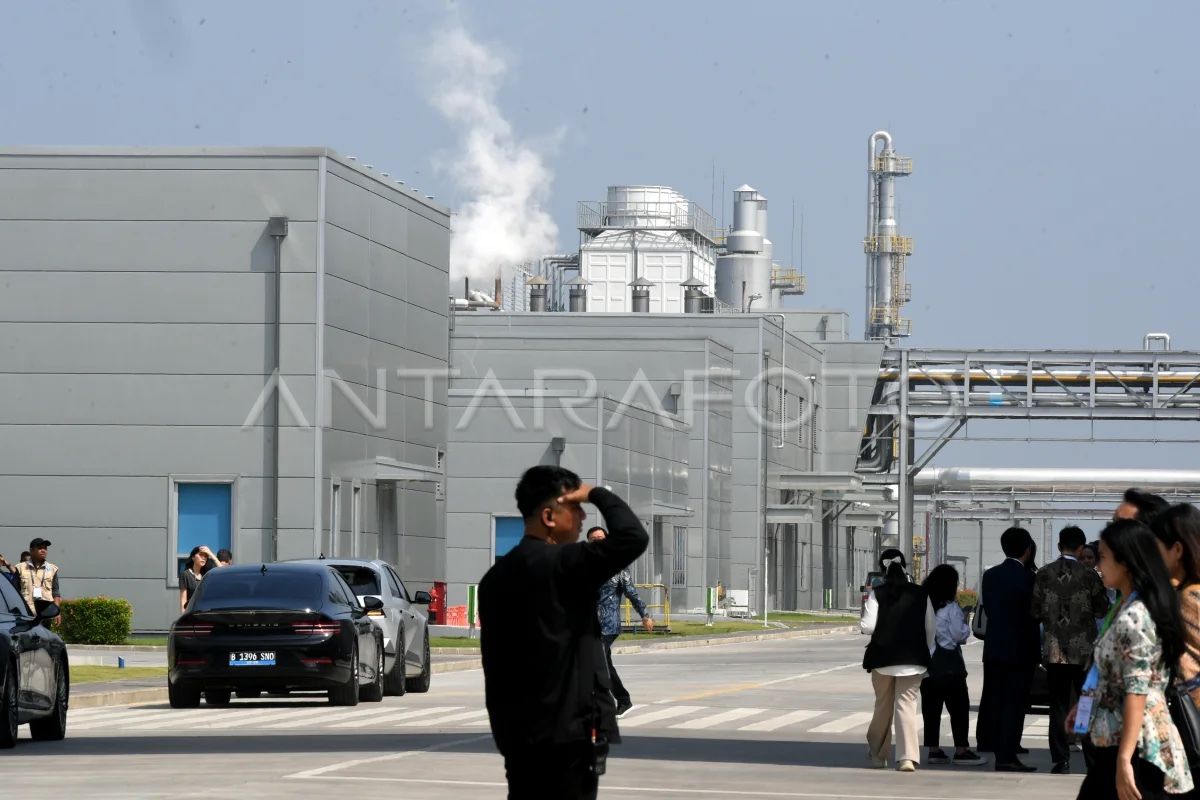
The Daya Anagata Nusantara Investment Management Agency (Danantara) is promoting technology transfer, co-development, and the involvement of universities and research institutions in advanced material investments to strengthen national industrial and technological capabilities.
Danantara Managing Director of Industrialisation Ardy Muawin stated that the investment approach considers not only cost and time but also its contribution to domestic industrial development. “Our concept in engaging investment partners is not just about cost and time, but also industrial development. We want technology transfer, co-development, and the involvement of universities and research institutions such as BRIN,” Ardy said in an official statement received in Jakarta on Tuesday.
According to him, mastery of advanced materials is necessary for Indonesia to evolve from a country reliant on natural resource wealth into one with stronger industrial and technological capabilities. This push for advanced material development comes amid growing investment in downstream processing in Indonesia.
The Ministry of Investment and Downstreaming/Investment Coordinating Board (BKPM) recorded downstream investment realisation of Rp300.1 trillion in the first half of 2026, accounting for 29.7 percent of the total national investment of Rp1,010.6 trillion. In the second quarter of 2026, downstream investment realisation reached Rp152.7 trillion. Bauxite was the largest commodity at Rp40.1 trillion, followed by nickel at Rp29.4 trillion, copper at Rp16.7 trillion, iron and steel at Rp13.2 trillion, and silica sand at Rp4 trillion.
Indonesia is considered to have substantial resource endowments for developing this industry. The Geological Agency of the Ministry of Energy and Mineral Resources, citing United States Geological Survey (USGS) data, noted that Indonesia holds the world’s largest nickel reserves, accounting for more than 40 percent of global reserves.
Danantara CEO Rosan Roeslani said that resources such as nickel, bauxite, copper, tin, and rare earth elements are essential materials for technology development, including electric vehicle batteries, semiconductors, the defence industry, and clean energy. According to Rosan, mineral resource management must move beyond the extraction stage towards the domestic development of higher value-added materials and technology products. “We agree that it is time for Indonesia to move up the value chain in advanced materials,” Rosan stated.
He added that Danantara’s investment direction is aimed not only at creating economic value but also at strengthening national industrial and technological capabilities, creating quality jobs, and supporting sustainable development. “This is Danantara’s commitment so that investment creates value for the nation,” he said.
One step already taken is the signing of a cooperation agreement on advanced material development or critical mineral downstreaming between PT Mineral Industri Indonesia (Persero), or MIND ID, PT Len Industri (Persero), PT Krakatau Steel (Persero) Tbk, and PT Perusahaan Mineral Nasional (Perminas) (Persero). The cooperation is directed at optimising the supply and absorption of critical minerals and advanced materials for national strategic industries and jointly developing technology to build a domestic advanced material industry.
Technocrat and Chairman of the Indonesian Engineers Association (PII) Ilham Akbar Habibie assessed that technological mastery must go hand in hand with improving the quality of human resources so that Indonesia can develop technology independently. “Technology development must proceed in tandem with human resource quality development. With stronger human resources, Indonesia will have the ability to develop technology independently and not remain dependent on products or knowledge from other countries,” Ilham said.
According to him, natural resource wealth alone is insufficient to make a country advanced without the ability to apply, institutionalise, and master technology. “Industry ultimately depends heavily on a country’s ability to apply, institutionalise, and master technology. If we cannot apply, institutionalise, and master technology, we will not become a developed country,” he stated. He assessed that the transformation from a natural resource-based economy towards industry and technology is necessary so that mineral wealth can generate higher added value, strengthen industrial independence, and provide broader benefits to society.