
Danantara Prepares AI and Data Centre Investments, with Energy Needs in Focus
The development of data centres and artificial intelligence (AI) requires supporting infrastructure, particularly reliable energy and water supplies. Danantara Investment Management (DIM) is preparing to announce several strategic investments in the sector at the New Asia Forum (NAF) 2026 in Bali on 3–4 December.
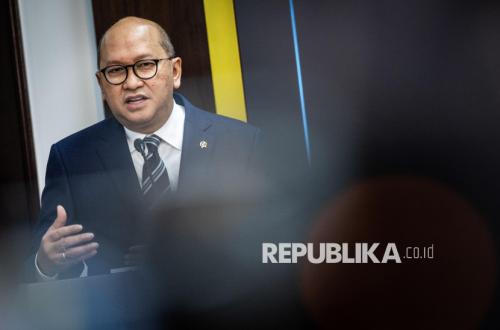
DIM Managing Director of Investment Stefanus Ade Hadiwidjaja said investment in digital infrastructure and AI was a priority for strengthening national technological capacity and competitiveness.
“We have several projects, including in data centres, that will be announced at the New Asia Forum. We hope this will be an example of large-scale investment entering Indonesia,” Stefanus said at a media coffee morning at Wisma Danantara Indonesia in Jakarta on Thursday (22 October 2026).
According to Stefanus, technology investments should not be assessed solely on their potential financial returns. They should also promote technology transfer, strengthen industrial capabilities and develop Indonesian human resources.
He said the global growth of AI presented a major opportunity for Indonesia. However, investment in the sector still required careful assessment to ensure its economic benefits were matched by the readiness of national infrastructure.
“AI is developing rapidly around the world. We are always prudent and cautious with every investment. At the same time, we cannot afford to miss the major opportunities in AI,” he said.
One issue DIM is focusing on is the energy and water required to operate large-scale data centres. Stefanus said digital infrastructure development needed to take the availability of both resources into account so that it would not disrupt public needs or industrialisation.
DIM is therefore encouraging the adoption of the Bring Your Own Energy (BYOE) principle, under which energy sources are provided to support data-centre operations. Development should also consider closed-loop technology to reduce water consumption, as well as water-treatment and desalination systems.
DIM also assesses emissions, electricity-grid readiness, data security and environmental impacts when considering investments. This approach is intended to ensure that digital infrastructure development keeps pace with national development needs.
Stefanus also provided updates on several strategic projects managed by DIM. In the waste-to-energy sector, three first-phase projects in Bali, Bekasi and Bogor have entered the construction stage.
Meanwhile, eight partners in the second phase have received Conditional Letters of Award (CLoAs) for eight sites covering 20 regencies and municipalities. DIM is targeting phased ground-breakings for these projects in early 2027.
DIM and Denera have also appointed 34 financial institutions to a lenders’ panel. Indicative financing interest from those institutions exceeds three times the programme’s estimated funding requirement.
In Hajj and umrah services, DIM completed its acquisition of Novotel Thakher Makkah on 11 August 2026 and of a 4.4-hectare plot in the Thakher area on 18 October 2026.
The hotel has 1,461 rooms and can accommodate around 4,400 pilgrims. The acquired land is planned for development as a complex of 13 hotel towers, with about 4,560 rooms and capacity for up to 18,000 pilgrims, to be built in stages.
In the protein sector, DIM has partnered with JBS Group through a planned US$2.5 billion investment for a 25 per cent stake in a joint venture encompassing JBS operations in Australia and New Zealand. The partnership also opens the possibility of up to US$2.5 billion in additional financing for investment and acquisitions in Indonesia and the region.
Stefanus said the investments were intended to deliver long-term economic benefits, expand access to technology and strengthen national industrial capabilities.
Through the New Asia Forum 2026, DIM hopes to connect Indonesia’s development needs with global investors, including those interested in developing digital and AI infrastructure backed by adequate energy and resources and sound environmental management.