
Danantara Pays Rp562 Trillion in Taxes in 2025
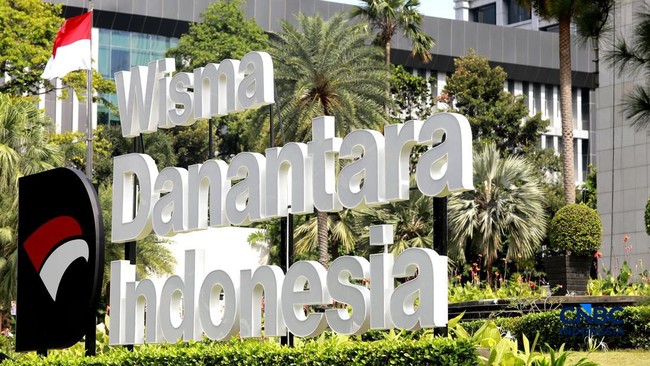
In its first year of operations, the Daya Anagata Nusantara Investment Management Agency (BPI Danantara) recorded a contribution of Rp567.2 trillion to state revenue through tax payments and non-tax state revenue (PNBP) from the entire ecosystem of companies it manages in 2025.
The figure was disclosed in Danantara’s first financial report, for the 2025 financial year, presented on Wednesday, 25 November 2026. The consolidated financial statements were audited by the Audit Board of Indonesia (BPK) and received an unqualified opinion.
In addition to the substantial contribution from companies in its ecosystem, BPI Danantara itself recorded income tax payments of Rp110 billion in 2025.
The scale of this contribution can be seen in the realisation of state revenue over the past year.
According to Ministry of Finance data, state revenue in 2025 reached Rp2,765.13 trillion, comprising tax revenue of Rp2,218.17 trillion, PNBP of Rp541.53 trillion and grant receipts of Rp5.43 trillion.
With payments totalling Rp567.2 trillion, Danantara’s ecosystem accounted for 20.51%, or about one-fifth, of total state revenue in 2025.
A closer look at tax contributions from Danantara’s businesses
Danantara’s substantial payments to the state reflect the scale of the state-owned companies now under its management.
According to Danantara’s 2025 Annual Report, through PT Danantara Asset Management (DAM), it manages about 50 state-owned enterprise (SOE) holding companies, with a portfolio covering more than 1,000 entities.
The companies’ business activities generated consolidated operating revenue of Rp2,385.2 trillion, with pre-tax profit of Rp292.75 trillion.
On that profit, Danantara recorded an income tax expense of Rp89.34 trillion, leaving net profit for the period of Rp203.41 trillion.
The consolidated cash flow statement shows that the Danantara Group paid Rp65.19 trillion in corporate income tax during the reporting period.
These financial results cover nine months of SOE performance, from the transfer of shares in March 2025 to the end of December 2025.
SOE tax payments continue to rise
Long before Danantara was established, state-owned companies had already been a source of tax revenue for the state. Their contribution has continued to increase in recent years.
In 2020, when Indonesia’s economy was under pressure from the Covid-19 pandemic, SOE tax payments stood at Rp247 trillion.
As the economy recovered, payments by state-owned companies rose to Rp278 trillion in 2021, then surged to Rp410 trillion in 2022.
The increase continued in 2023, with tax payments reaching Rp457 trillion.
According to the Ministry of SOEs’ 2024 Performance Report, the figure rose again to Rp491.66 trillion in 2024, based on data that had not yet been audited at the time.
Over four years, SOE tax payments to the state almost doubled.
Danantara’s arrival in 2025 brought changes to the management of state-owned companies, particularly in how the dividends they generate are used.
Most dividends that had previously been paid directly to the government are now managed through Danantara for investment and business development. Tax payments, meanwhile, remain a source of state revenue from SOE business activity.
With consolidated assets of Rp11,607 trillion at the end of 2025, Danantara has a substantial business base to develop. The more productive and profitable the companies it manages become, the greater the potential tax revenue for the state.
Large payments to the state, fewer government capital injections
Danantara’s contribution to public finances can be measured not only by its tax and PNBP payments, but also by the sharp reduction in government capital injections to SOEs.
The government has traditionally allocated funds through State Capital Participation (PMN) for various SOE needs, from strengthening their capital base to carrying out projects mandated by the government.
According to Danantara’s financial report presentation, the government allocated PMN of Rp54.6 trillion in 2022. This fell to Rp46.7 trillion in 2023 and Rp35.2 trillion in 2024.
In Danantara’s first year of operations, in 2025, the PMN allocation fell to Rp4.7 trillion, down 86.65% on the previous year.
The 2025 PMN was channelled through DAM to three state-owned companies: PT Pelayaran Nasional Indonesia (Pelni), PT Kereta Api Indonesia (KAI) and PT Industri Kereta Api (INKA), to support government-mandated projects.
Under Danantara, SOEs now have a source of funding from dividends collected and reinvested. These funds can be used to strengthen their capital, finance business expansion and support the recovery of state-owned companies.
If this arrangement helps SOEs become more financially independent, their reliance on direct capital injections from the state budget (APBN) could fall further. The government could then have more fiscal room to fund other development needs, while SOEs continue contributing to state revenue through tax payments.
Source: jawawa.id (https://jawawa.id/newsitem/danantara-pays-rp562-trillion-in-taxes-in-2025-1795665040)
Originally published by CNBC Indonesia (https://www.cnbcindonesia.com/research/20261126091529-128-788590/danantara-bayar-pajak-562-triliun-sepanjang-2025), translated from Indonesian