
Danantara Outlines Rationale for Forming a State-Owned Enterprise Specialising in Coal Exports and Related Activities
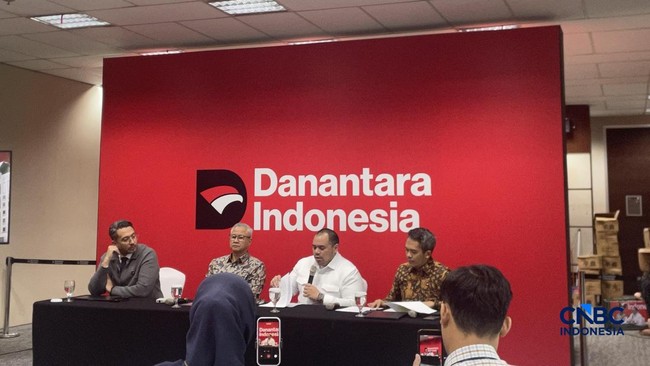
Jakarta – The Danantara Energy Investment Management Agency (BPI Danantara) has explained the rationale behind the formation of PT Danantara Sumber Daya Indonesia (DSI), a state-owned enterprise that will handle exports of Indonesia’s strategic commodities. Chief Investment Officer Danantara Pandu Sjahrir said the company is intended to strengthen the governance of exports of strategic commodities. He said the firm, which will operate effectively from 1 June 2026, will not only regulate the governance of commodity trade but also support national economic growth through the foreign exchange proceeds from exports. “We want the world to be happy Indonesia should be happier, and this is Indonesia’s resource for the world that brings the greatest possible prosperity to the Indonesian people,” he said at Wisma Danantara in Jakarta on Wednesday 20 May 2026. Sjahrir outlined that DSI will perform several roles. First, to strengthen transparency and the commodity trade reporting system, and to ensure transactions are conducted in an accountable manner and at market prices. Next, to support the management of the country’s foreign exchange reserves more effectively, as well as to consolidate data and governance to improve sector efficiency. “We will run this well and openly; with this new mechanism we can do things that are much better,” he added. In the same event, Managing Director of Stakeholders Management at BPI Danantara, Rohan Hafas, said that DSI, which is currently a private company, will later take the form of a state-owned enterprise. “This company has 1% of its shares owned by BP BUMN. It will act as the intermediary between the export process to overseas for several commodities,” he said. The formation of DSI will occur in two stages. The first stage, from 1 June to 31 December 2026, will function as an evaluator and intermediary for exporting companies, i.e., the sellers and buyers of certain commodities to be exported. “This intermediary will take effect on 1 June,” he said. The second stage will see DSI become a trader company. In other words, DAI will purchase commodities directly from coal, palm oil, and ferro alloy exporters. “That means direct procurement, not just inspection of documents for export. It will buy directly and sell to the international market,” he explained. In the second stage, DSI will also receive the proceeds of commodity sales in foreign currencies. “It depends on the country and the trade, according to best practice, and the funds will be repatriated to Indonesia in full,” he concluded.