
Danantara Opens Opportunities for Long-Term Sports Funding
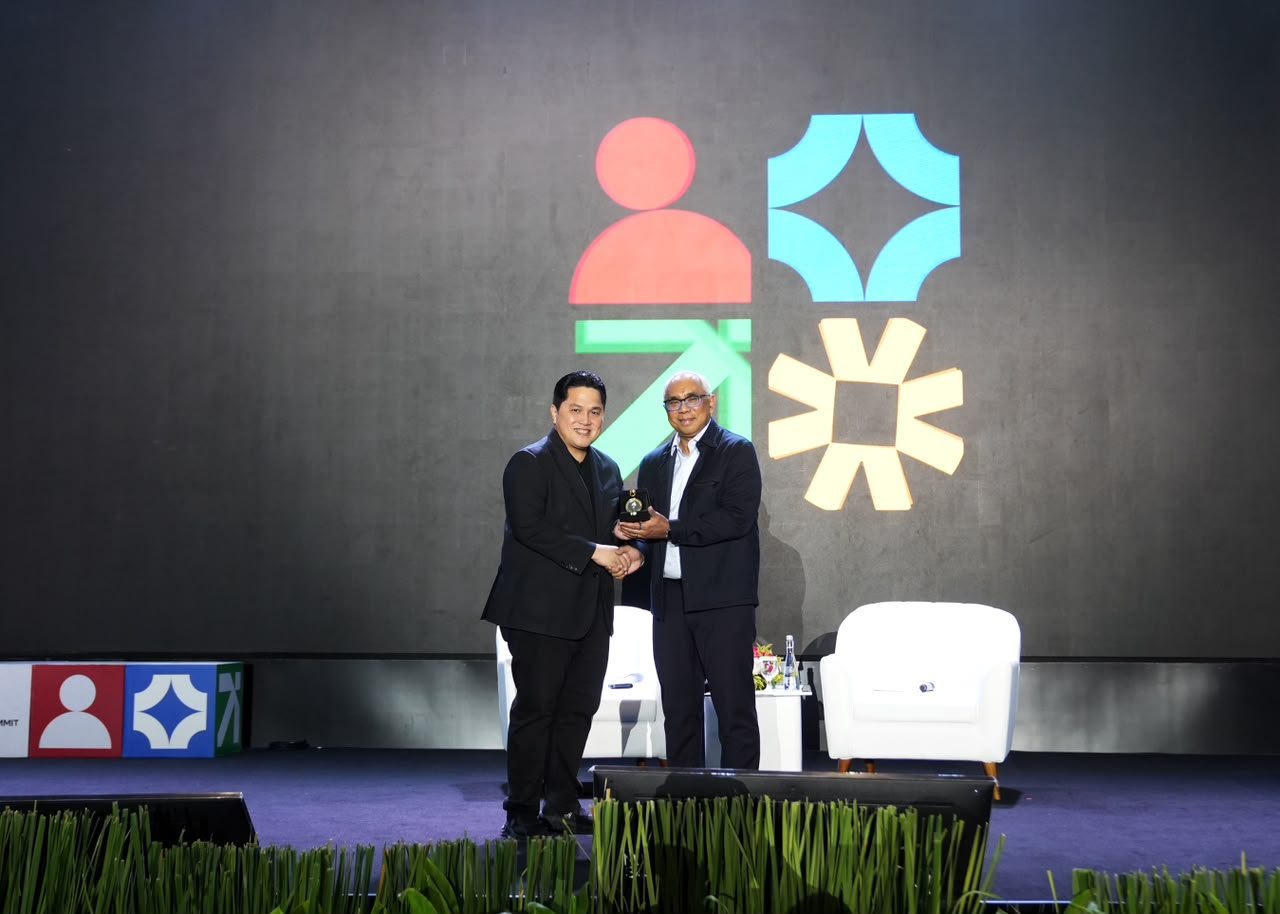
JAKARTA — The Daya Anagata Nusantara Investment Management Agency (Danantara) is opening opportunities for long-term funding collaboration to support the development of Indonesia’s sports ecosystem. The sport tourism sector is considered one of the most ready areas for development due to its significant economic potential and relatively low capital requirements.
This was stated by Djamal Attamimi, Managing Director of Global Business Development, Corporate Finance & Investments at Danantara, while serving as a speaker at the Global Leadership Forum Indonesia Sports Summit (ISS) 2026, themed ‘Financing the Future of Sport: Trust Funds, Strategic Capital, and National Development’.
Djamal noted that sports are not merely about athletic achievements. In his view, sports possess immense economic potential, the development of which requires capital support, proper governance, and sustainable funding systems.
He cited the development of sport tourism as being capable of delivering a significant economic impact. Based on data presented, the budget for sport tourism development in 2025 reached IDR 6.5 billion. From that budget, the absorption rate was reported to be 98.88 per cent, generating approximately IDR 2 trillion in economic activity across several provinces.
“An initial capital of IDR 6.5 billion provides an economic impact of IDR 2 trillion. This demonstrates that the multiplier effect of activities related to sports is quite high,” said Djamal.
Djamal believes this massive economic impact shows that sports can become a vital driver of the economy. This potential grows even larger if sports development is carried out through proper, long-term oriented investment planning.
He also mentioned that the economic value of Indonesian sports reached nearly IDR 40 trillion in 2024. Furthermore, Indonesia possesses a large market base with a population of approximately 280 million people and a high public interest in sporting activities.
However, this vast potential must be accompanied by industrial certainty so that investors have a clearer basis for entering the sports sector. Djamal identified at least three aspects that need strengthening: the classification of the sports industry, the measurement of economic impact, and the certainty of funding durations.
“Capital will only arrive if the identification and definition of the sector within the ecosystem itself are clear,” he said.
Djamable noted that the character of the sports industry makes its funding needs different from other sectors. Investment in sports does not always yield immediate results, as the development of athletes, competitions, and infrastructure requires a long period. He mentioned that developing an athlete can take around 12 years, while a sports league requires about 15 years to reach maturity, and stadiums have an economic lifespan that can reach approximately 40 years.
Therefore, Djamal assessed that short-term funding schemes are less suitable for many sports projects. “Short-term funding seems inappropriate for certain sports projects. Funding needs to be adjusted to the time required so that investments can produce an optimal impact,” he explained.
Djamal then positioned sport tourism as a sector relatively ready for near-term development. Besides the relatively low capital requirement, Indonesia already possesses various assets and infrastructure that can be optimised to support both sporting and tourism activities.
“The opportunity that can be realised immediately is sport tourism. The capital requirement is relatively light and the assets we possess are already in place,” he said.
He noted that developing sport tourism can integrate the sports sector with tourism, hospitality, transport, culinary, and the local community economy. Under this model, hosting sporting events can provide a broader economic impact.
Djamal also assessed that hosting the 2028 National Sports Week (PON) in West Nusa Tenggara (NTB) and East Nusa Tenggara (NTT) could serve as a momentum to strengthen the sports ecosystem in both regions. PON 2028 could trigger the development of various supporting infrastructures, ranging from stadiums, hotels, and airports to access roads. The infrastructure built for these sporting events can subsequently be utilised for sustainable sports and tourism activities.
Meanwhile, the CEO of Danantara, Rosan Roeslani, expressed his appreciation for the forum during a video presentation at ISS 2026. According to Rosan, ISS 2026 is an important momentum to strengthen collaboration among various parties to advance Indonesia’s sports ecosystem.
“Therefore, sports require sustainable funding support, strong partnerships, and long-term investment. Danantara Indonesia is ready to collaborate with all stakeholders to support the development of the Indonesian sports ecosystem to become stronger and more competitive,” said Rosan.
Rosan emphasised that sports are not only about achievement but also about human development, increasing economic activity, and national competitiveness. Collaboration between the government, the business world, investment institutions, sports federations, and other stakeholders is seen as the key to building a sustainable sports industry. With a large market potential and available sporting assets, the development of sport tourism is viewed as a gateway to strengthening sports investment while creating a wider economic impact for the regions.