
Danantara Invests in US Oil and Gas: What Does It Mean for Indonesia?
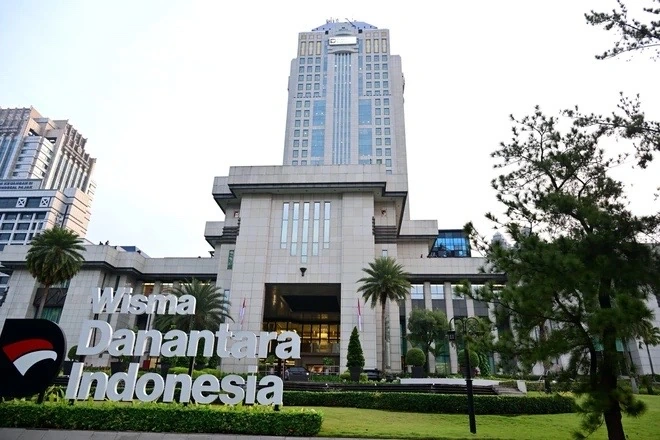
KABARBURSA.COM — Danantara Indonesia, the Daya Anagata Nusantara Investment Management Agency, has invested US$250 million, equivalent to Rp4.5 trillion, in US oil and gas company HighPeak Energy. The investment is considered to have the potential to bring strategic benefits to Indonesia’s upstream oil and gas industry.
Komaidi Notonegoro, executive director of the ReforMiner Institute, said the investment could deliver not only financial returns but also opportunities for technology transfer and improved operational capabilities in Indonesia’s upstream sector.
Through its investment in the Permian Basin, one of the United States’ main oil and gas production areas, Indonesia could gain wider access to knowledge, experience, skills and networks in the global oil and gas industry.
“From a financial perspective, I think it is prudent. There are also strategic aspects in terms of technology and upstream operations, including the possibility of technology transfer if we need it at some point,” Komaidi said on Tuesday, 13 October 2026.
He said US industry experience in developing production technology could serve as a reference for Indonesia as it seeks to increase output from oil and gas fields.
The Permian Basin holds oil and gas reserves across various rock layers, including shale. Major formations in the area include Wolfcamp, Bone Spring and Spraberry.
To extract oil and gas from shale, US companies use horizontal drilling and hydraulic fracturing, commonly known as fracking.
Knowledge of these technologies and production techniques could be applied in Indonesia, particularly at onshore oil and gas fields that have reached maturity.
However, applying the technology would depend on the characteristics and conditions of each field’s reservoir.
Preferred shares offer returns of 6–7 per cent
In addition to the prospect of technology transfer, Komaidi said Danantara’s investment structure in HighPeak Energy included a mechanism to help manage financial risk. The investment in preferred shares offers a fixed return of around 6–7 per cent a year, with periodic payments.
The mechanism could provide investors with greater certainty over cash flows, rather than requiring them to wait until the end of the year for payment.
“Waiting a year would be quite difficult. If the cash flow comes in before then, I think that is better,” Komaidi said.
Danantara, through PT Danantara Investment Management (DIM), previously announced the US$250 million investment, equivalent to Rp4.5 trillion at an assumed exchange rate of Rp18,000 per US dollar.
Danantara Investment Management chief executive Pandu Sjahrir said the investment was part of the company’s strategy to develop a global portfolio in strategic sectors.
“This investment is in line with our mandate to invest in strategic sectors that deliver sustainable long-term returns while supporting Indonesia’s national interests. HighPeak’s strategic position in one of the world’s most advanced upstream oil and gas markets makes it a promising investment opportunity as we build a globally diversified investment platform,” Pandu said.
Once the transaction is complete, HighPeak will develop training and secondment programmes for Indonesian workers. The programmes are intended to strengthen the capabilities and expertise of the national workforce in the upstream oil and gas sector.
The programmes are expected to give Indonesian workers the opportunity to learn about the technology, skills and operational practices used in the US oil and gas industry.
“We hope this partnership will facilitate a skills exchange that supports the development of Indonesia’s energy sector, while strengthening the longstanding energy and economic ties between Indonesia and the United States,” Pandu said.
National oil and gas company PT Energi Mega Persada (EMP) has also invested US$200 million in HighPeak Energy, equivalent to Rp3.6 trillion at an assumed exchange rate of Rp18,000 per US dollar.
Like Danantara, EMP hopes the investment will open opportunities for cooperation in skills development and the exchange of knowledge about the latest technologies used in the US upstream oil and gas industry.
The investments by the two Indonesian companies in HighPeak Energy are therefore intended not only to generate financial returns, but also to widen access to technology and expertise in the global oil and gas industry.
How much could Danantara’s investment benefit Indonesia’s oil and gas sector?
Danantara Indonesia’s US$250 million investment in HighPeak Energy—around Rp4.475 trillion at an exchange rate of Rp17,900 per US dollar—raises two questions: how much technology could be brought back to Indonesia, and what are the financial risks associated with the company receiving the investment?
On the technology front, the Permian Basin offers experience that could be relevant to Indonesia. It is one of the world’s largest oil-producing regions, relying on horizontal drilling and hydraulic fracturing to extract hydrocarbons from rock layers that conventional drilling cannot easily reach.
The US Energy Information Administration (EIA) reported that the Permian Basin produced an average of 6.6 million barrels of crude oil a day in 2025, or about 48 per cent of total US crude oil production. Output rose by approximately 280,000 barrels a day compared with the previous year.
In a separate report, the EIA said production of hydrocarbons in the Permian Basin increased from around 2.9 million barrels of oil equivalent a day in 2015 to 11.2 million in 2025. The growth reflects rising productivity, supported by drilling technology, field development and operational efficiency.
For Indonesia, that experience could offer a reference for boosting production at mature oil and gas fields. However, the success of these technologies in the Permian does not mean they can automatically be replicated domestically. Differences in rock characteristics, reservoir pressure, development costs and infrastructure determine whether their use is technically and economically viable.
The strategic benefits of Danantara’s investment would therefore be easier to assess if the company explained which fields might be targeted for the technology, what technology would be studied and what production gains it expects to achieve.
On the financial side, HighPeak Energy’s quarterly filing with the US Securities and Exchange Commission (SEC) showed that the company had total debt of around US$1.2 billion, or Rp21.48 trillion, as at 30 June 2026. It had cash and cash equivalents of US$146.3 million, or around Rp2.62 trillion.
The same filing showed that HighPeak’s operating cash flow in the first half of 2026 was US$180.5 million, or around Rp3.23 trillion, down 39 per cent from the same period a year earlier. Its daily sales volume also fell by 11 per cent to 45,456 barrels of oil equivalent.
These figures do not in themselves mean Danantara’s investment will lose money. However, the company’s cash flow and substantial debt are factors to consider when assessing its ability to maintain operations and meet its obligations to investors.
Reuters reported on 17 September 2026 that HighPeak was exploring a possible sale of the company after receiving acquisition interest. This provides additional context for assessing the strategic position of the transaction, which was announced several weeks later.
Danantara’s investment through preferred shares offers a different return mechanism from an investment in ordinary shares. According to HighPeak transaction documents filed with the SEC on 6 October 2026, the instrument is Series A 6.0% Perpetual Convertible Preferred Stock.
The documents set out different dividend rates depending on the holding period and payment method. During the initial period before the investment’s second anniversary, the rate is 6 per cent a year if paid in cash and 7.5 per cent if paid in shares or through a payment-in-kind (PIK) mechanism. The dividend rate may subsequently increase under the contract’s terms.
The arrangement needs to be considered in full. Preferred dividends are not equivalent to guaranteed deposit interest, while a PIK payment is not the same as receiving cash that an investor can use immediately. The company’s ability to meet its obligations and the contractual terms remain important elements in assessing the risk.
Another promised benefit of the transaction is a training and secondment programme for Indonesian workers. Danantara’s public announcement said the programme was intended to improve technical skills and expand knowledge exchange in the upstream oil and gas sector.
However, the public announcement did not specify the number of participants, the programme’s duration, the fields of expertise to be covered or which Indonesian oil and gas fields might benefit from the programme’s results.
Without those details, the benefits of technology transfer cannot yet be measured concretely. Success should ultimately be assessed not only by how many workers are sent to the United States, but also by whether they apply the skills they acquire, improve operational efficiency and help increase production at Indonesian fields.
Source: jawawa.id (https://jawawa.id/newsitem/danantara-invests-in-us-oil-and-gas-what-does-it-mean-for-indonesia-1791892259)
Originally published by kabarbursa.com (https://www.kabarbursa.com/makro/danantara-masuk-migas-as-apa-dampaknya-bagi-indonesia), translated from Indonesian