
Danantara Indonesia Trust launches three strategic partnerships
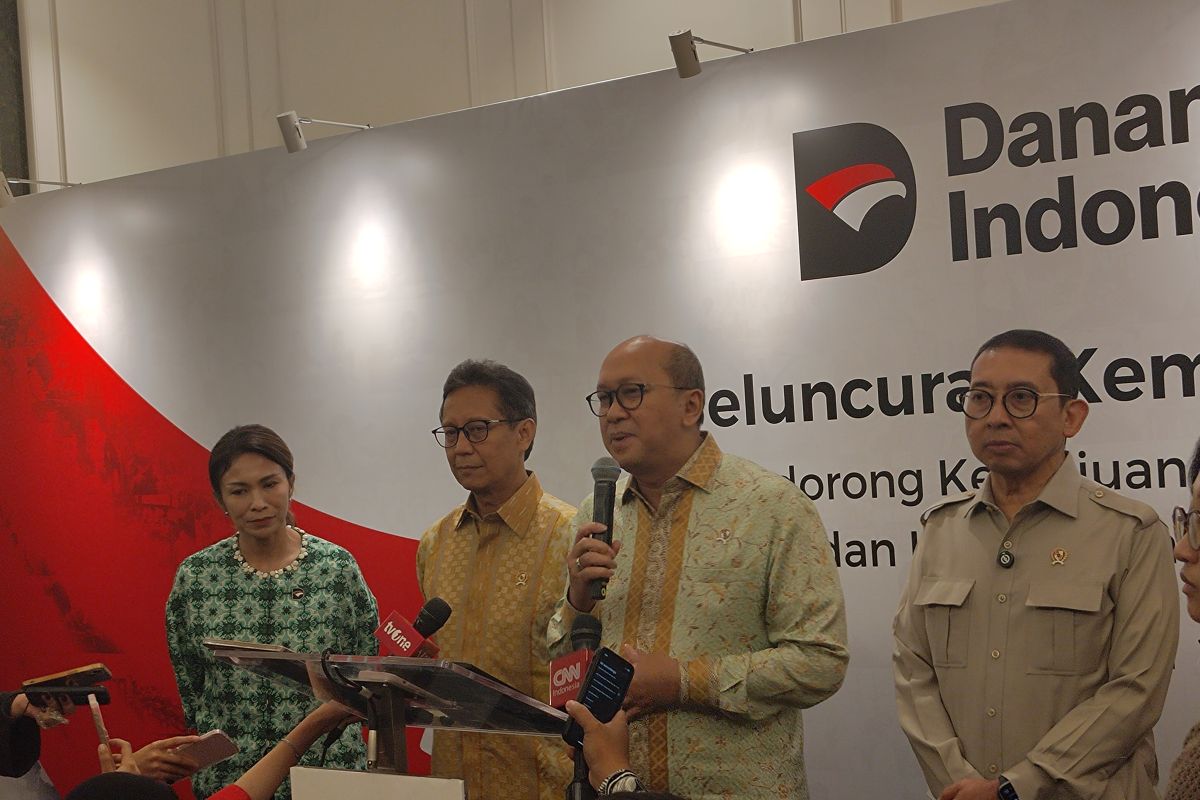
Danantara Indonesia was established not only to manage state assets and investments but also to contribute to Indonesia’s social progress. Jakarta (ANTARA) - Danantara Indonesia Trust (DIT) has launched its first three strategic partnerships in health, education, and cultural literacy as part of strengthening philanthropy and sustainable social development programmes in Indonesia.
The partnerships were formalised through Memorandum of Understanding (MoU) signings between DIT and the Ministry of Health, Karya Salemba Empat Foundation, and the Museum and Cultural Heritage (Indonesia Heritage Agency).
“Danantara Indonesia was established not only to manage state assets and investments but also to contribute to Indonesia’s social progress,” said Rosan Roeslani, CEO of the National Investment Management Agency (Danantara) and Chair of Danantara Indonesia Trust, in Jakarta on Monday.
He stated that DIT was formed to expand Danantara Indonesia’s social contributions beyond managing state investments and assets.
He added that DIT will focus on health, education, culture, and water, sanitation, and hygiene (WASH).
Rosan said Danantara Indonesia is collaborating with the Gates Foundation to establish a credible, professional, transparent philanthropic institution with strong governance.
He said the programmes are expected to deliver positive, sustainable, and lasting social impacts for communities.
“Through DIT, we are expanding our mission to strengthen human resources and address social challenges, as we believe long-term value creation must go hand in hand with tangible societal impact,” Rosan said.
In the health partnership, DIT is supporting maternal and child health programmes through hexavalent vaccine provision, strengthening vaccine cold chains, and providing multiple micronutrient supplements for pregnant and postpartum mothers to help prevent stunting.
Health Minister Budi Gunadi Sadikin said the initial support from DIT for the health programmes amounts to approximately Rp250 billion, equivalent to US$15 million.
“These three support initiatives total around Rp250 billion or US$15 million from DIT,” Budi said.
He stated that philanthropic support is needed to bolster national health financing and act as a catalyst to attract further funding from international donor agencies.
Budi added that Indonesia still faces health and nutrition challenges, including nearly 960,000 zero-dose children who have received no vaccinations and maternal mortality rates that remain high in the ASEAN region.
Meanwhile, the partnership with Karya Salemba Empat Foundation includes a three-year scholarship programme for approximately 500 underprivileged students across various regions of Indonesia.
The programme also includes mentoring, leadership development, and career readiness initiatives.
DIT highlighted the importance of the programme given that around one-fifth of Indonesian youth aged 15-24 are NEET (Not in Education, Employment or Training).
In the cultural sector, DIT has partnered with the Museum and Cultural Heritage to develop the Danantara Indonesia Trust Library at the National Museum.
Culture Minister Fadli Zon said the support will also aid the revitalisation of two sections of the National Museum damaged in the 2023 fire.
“Thank you once again to Danantara Indonesia Trust. We are greatly helped, especially with the museum and the library,” Fadli said.
He said strengthening the cultural sector is vital to position Indonesia’s cultural wealth as a national treasure and soft power.
DIT Chair Nuraini Razak said the three partnerships were chosen to address urgent development needs, from maternal and child health to education access and cultural literacy.
“Through this collaboration, these programmes will form the foundation of DIT as a platform mobilising collective action, driving large-scale solutions, and delivering tangible impacts across Indonesia,” Nuraini said.
She added that DIT is currently building governance systems, oversight mechanisms, and a monitoring, evaluation, and learning (MEL) framework to ensure programme effectiveness.