
Danantara Head Provides Latest Update on State-Owned Textile Company, Here's What He Said
Jakarta, CNBC Indonesia - The Investment Management Agency (BPI) Danantara is still discussing the establishment of a red-plate company in the textile sector. This idea has emerged to restore the glory days of Indonesia’s garment industry and create jobs.
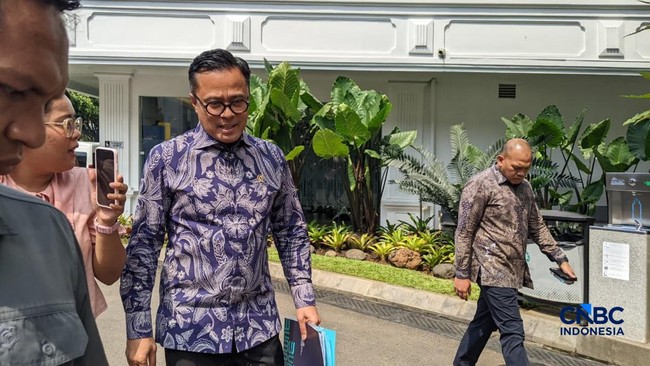
COO of BPI Danantara and Head of the BUMN Financial and Asset Management Agency (BP BUMN) Dony Oskaria revealed the latest developments regarding the plan to form a BUMN in the textile sector. According to him, it is currently still in the discussion process.
“The textile BUMN is still being studied. We’re looking at it first, examining the market sizing, and also because this is one of the industries related to a lot of employment. So, it comes back to that: BUMNs enter industries that have a significant economic impact for us, especially in job creation,” said Dony at the Presidential Palace Complex on Tuesday (7/4/2026).
According to Dony, the textile industry was once a strength and backbone of Indonesia. However, many private textile companies have now collapsed. This situation opens opportunities for the state to consider intervention in this sector through the formation of a BUMN.
“As we know, textiles have long been one of Indonesia’s strengths, right? If the private sector isn’t that strong, then perhaps if needed, we should enter. But we’re still studying it; it hasn’t started yet,” he explained.
He also outlined several options to be pursued, such as taking over assets from the textile giant PT Sri Rejeki Isman Tbk (Sritex). However, it is currently still in the calculation process, as Danantara does not simply want to enter without making the textile business more competitive.
From a fundamental perspective, according to Dony, Indonesia has competitive advantages in the textile industry, such as low labour costs and a large domestic market. However, the issue of market share remains a hurdle, as many legal imported textile products leak into the market.
“Actually, we have competitive advantages, right? Labour costs, and also a large market sizing. Of course, the regulations also need to be examined, especially the import issues—the leaks must be protected. So that domestic companies can compete,” he said.
Furthermore, according to Dony, there is no timeline yet for when this BUMN will be formed. This is because both at Danantara and BP BUMN, there are still many issues with other red-plate companies that need to be resolved.
“Because friends can see, there are 1,101 companies that I have to handle one by one, tidy up one by one. We’ll prioritise the ones with the biggest impact first. We’ll finish the big ones first, then the ones with lower priority,” Dony stated.