
Danantara Gathers Coal and Commodity Bosses, Outlines DSI Working Mechanism
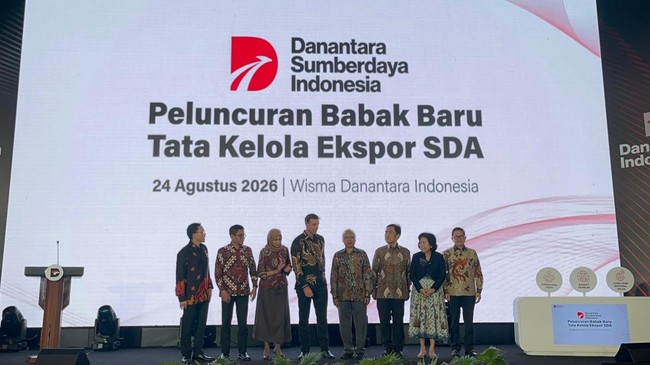
PT Danantara Sumberdaya Indonesia (Persero) has announced its implementation plan, executive leadership, and identity. Addressing commodity entrepreneurs, Danantara Indonesia CEO Rosan Roeslani emphasised that DSI’s mandate is to strengthen visibility within the strategic commodity ecosystem while improving comprehensive understanding of export transactions, market dynamics, and how to maximise value for the national economy.
“Indonesia has abundant natural resources, but resources alone are not enough. We need stronger governance, better visibility, and a more accountable system to ensure that the value generated from these commodities is properly recorded and optimised for the national interest,” he said at Wisma Danantara in Jakarta on Monday (24/8/2026).
DSI was established under Government Regulation No. 24 of 2026 concerning Governance of Strategic Natural Resource Commodity Exports. The agency holds a mandate to strengthen transparency, governance, and value optimisation in Indonesia’s strategic commodity exports. Since commencing operations on 1 June 2026, DSI has begun operating across commodities including coal, palm oil, and ferroalloy.
Rosan revealed that over the past two months, DSI has built analytical visibility over approximately 6,500 export declarations representing more than US$14 billion in export value and over 90 million tonnes of commodities. This trade flows through more than 50 loading ports across 25 provinces, destined for over 100 countries.
By integrating data with global market references, DSI is building more comprehensive transaction visibility, linking price, volume, quality, Harmonized System (HS) classification, shipping vessels, and export destination markets. This approach enables a more thorough understanding of trade flows and the value of Indonesia’s strategic commodities throughout the export chain.
DSI is also focused on integrating national export data and conducting transaction-level analytics by leveraging existing government systems and global market references. “As visibility at the transaction level increases, DSI is beginning to identify areas where value can be enhanced and captured more optimally across the ecosystem,” he added.
As part of DSI platform development, industry players are directly engaged to ensure the system aligns with trade dynamics while maintaining export sustainability. DSI has signed MoUs with the Indonesian Employers Association (APINDO), the Indonesian Nickel Industry Forum (FINI), the Indonesian Coal Mining Association (APBI-ICMA), and the Indonesian Palm Oil Association (GAPKI) to form an Industry Task Force that will test the platform, provide direct industry input, and identify and resolve potential issues before broader implementation.
This approach ensures DSI is built together with the market, maintaining system readiness and building trust from the outset. On the same occasion, DSI President Director Luke Mahony affirmed that DSI’s current focus is building systems and capabilities to implement its mandate credibly, measurably, and sustainably.
“We will continue to strengthen monitoring, verification, and operational capabilities to support a more transparent, accountable, and efficient export ecosystem, while maintaining business certainty and export sustainability,” he stated.